Scientists Discover That COVID-19 Causes Brain Blood Flow Changes That Persist After Recovery
Nikhil Prasad Fact checked by:Thailand Medical News Team Feb 21, 2026 7 months, 1 week, 4 days, 3 hours, 33 minutes ago
Medical News: A new scientific investigation has raised fresh concerns about the long-term effects of COVID-19 on the human brain. Researchers from Sunnybrook Research Institute, the University of Toronto, University of Waterloo, St. Michael’s Hospital, Baycrest Academy for Research and Education, Toronto Metropolitan University, and Oslo University Hospital have discovered that people experiencing post-COVID-19 condition may show measurable changes in brain blood circulation months after recovering from the virus. The findings help explain why many individuals continue to suffer from fatigue, memory issues, and mental fog long after their initial infection has ended.
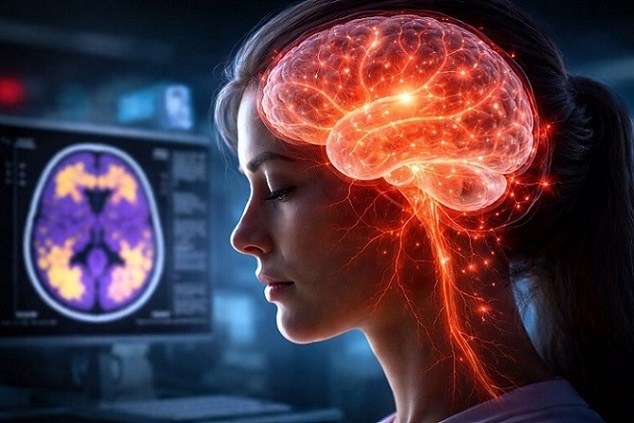 Researchers find lasting brain blood flow changes in people experiencing long COVID symptoms months after recovery
Long COVID Symptoms May Have a Physical Brain Basis
Researchers find lasting brain blood flow changes in people experiencing long COVID symptoms months after recovery
Long COVID Symptoms May Have a Physical Brain Basis
Post-COVID-19 condition, often referred to as long COVID, describes symptoms that persist for months after the acute phase of infection. While some patients recover quickly, others report ongoing exhaustion, headaches, concentration problems, and reduced mental clarity that interfere with daily life. For years, scientists have been trying to determine whether these symptoms reflect lasting biological changes or are simply part of a prolonged recovery process.
In this
Medical News report, researchers focused on whether the virus might leave behind subtle but measurable effects on the brain’s vascular system. The study aimed to explore how blood moves through the brain after recovery and whether these patterns differ in people with lingering symptoms.
Advanced MRI Scans Reveal Hidden Changes
The research team used an advanced brain imaging method that allows scientists to observe how blood travels through brain tissue. This technique enabled them to measure regional cerebral blood volume, which reflects how much blood reaches specific brain regions, and cerebral blood flow, which indicates how quickly blood moves through those areas.
Participants included adults who had previously experienced COVID-19 but were not hospitalized during the acute illness. Some participants continued to experience long COVID symptoms, while others recovered without long-term issues and served as a comparison group. The researchers examined multiple brain regions linked to cognition, attention, emotional processing, and sensory function.
Major Findings Show Reduced Blood Volume in Key Brain Regions
The most significant finding was a clear reduction in blood volume in several brain areas among individuals with post-COVID-19 condition. These regions included parts of the frontal brain, the cingulate area, the thalamus, and sections involved in sensory and cognitive processing.
These results suggest that COVID-19 may trigger lasting changes in the brain’s small blood vessels or in how blood supply is regulated. Although overall blood flow changes were less dramatic, the reduced blood volume indicates that subtle neurovasc
ular disruptions may continue long after the infection itself has resolved.
Researchers believe these alterations may contribute directly to symptoms such as brain fog, mental fatigue, and reduced concentration, which many long COVID patients describe as their most disabling problems.
Cognitive Effects and Ongoing Symptoms
Participants experiencing long COVID reported more fatigue, headaches, and sensory disturbances compared to those who fully recovered. Cognitive testing also showed lower performance in areas involving memory and reasoning, suggesting that the brain circulation changes could have real-world effects on thinking ability.
Scientists suspect that ongoing inflammation, altered oxygen delivery, or disruptions in communication between nerve cells and blood vessels could explain these findings. While the exact biological mechanisms are still being investigated, the study adds to growing evidence that long COVID is associated with measurable brain changes rather than purely subjective symptoms.
What These Findings Mean for the Future
Researchers caution that these results do not mean permanent damage has occurred. Instead, the brain may still be undergoing recovery or adaptation months after infection. However, the findings highlight the need for continued monitoring of patients who report long-term neurological symptoms and for further research into treatments that could restore normal brain circulation.
Conclusion
The study provides strong evidence that COVID-19 can leave lasting effects on brain blood volume even after apparent recovery, particularly in regions responsible for thinking, attention, and fatigue regulation. These findings reinforce the seriousness of long COVID and emphasize that persistent symptoms may have a real biological foundation. Future large-scale studies will be essential to understand how long these changes last and whether targeted therapies can help patients regain full neurological function and quality of life.
The study findings were published in the peer reviewed journal: Frontiers in Neuroimaging.
https://www.frontiersin.org/journals/neuroimaging/articles/10.3389/fnimg.2025.1688973/full
For the latest COVID-19 news, keep on logging to Thailand
Medical News.
Read Also:
https://www.thailandmedical.news/articles/coronavirus
https://www.thailandmedical.news/articles/long-covid




 Share
Share
 Tweet
Tweet
 Share
Share

































