Nikhil Prasad Fact checked by:Thailand Medical News Team Apr 08, 2026 5 months, 3 weeks, 5 days, 1 hour, 38 minutes ago
Medical News: Heart failure and chronic kidney disease are two serious conditions that often go hand in hand - and when they do, the risks to patients rise dramatically. A new comprehensive review highlights just how deeply these diseases are connected and why managing them together remains one of the biggest challenges in modern medicine.
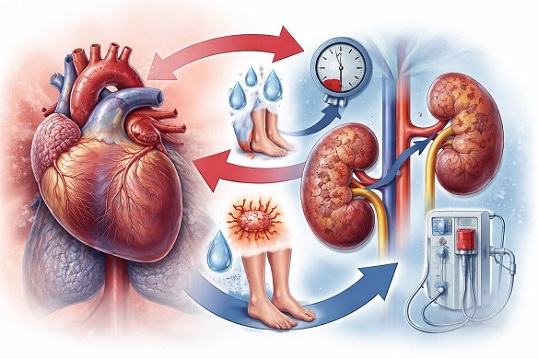 Heart and kidney disease together create a dangerous cycle that worsens patient survival
A Dangerous Combination Affecting Millions
Heart and kidney disease together create a dangerous cycle that worsens patient survival
A Dangerous Combination Affecting Millions
Heart failure affects around 64 million people globally, and a large number of these individuals also suffer from chronic kidney disease. When the kidneys begin to fail, the risk of developing heart problems increases sharply. In fact, nearly half of patients undergoing dialysis face a high risk of heart failure.
The review explains that when both conditions coexist, outcomes worsen significantly. Patients are more likely to be hospitalized, experience complications, and face higher mortality rates. The heart struggles to pump effectively, while the kidneys fail to regulate fluids and toxins - creating a harmful cycle that accelerates disease progression.
Why the Heart and Kidneys Affect Each Other
The relationship between the heart and kidneys is complex but crucial. As kidney function declines, fluid and salt build up in the body. This extra fluid puts pressure on the heart, forcing it to work harder.
At the same time, changes occur inside the heart muscle. The walls of the heart can thicken, a condition known as left ventricular hypertrophy. Over time, this reduces the heart’s ability to pump efficiently.
The review also highlights other hidden contributors, including chronic inflammation, anemia, toxin buildup, and hormonal imbalances. These factors damage blood vessels and heart tissue, making the situation even worse. The study clearly illustrates how reduced cardiac output, fluid retention, and hormonal activation combine to drive heart failure in kidney disease patients.
Symptoms That Are Often Overlooked
Recognizing heart failure in patients with kidney disease is not always straightforward. Common symptoms include shortness of breath, fatigue, swelling in the legs, and chest discomfort. However, in patients undergoing dialysis, these symptoms may be mistaken for fluid shifts rather than heart failure.
Doctors rely on a mix of clinical signs and biomarkers to make a diagnosis. Blood tests measuring substances like BNP and troponins can provide important clues about heart stress and damage.
This
Medical News report highlights that rising levels of these biomarkers are strongly linked to increased risk of hospitalization and death, especially in patients with advanced kidney disease.
New Insights into Diagnosis and Monitoring
Modern tools are improving how doctors detect and monitor this dangerous combination. Ultrasound techniques can now identify fluid overload in
the lungs, even before symptoms become severe.
Bioimpedance technology, which measures body fluid levels, is also gaining attention. Studies involving tens of thousands of patients show that fluid overload significantly increases the risk of death.
Interestingly, traditional signs like swollen ankles or lung crackles may not always be reliable, especially in kidney patients. This has pushed clinicians toward more advanced and precise monitoring techniques.
Treatment Strategies Are Evolving
Managing heart failure in patients with kidney disease requires a careful balance. Treatments include medications that reduce fluid buildup, control blood pressure, and protect the heart.
Drugs such as beta-blockers, ACE inhibitors, and newer therapies like SGLT2 inhibitors have shown promising results. Some newer medications can even improve heart function and reduce hospitalizations.
However, treatment is not without risks. Many of these drugs can affect kidney function or cause electrolyte imbalances, meaning patients must be closely monitored.
The review also emphasizes the importance of personalized care, where cardiologists and kidney specialists work together to tailor treatments based on each patient’s condition.
A Shift Toward Smarter, Personalized Care
Looking ahead, the future of treatment lies in combining advanced diagnostics with targeted therapies. Emerging tools like molecular biomarkers and AI-assisted imaging could help doctors detect problems earlier and treat them more effectively.
The study stresses that a multidisciplinary approach is essential. By integrating new technologies with traditional care, healthcare providers can improve outcomes and reduce the burden of this life-threatening combination.
Conclusion
The coexistence of heart failure and chronic kidney disease represents a complex and high-risk medical challenge that requires urgent attention. The evidence shows that these conditions are deeply interconnected, with each accelerating the progression of the other through fluid overload, inflammation, and structural damage to the heart. Effective management depends on early detection, careful monitoring, and coordinated treatment strategies. Without a proactive and personalized approach, patients face significantly higher risks of hospitalization and death. However, advances in diagnostics and therapies offer hope for better outcomes in the near future.
The study findings were published in the peer reviewed journal: Biomedicines.
https://www.mdpi.com/2227-9059/14/4/841
For the latest on heart failure and kidney disease, keep on logging to Thailand
Medical News.
Read Also:
https://www.thailandmedical.news/articles/nephrology-(kidneys)
https://www.thailandmedical.news/articles/cardiology




 Share
Share
 Tweet
Tweet
 Share
Share

































