Nikhil Prasad Fact checked by:Thailand Medical News Team May 11, 2026 3 months, 37 minutes ago
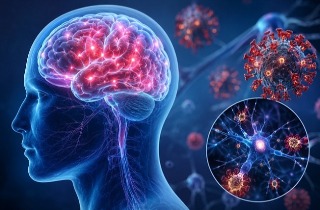
Medical News: Researchers from the Department of Veterinary Pathobiology and the Department of Physiological Sciences at the College of Veterinary Medicine, Oklahoma State University in Stillwater, Oklahoma, USA, have uncovered alarming evidence that latent herpes simplex virus type 1 (HSV-1) infection may quietly trigger inflammation, immune activation, and signs of brain aging deep inside the brainstem.
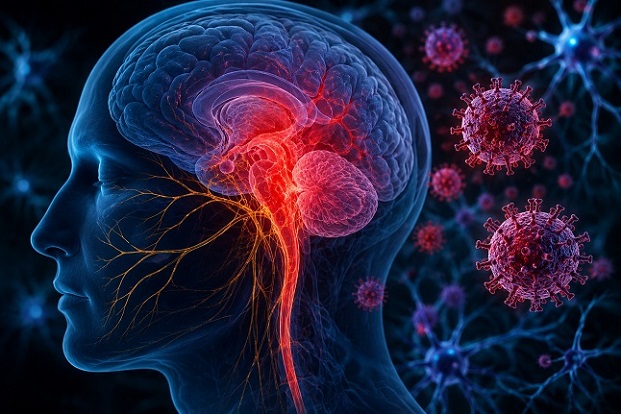 Dormant HSV-1 infection may silently trigger inflammation and brain aging linked to neurodegeneration
HSV-1 is widely known as the virus responsible for cold sores, but once a person is infected, the virus never truly leaves the body. Instead, it hides in nerve cells for life in a dormant state known as latency. Scientists have long known that HSV-1 can remain inside nerve clusters called trigeminal ganglia, but this new study shows that the virus may also silently affect critical brainstem regions connected to stress responses, memory, and nerve communication.
Silent Brain Changes Found During Dormant Infection
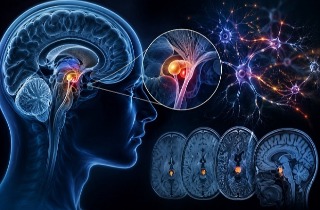
The study examined two important brainstem regions in mice: the principal sensory nucleus of the spinal trigeminal tract, known as Pr5, and the locus coeruleus, or LC. The LC is especially important because it produces norepinephrine, a chemical involved in stress, alertness, and brain function.
Damage to this area has also been linked to Alzheimer’s disease. Researchers infected mice with HSV-1 and later studied the animals after the virus had entered its latent stage. Even though the infection appeared inactive, the scientists discovered widespread changes in genes related to inflammation, immune activity, nerve survival, and cellular aging.
One of the most striking findings was the sharp rise in inflammatory molecules such as Ccl5 and Cxcl10. These molecules help recruit immune cells and are often associated with chronic inflammation and tissue damage. Some genes linked to neurodegeneration and stress responses were also dramatically increased.
The researchers found that certain inflammatory genes increased more than 20-fold in some brain regions. At the same time, genes involved in healthy nerve communication and nerve growth were also altered, suggesting that the brain may be attempting to repair ongoing viral-related damage.
Females Showed Stronger Brain Inflammatory Responses
Another important discovery was that female mice often showed stronger inflammatory and neurodegenerative changes than males. In particular, female mice displayed higher activity of genes associated with immune stress and nerve injury within the locus coeruleus.
This finding is significant because women are known to have a higher risk of developing Alzheimer’s disease later in life. The researchers believe HSV-1 could act as a contributing factor that worsens brain aging or neurodegeneration in vulnerable individuals.
This
Medical News report highlights that the study also identified increased levels of Lipocalin-2, a protein associated with activated brain
immune cells and nerve damage. Elevated Lipocalin-2 has previously been linked to neurodegenerative diseases and inflammatory brain disorders.
Viral Dormancy May Not Be Truly Dormant
For decades, scientists believed latent HSV-1 infection was mostly inactive. However, the new findings suggest the virus may periodically switch on small amounts of viral activity that continuously irritate the nervous system.
Researchers believe these low-level viral events may stimulate constant immune surveillance and inflammation inside sensitive brain regions. Even though the virus is not causing full-blown encephalitis, the persistent irritation may slowly damage neurons over time.
The study also found evidence that some viral genetic elements may influence whether nerve cells survive or deteriorate. Certain viral latency genes appeared to help maintain neuron health, while the absence of these viral components sometimes worsened inflammatory damage.
Links to Alzheimer’s Disease Raise New Questions
The locus coeruleus has become an area of intense interest in Alzheimer’s research because it is one of the first brain regions affected during the disease process. The researchers noted that HSV-1 latency in this region may contribute to long-term neurological decline.
Scientists stressed that HSV-1 is unlikely to be the sole cause of Alzheimer’s disease, but they believe it may act as an important cofactor in some people, especially those with genetic susceptibility or aging-related immune decline.
The study also strengthens growing evidence that chronic viral infections may play a much larger role in brain aging than previously thought.
Conclusion
The findings reveal that latent HSV-1 infection is far from harmless. Even while dormant, the virus appears capable of triggering chronic inflammation, activating immune pathways, and altering genes involved in neuronal survival and degeneration inside important brainstem regions. The discovery that females may experience stronger inflammatory effects further raises concerns about the possible connection between HSV-1 and disorders such as Alzheimer’s disease.
Researchers now believe that lifelong latent HSV-1 infection may quietly reshape the nervous system over decades, potentially contributing to cognitive decline, stress-related neurological damage, and progressive neurodegenerative processes in certain individuals.
The study findings were published in the peer reviewed journal: Pathogens.
https://www.mdpi.com/2076-0817/15/5/510
For the latest on HSV-1, keep on logging to Thailand
Medical News.
Read Also:
https://www.thailandmedical.news/articles/alzheimer,-dementia-
https://www.thailandmedical.news/articles/stds




 Share
Share
 Tweet
Tweet
 Share
Share