Nikhil Prasad Fact checked by:Thailand Medical News Team May 25, 2026 3 months, 1 week, 1 day, 13 hours, 31 minutes ago
Medical News: Doctors in Mexico are raising concerns after documenting a troubling medical case involving a 70-year-old woman whose arthritis dramatically worsened following COVID-19 infections and repeated AstraZeneca vaccinations, eventually leading to recurring herpes infections, chronic pain, anxiety, and severe mobility problems.
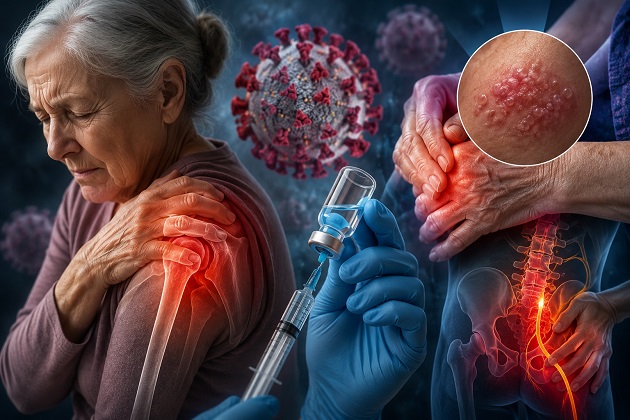 Elderly rheumatoid arthritis patient develops severe pain and herpes complications after COVID infections and AstraZeneca vaccinations
The researchers involved in the case were from the Instituto Nacional de Pediatria (INP) in Mexico City, including its Laboratory of Neurosciences, Laboratory of Experimental Bacteriology, and Laboratory of Pharmacology, along with experts from the Department of Pharmacology at the Faculty of Medicine, Universidad Nacional Autonoma de Mexico.
Woman’s Health Declined After COVID and Vaccination
According to the report, the woman had been living with rheumatoid arthritis for about a decade and had remained relatively stable while taking medications such as prednisone and painkillers. She regularly exercised by walking several days a week and was able to carry out her normal daily activities.
However, after suffering a second COVID-19 infection and receiving three AstraZeneca vaccine doses, her condition began to deteriorate rapidly. She developed intense lower limb pain, severe inflammation, sacroiliitis involving the lower back and sciatic nerves, mood disturbances, chronic fatigue, and recurring herpes outbreaks.
Doctors noted that the woman also experienced depression, anxiety, irritability, and sleep disturbances. Despite extensive medical care involving neurologists, rheumatologists, psychologists, cardiologists, and ophthalmologists, her symptoms persisted.
Dangerous Combination of Autoimmune Disease and Steroid Use
Researchers explained that rheumatoid arthritis is already an autoimmune disease in which the body mistakenly attacks its own joints and tissues. Patients are often treated with immunosuppressive drugs like prednisone and dexamethasone to reduce inflammation.
But these medications can also weaken immune defenses, making patients more vulnerable to infections such as herpes zoster and herpes simplex virus. In this case, the doctors suspect that the patient’s immune system became increasingly unstable after COVID-19 infection and vaccination, allowing dormant herpes viruses to reactivate.
The study also suggested that dexamethasone injections may have contributed to repeated herpes flare-ups by suppressing vaccine-induced T-cell immune responses.
Blood Tests Revealed Multiple Abnormalities
Medical examinations uncovered several warning signs. Blood tests showed low sodium and chloride levels, reduced red blood cells, elevated platelets, increased lipase and alkaline phosphatase levels, and evidence of inflammation. Urine testing also suggested possible infection and blood in the urine.
Although brain scans and electromyography tests did not reveal major neurological damage, doctors found abnormal tendon reflexes and balance probl
ems that increased her risk of falls. The patient continued suffering severe nerve pain, low back pain, and sciatica.
This
Medical News report highlights how complicated post-COVID inflammatory reactions can become in elderly individuals who already suffer from autoimmune diseases and rely on long-term steroid treatments.
Multiple Treatments Failed to Fully Control Symptoms
The woman underwent a wide range of therapies, including physiotherapy, acupuncture, cannabis-based products, vitamin supplementation, antidepressants, antiviral drugs, and herbal remedies such as turmeric tea. Yet her symptoms improved only slightly.
Researchers noted that many rheumatoid arthritis patients do not fully respond to standard therapies, especially older adults whose tissues and immune systems may already be weakened by age. The study also warned that complementary therapies, although popular, may not always provide reliable symptom relief.
The doctors stressed that managing rheumatoid arthritis during and after the COVID-19 era has become increasingly difficult because both the virus and certain treatments can disrupt immune balance.
Researchers Warn About Possible Post-COVID Arthritis Flares
The researchers concluded that COVID-19 infection or vaccination may potentially trigger or worsen arthritis symptoms in susceptible individuals, especially elderly patients with existing autoimmune disease. They also warned that long-term use of corticosteroids such as prednisone may increase vulnerability to herpes reactivation and neurological complications.
Importantly, the authors emphasized that doctors should carefully monitor older rheumatoid arthritis patients who develop new pain symptoms, sciatica, mood disorders, or viral infections following COVID-19 illness or vaccination. They believe more research is urgently needed to understand how immune suppression, viral reactivation, and chronic inflammation interact in vulnerable patients. The case also highlights the importance of individualized treatment plans and ongoing neurological evaluation for elderly patients receiving immune-modifying therapies.
The study findings were published in the peer reviewed journal: Medicine.
https://journals.lww.com/md-journal/fulltext/2026/05220/post_covid_19_treated_with_astrazeneca_vaccine.55.aspx
For the latest COVID-19 news, keep on logging to Thailand
Medical News.
Read Also:
https://www.thailandmedical.news/articles/vaccine-news
https://www.thailandmedical.news/articles/coronavirus
https://www.thailandmedical.news/articles/arthritis




 Share
Share
 Tweet
Tweet
 Share
Share