Nikhil Prasad Fact checked by:Thailand Medical News Team Sep 01, 2026 55 minutes ago
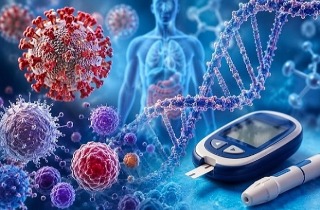
Researchers have identified striking changes in two immune-system receptors in people with COVID-19, with one also showing a significant association with more serious disease. The findings suggest Toll-like receptor 7 (TLR7) and Toll-like receptor 9 (TLR9) could eventually help distinguish SARS-CoV-2 infection, although larger studies are needed before clinical use.
 Higher TLR7 and TLR9 expression distinguished COVID-19 patients from controls, while TLR9 was also associated
with more severe illness
Researchers Examine Innate Immune Signals
TLR7 and TLR9 are part of the body’s innate immune defenses. TLR7 recognizes single-stranded viral RNA, while TLR9 detects certain nucleic-acid patterns and contributes to inflammatory responses. Researchers therefore measured TLR7 and TLR9 messenger RNA expression in whole blood.
The study included 134 adults: 94 patients with RT-PCR-confirmed COVID-19 and 40 healthy controls. Blood was collected at diagnosis before COVID-19 treatment, and gene expression was measured using quantitative real-time PCR.
Researchers were from Cairo University’s National Cancer Institute and Faculty of Medicine; Suez Canal University; National Hepatology and Tropical Medicine Research Institute and General Organization for Teaching Hospitals and Institutes; Military Medical Academy; Tanta University; Ain Shams University; National Research Centre in Giza; and Benha University, all in Egypt.
TLR7 and TLR9 Sharply Elevated in COVID-19
This
Thailand Medical News report highlights that median TLR7 expression was 1.68-fold in COVID-19 patients versus 1.00 in controls, while TLR9 was 2.44-fold versus 1.00. Both differences were highly significant.
After adjustment for age, sex, and body mass index, both receptors remained independently associated with COVID-19. TLR7 produced an adjusted odds ratio of 6996.516 and TLR9 an odds ratio of 7.365. Because the TLR7 estimate was unusually large, investigators performed a Firth-penalized sensitivity analysis; its odds ratio fell to 110.603 but remained statistically significant, underscoring the need for caution when interpreting effect size.
Diagnostic discrimination was particularly strong. TLR7 achieved an area under the ROC curve of 0.973, while TLR9 reached 0.937. Combining both markers produced an AUC of 0.965, meaning the combination did not outperform TLR7 alone.
TLR9 Tied to More Serious Disease
Among the 94 patients, 42 had no-to-mild disease and 52 had moderate-to-critical illness. Median TLR9 expression was significantly higher in the latter group, at 2.73-fold versus 1.89-fold. ALT, a liver enzyme, was also higher.
After adjustment, TLR9 and ALT independently remained associated with moderate-to-critical COVID-19. However, their ability to separate mild from more serious disease was modest: AUCs were 0.623 for TLR9 and 0.641 for ALT, rising only to 0.659 when combined.
Conclusions
The results strengthen evidence tha
t TLR7 and TLR9 expression changes accompany COVID-19, while TLR9 may carry additional information about severity. However, the relatively small cohort, whole-blood mRNA measurements, lack of protein or receptor-activity testing, and absence of external validation mean these markers are not ready for routine clinical decision-making. Larger multicenter studies are needed.
The study findings were published in the peer reviewed journal: COVID.
https://www.mdpi.com/2673-8112/6/9/156
Read Also:
https://www.thailandmedical.news/articles/coronavirus 



 Share
Share
 Tweet
Tweet
 Share
Share