Nikhil Prasad Fact checked by:Thailand Medical News Team Jun 11, 2026 1 month, 3 weeks, 1 day, 15 hours, 47 minutes ago
Medical News: Parkinson’s disease affects millions of people worldwide, causing tremors, stiffness, slow movement, balance problems, and eventually cognitive decline. While current treatments can help manage symptoms, they do not stop the disease from progressing. Now, scientists are exploring a new and potentially game-changing strategy: training the immune system to attack one of the disease’s main culprits, a protein called alpha-synuclein.
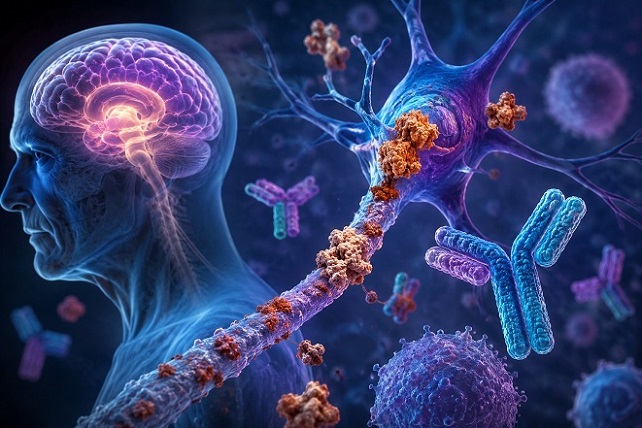 New vaccines and antibody therapies targeting alpha-synuclein are bringing renewed hope for slowing the progression
of Parkinson’s disease
A new review by researchers from the Graduate Program in Biosciences and Health at Tiradentes University and the Northeast Biotechnology Network (RENORBIO), the Laboratory of Morphology and Experimental Pathology at the Institute of Technology and Research (ITP), the Department of Agroindustry at the Federal Institute of Sertão Pernambucano, and the Center for Study on Colloidal Systems at the Institute of Technology and Research, all in Brazil, has examined the latest advances in alpha-synuclein-targeted immunotherapies and their potential to transform Parkinson’s disease treatment.
Why Alpha-Synuclein Matters
Parkinson’s disease develops when nerve cells that produce dopamine gradually die. One of the major reasons for this degeneration is the abnormal buildup of alpha-synuclein, a protein naturally found in the brain.
Under healthy conditions, alpha-synuclein helps nerve cells communicate. However, in Parkinson’s disease, the protein can misfold and clump together. These toxic clusters spread from cell to cell, damaging brain tissue and triggering inflammation. Eventually, they form the characteristic Lewy bodies that are considered hallmarks of the disease.
Researchers now believe that smaller alpha-synuclein clusters known as oligomers may be even more harmful than the larger Lewy body deposits, making them a prime target for new therapies.
Turning the Immune System Against Parkinson’s
Scientists are developing two major forms of immunotherapy against alpha-synuclein.
The first is active immunotherapy, which works like a vaccine. Patients receive specially designed protein fragments that teach the immune system to recognize and attack harmful alpha-synuclein.
The second is passive immunotherapy, where laboratory-made antibodies are directly administered to patients. These antibodies are designed to bind to toxic forms of alpha-synuclein and help remove them from the body.
Both approaches aim to slow or stop disease progression rather than simply relieve symptoms.
Promising Vaccine Candidates
Several experimental vaccines have shown encouraging results.
Among the most studied are PD01A and PD03A, developed using modified fragments of alpha-synuclein. Early clinical trials demonstrated that these vaccines were generally safe and stimulated strong antibody responses in many participants.
PD01A was particularly notable for reducing alpha-sy
nuclein levels in cerebrospinal fluid and generating a sustained immune response. PD03A also produced high levels of antibodies and showed signs of improving function in animal models.
Another candidate, ACI-7104, is an improved version of PD01A that uses advanced liposomal delivery technology to enhance immune responses. This vaccine is currently undergoing Phase II clinical evaluation.
Researchers also highlighted UB-312, which selectively targets toxic alpha-synuclein forms while leaving normal proteins largely untouched. Animal studies showed reductions in harmful protein aggregates and favorable safety profiles.
Antibody Treatments Show Mixed Results
Several monoclonal antibody therapies have also entered human testing. Prasinezumab, one of the most closely watched candidates, was designed to bind both monomeric and aggregated alpha-synuclein. Although it demonstrated a strong safety profile, large clinical trials failed to show significant slowing of disease progression.
Similarly, cinpanemab, previously known as BIIB054, showed strong ability to bind alpha-synuclein aggregates but ultimately failed to provide meaningful clinical benefits in Phase II trials.
Despite these setbacks, researchers emphasize that the failures may not mean the strategy itself is flawed. One major challenge is that antibodies have difficulty crossing the blood-brain barrier, the protective shield that limits substances entering the brain. Another issue is that many patients may receive treatment after irreversible damage has already occurred.
New Technologies Could Improve Success
This
Medical News report highlights that advances in structural biology, proteomics, and computational modeling are helping scientists identify the most vulnerable parts of alpha-synuclein for therapeutic targeting.
Researchers have mapped critical regions of the protein with extraordinary precision, allowing the design of highly specialized antibodies and nanobodies that recognize disease-causing forms while avoiding healthy versions.
Innovative delivery technologies are also emerging. Liposomes, nanoparticles, and other nanocarriers may help transport therapies across the blood-brain barrier more effectively, potentially overcoming one of the biggest obstacles in Parkinson’s treatment.
At the same time, scientists are exploring dendritic cell vaccines, RNA-based approaches, gene-editing strategies, and therapies that enhance the brain’s natural ability to clear protein waste.
Conclusion
Although no alpha-synuclein-targeted immunotherapy has yet proven capable of definitively stopping Parkinson’s disease, the field has advanced remarkably over the past decade. Early vaccine candidates have demonstrated strong safety profiles and the ability to generate lasting immune responses, while antibody therapies have confirmed that pathological alpha-synuclein can be successfully targeted in humans. Researchers now understand that future success will likely depend on treating patients earlier, improving delivery into the brain, identifying reliable biomarkers, and selecting the right patients for clinical trials. With ongoing advances in precision medicine, structural biology, nanotechnology, and immunology, alpha-synuclein-targeted therapies remain among the most promising avenues for achieving the long-sought goal of slowing or even preventing Parkinson’s disease progression.
The study findings were published in the peer reviewed journal: Molecules.
https://www.mdpi.com/1420-3049/31/12/2036
For the latest research on Parkinson’s Disease, keep on logging to Thailand
Medical News.
Read Also:
https://www.thailandmedical.news/articles/alzheimer,-dementia-




 Share
Share
 Tweet
Tweet
 Share
Share