The Phytochemicals Bixin and Norbixin Show Surprising Effects Against Brain Cancer Cells
Nikhil Prasad Fact checked by:Thailand Medical News Team Jan 21, 2026 8 months, 2 weeks, 1 day, 17 hours, 39 minutes ago
Medical News: A new laboratory study has revealed that two natural compounds derived from the annatto plant may have unexpected and very different effects on aggressive brain cancer cells, offering fresh scientific clues for future cancer research. The compounds, known as bixin and norbixin, were tested against human glioblastoma cells, one of the deadliest and most treatment resistant forms of brain cancer.
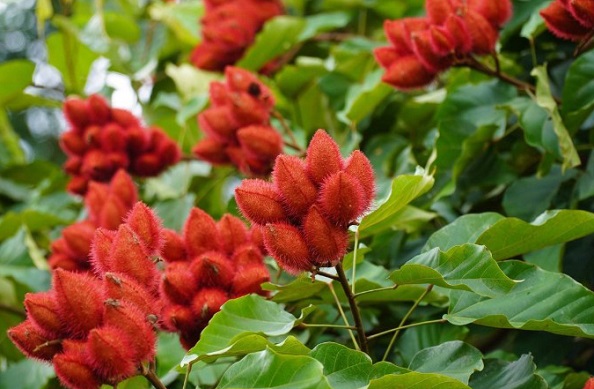 Natural annatto compounds reveal unexpected cell killing behavior in aggressive brain tumors
Why Glioblastoma Remains So Hard to Treat
Natural annatto compounds reveal unexpected cell killing behavior in aggressive brain tumors
Why Glioblastoma Remains So Hard to Treat
Glioblastoma is an aggressive brain tumor that grows rapidly and is extremely difficult to control with existing treatments such as surgery, radiation, and chemotherapy. Even with the best available care, many patients survive little more than a year after diagnosis. This harsh reality has pushed scientists worldwide to explore new strategies, including natural compounds that may influence cancer cell survival in unique ways.
The Natural Compounds Under Study
Bixin and norbixin come from the seeds of the annatto plant (Bixa orellana), which is commonly used as a natural food coloring. Although these compounds are already known for their antioxidant properties, their effects on brain cancer cells had not been clearly explored before this research. The study was carried out by scientists from the Biotechnology Center of the Energy and Nuclear Research Institute in São Paulo, Brazil, and the Industrial Biotechnology Laboratory of the Institute for Technological Research of the State of São Paulo.
How The Experiments Were Conducted
The researchers exposed human glioblastoma cells known as U87 MG cells to different concentrations of bixin and norbixin in controlled laboratory conditions. They carefully measured how many cells survived and whether the cells showed signs of apoptosis, a form of programmed cell death where damaged cells self-destruct rather than spreading further.
Key Findings That Caught Attention
One of the most striking discoveries was that bixin showed a dual effect. At lower doses, it briefly appeared to boost cell survival, a phenomenon scientists call a hormetic effect. However, once the dose increased beyond a certain point, bixin became strongly toxic to the cancer cells and triggered early apoptosis. This suggests that bixin pushes cancer cells past their stress limits, leading them to shut down.
Norbixin behaved very differently. It required much higher concentrations to achieve similar effects and caused cell death more slowly. This difference appears to be linked to how easily each compound can enter the cells. Bixin is more fat soluble, allowing it to cross cell membranes more efficiently than norbixin, which is water soluble.
This
Medical News report highlights that bixin caused visible changes in cancer cell shape, including shrinkage and membrane damage, which are classic signs of apoptosis. Importantly, the researchers found that ce
ll death signals appeared before overall cell metabolism collapsed, suggesting a targeted biological process rather than random toxicity.
What These Results Really Mean
The researchers stress that neither bixin nor norbixin should be considered cancer treatments at this stage. Instead, they may serve as useful molecular templates for designing future drugs that can selectively push cancer cells toward self-destruction while sparing healthy cells.
Conclusions
The findings demonstrate that small differences in chemical structure can lead to major changes in how cancer cells respond. Bixin, in particular, showed a unique ability to first stress and then kill glioblastoma cells through programmed death mechanisms. While the research is still at an early laboratory stage, it provides valuable insight into how natural compounds might be refined and studied further in the fight against one of the most lethal brain cancers.
The study findings were published on a preprint server and are currently being peer reviewed.
https://www.researchsquare.com/article/rs-8620168/v1
For the latest cancer research, keep on logging to Thailand
Medical News.
Read Also:
https://www.thailandmedical.news/articles/herbs-and-phytochemicals
https://www.thailandmedical.news/articles/cancer




 Share
Share
 Tweet
Tweet
 Share
Share