Nikhil Prasad Fact checked by:Thailand Medical News Team Feb 24, 2026 6 months, 6 days, 8 hours, 57 minutes ago
Medical News: Researchers are increasingly focusing on a surprising factor in breast cancer biology: vitamin B12, also known as cobalamin. A new scientific review has highlighted how breast cancer cells may depend on this essential vitamin to survive, grow, and sometimes resist treatment. The findings suggest that understanding how cancer uses vitamin B12 could open new doors for earlier diagnosis and more precise therapies.
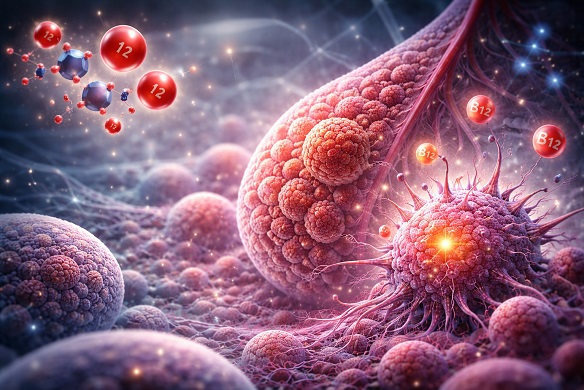 New research shows breast cancer cells may depend on vitamin B12, creating fresh opportunities for diagnosis
and targeted treatment
Why Vitamin B12 Is Important
Vitamin B12 plays a major role in keeping the human body healthy. It helps produce energy, supports DNA formation, and maintains normal cell function. Because the human body cannot produce this vitamin, it must come from dietary sources such as meat, fish, eggs, dairy products, or supplements. After entering the body, B12 passes through a complex absorption and transport system before reaching cells where it supports vital metabolic processes.
Scientists explain that cancer cells, including breast cancer cells, often alter their metabolism to meet the demands of rapid growth. In this case, researchers found that breast cancer cells appear to increase their ability to absorb vitamin B12. This suggests that tumors may rely on the vitamin as a metabolic fuel, helping them maintain fast cell division and survival.
Researchers And Institutions Behind the Study
The review was carried out by researchers from the Centro de Estudios e Investigación en Salud y Sociedad at Universidad Bernardo O’Higgins in Chile, the Colombian Network of Scientific Women in Colombia, and the Department of Drug Discovery and Biomedical Sciences at the College of Pharmacy, University of South Carolina in the United States.
How Breast Cancer Cells Use Vitamin B12
Researchers found that breast cancer cells express high levels of special receptors that help bring vitamin B12 into the cell. One receptor in particular, known as CD320, appears to be more active in aggressive breast cancer types, including triple-negative breast cancer. This suggests that the more aggressive the tumor, the more strongly it may depend on B12 metabolism.
In simple terms, cancer cells may become highly efficient at capturing vitamin B12 from the bloodstream. Once inside the cell, the vitamin supports pathways linked to DNA synthesis, cell growth, and energy production. Some studies also suggest that vitamin B12 may help cancer cells survive stressful conditions, including exposure to certain chemotherapy drugs, by protecting cellular structures involved in energy production.
New Possibilities for Diagnosis and Treatment
This
Medical News report highlights an exciting idea emerging from the research: if cancer cells naturally absorb vitamin B12, scientists may be able to use that pathway to their advantage. Researchers are experimenting with modified forms of B12 that can carry drugs or ima
ging substances directly into tumors.
Several early strategies include using vitamin B12 linked to imaging agents that help doctors detect tumors more clearly during scans. Other experimental approaches involve attaching chemotherapy compounds to B12 so that treatment is delivered more directly to cancer cells while potentially reducing harm to healthy tissue. Scientists are also studying therapies that target the B12 receptor itself, aiming to block cancer cells from accessing the nutrient they depend on.
The Bigger Picture and Remaining Questions
The research also connects vitamin B12 to a biochemical system called one-carbon metabolism, which influences DNA repair and gene regulation. Changes in this pathway may affect cancer risk and progression, suggesting that B12 metabolism could play a broader role in understanding how breast cancer develops and behaves.
However, researchers emphasize that much of the evidence is still based on laboratory studies and early research models. Large clinical trials are needed before these approaches can become standard treatment. Scientists also caution that high levels of vitamin B12 in the blood have sometimes been linked to worse outcomes in cancer patients, showing that the relationship between B12 and cancer is complex and requires careful study.
Conclusion
The growing body of research suggests that vitamin B12 metabolism is closely connected to breast cancer biology. By learning how tumors exploit this essential nutrient, scientists may be able to design smarter diagnostic tools and more targeted therapies that strike cancer cells where they are most vulnerable. While more human studies are needed, the idea of turning a basic nutrient pathway into a medical weapon represents an exciting and promising direction for future cancer care, offering hope that treatments could become both more effective and more precise for patients worldwide.
The study findings were published in the peer reviewed journal: Scientia Pharmaceutica.
https://www.mdpi.com/2218-0532/94/1/18
For the latest on breast cancer research, keep on logging to Thailand
Medical News.
Read Also:
https://www.thailandmedical.news/articles/cancer




 Share
Share
 Tweet
Tweet
 Share
Share

































