Nikhil Prasad Fact checked by:Thailand Medical News Team Jun 01, 2026 1 month, 3 weeks, 1 day, 17 hours, 33 minutes ago
Medical News: A new scientific hypothesis is offering a fresh perspective on one of the world's deadliest infectious diseases. Researchers are now suggesting that the devastating effects of Ebola virus disease may not be driven solely by the virus itself, but also by major disruptions in blood sugar regulation and vitamin C availability throughout the body.
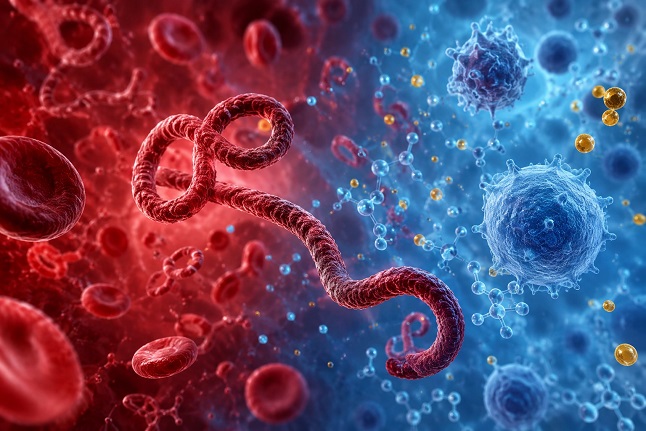 New research hypothesis suggests that disruptions in blood sugar regulation and vitamin C availability may be key
drivers of severe Ebola disease
The study, conducted by Ivan Chicano Wust, an independent researcher and student at the National Distance Education University (UNED) in Spain, proposes that glucose and vitamin C may play central roles in determining how severely Ebola affects infected individuals. While the theory still requires experimental confirmation, it provides a detailed biological explanation for many of the symptoms associated with Ebola hemorrhagic fever.
A Different Way of Looking at Ebola
For years, scientists have focused primarily on how Ebola enters cells through its surface glycoprotein. The new hypothesis goes further by examining what happens after the virus has already invaded the cell.
The study highlights the actions of several Ebola proteins, including VP24, VP35, VP40, and nucleoprotein (NP), which help the virus evade immune defenses and spread throughout the body. According to the researcher, these proteins work together to suppress interferons, a family of antiviral signaling molecules that normally help the immune system contain infections during their earliest stages.
By blocking interferon activity, Ebola may gain a significant advantage, allowing viral replication to continue unchecked while simultaneously weakening the body's natural defenses.
The Hidden Role of Blood Sugar
One of the most intriguing aspects of the hypothesis is the proposed role of glucose metabolism.
The researcher argues that Ebola may interfere with cellular systems involved in transporting glucose. This disruption could contribute to abnormal blood sugar levels, a condition that has been observed in many Ebola patients. Previous clinical data cited in the study showed that both severe hypoglycemia and hyperglycemia frequently occur during Ebola infection.
High blood sugar levels may be particularly dangerous. According to the hypothesis, excess glucose can trigger oxidative stress, increase inflammation, damage blood vessels, and impair immune function. Elevated glucose levels are also believed to activate inflammatory pathways such as NF-kB and stimulate the production of cytokines including IL-6, both of which are associated with severe disease outcomes.
The study suggests that these metabolic disturbances could help explain why Ebola patients often experience widespread tissue damage, circulatory problems, bleeding disorders, and multiple organ failure.
Why Vitamin C May Matter More Than Previously Thought
Vitamin C emerges as a key player in the new theory. The study explains that vitamin C and glucose compete for some of the same cellular tra
nsport systems. When blood glucose levels become excessively high, vitamin C uptake into cells may be reduced. This could leave tissues vulnerable to oxidative damage at precisely the time they need antioxidant protection the most.
Vitamin C performs numerous critical functions in the body. It helps maintain blood vessel integrity, supports immune cell activity, regulates inflammation, and protects cells from harmful reactive oxygen species.
The researcher proposes that reduced vitamin C availability during Ebola infection may contribute to the vascular damage and bleeding tendencies that characterize the disease. In some respects, the resulting damage may resemble a severe "scurvy-like" state affecting blood vessels and tissues.
This
Medical News report notes that the hypothesis also suggests vitamin C may enhance interferon activity, helping immune cells mount a more effective antiviral response despite the virus's efforts to suppress these defenses.
Could Vitamin C Even Interfere with Viral Spread?
One of the more fascinating observations discussed in the study involves Ebola's budding process, the mechanism by which newly formed virus particles leave infected cells.
According to the researcher, vitamin C may influence the redox state within cells and alter the behavior of viral proteins involved in budding. By affecting these molecular processes, vitamin C could potentially interfere with the efficient release and dissemination of new virus particles.
Although this possibility remains speculative, it highlights how metabolic factors may influence viral behavior in ways that extend beyond traditional immune responses.
New Possibilities for Supportive Care
The hypothesis proposes that managing glucose levels and maintaining adequate vitamin C and glutathione reserves could become important components of supportive Ebola treatment strategies.
Rather than targeting the virus directly, such approaches would focus on stabilizing the body's internal environment, reducing oxidative stress, protecting blood vessels, and supporting immune function. The researcher believes that maintaining normal glucose levels while preventing vitamin C depletion could potentially lessen some of the most dangerous complications associated with Ebola infection.
Conclusion
While this new hypothesis remains unproven and should not be viewed as an established treatment approach, it offers a compelling explanation for many of the biological events seen during Ebola infection. By connecting viral immune suppression with blood sugar abnormalities, oxidative stress, inflammation, and vitamin C depletion, the study presents a broader framework for understanding the disease. Future laboratory and clinical research will be needed to determine whether these metabolic mechanisms truly influence Ebola outcomes. If validated, the findings could eventually lead to new supportive therapies that complement antiviral treatments and improve survival in one of the world's most feared infectious diseases.
The study findings were published on a preprint server and are currently being peer-reviewed.
https://www.preprints.org/manuscript/202602.2035
For the latest on Ebola, keep on logging to Thailand
Medical News.
Read Also:
https://www.thailandmedical.news/articles/ebola




 Share
Share
 Tweet
Tweet
 Share
Share