Nikhil Prasad Fact checked by:Thailand Medical News Team Nov 24, 2026 17 minutes ago
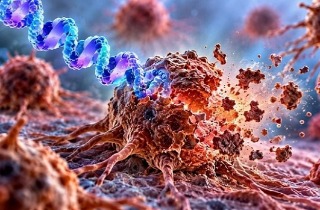
A naturally occurring compound found in honey, propolis, and passionflower has demonstrated promising anticancer activity by interfering with an enzyme that helps cancer cells multiply indefinitely. Scientists discovered that chrysin can suppress telomerase, reduce cancer cell survival, and push surviving malignant cells into a state resembling permanent cellular aging.
 Chrysin, a natural flavonoid, suppresses telomerase activity and triggers cellular aging in laboratory-grown lung and
cervical cancer cells.
The findings suggest a possible strategy for controlling cancer through two complementary mechanisms: eliminating some malignant cells while preventing others from continuing to divide.
The research involved scientists from Kakatiya University, Vaagdevi Pharmacy College, and St. Peter’s Institute of Pharmaceutical Sciences in India, alongside Newcastle University in the United Kingdom.
Targeting Cancer Cells’ Ability to Keep Dividing
Telomerase is an enzyme that maintains telomeres, protective structures at the ends of chromosomes. Although its activity is limited in most normal adult cells, many cancers reactivate telomerase to support continuous growth.
Researchers investigated whether chrysin could disrupt this process in A549 lung cancer cells and HeLa cervical cancer cells.
As highlighted in this
Thailand Medical News report, the investigation combined laboratory experiments with computer-based molecular modeling to examine chrysin’s effects on cancer cell survival, telomerase activity, and cellular senescence.
Cancer Cell Survival Falls Dramatically
The researchers exposed both cancer cell lines to chrysin concentrations ranging from 5 to 60 micromolar over 24, 48, and 72 hours.
At the highest concentration, lung cancer cell viability declined to 45.82% after 24 hours, 37.3% after 48 hours, and just 26.38% after 72 hours.
Cervical cancer cells showed even greater sensitivity, with viability falling to 41.13%, 34.53%, and 21.7% over the same periods.
The concentration required to reduce viability by half also decreased with prolonged exposure. After 72 hours, this concentration was 13.8 micromolar for lung cancer cells and 9.7 micromolar for cervical cancer cells.
These findings demonstrated that chrysin’s effects strengthened with increasing concentrations and longer treatment periods.
Surviving Cancer Cells Show Signs of Aging
An important discovery emerged when researchers examined cells that survived the initial treatment.
Seven days after exposure, many surviving cells displayed characteristics of senescence, including enlarged bodies, flattened shapes, and altered internal structures.
Senescence is a condition in which cells remain alive but stop dividing, potentially limiting further tumor growth.
>
Laboratory staining confirmed that the proportion of senescent cells increased with higher chrysin concentrations in both cancer cell lines.
The findings suggest chrysin may produce two distinct responses: early reductions in cancer cell viability followed by senescence among surviving cells.
Telomerase Suppression Reveals a Possible Mechanism
After 48 hours, chrysin significantly suppressed telomerase activity at higher concentrations in both cancer cell lines.
At 60 micromolar, telomerase activity dropped to approximately half of untreated levels in lung cancer cells and below half in cervical cancer cells.
Computer simulations further suggested that chrysin could interact with TERT, telomerase’s catalytic protein component. Molecular docking identified 26 protein contacts and produced a binding score of −53.79.
These findings support a possible connection between telomerase inhibition and cancer cell senescence, although direct binding remains unconfirmed experimentally.
Early Safety Findings Offer Encouragement
Chrysin showed no apparent toxicity in normal WI-38 lung fibroblasts during 48-hour testing.
Red blood cell damage remained relatively low, reaching 4% at the highest concentration tested.
Additional computational assessments suggested favorable drug-like characteristics, including predicted oral bioavailability. However, these predictions require experimental confirmation.
Conclusions and Future Implications
The findings identify chrysin as a promising experimental compound capable of reducing cancer cell viability, suppressing telomerase, and promoting senescence. Nevertheless, these results come from cultured cells and computer simulations, not clinical trials. Animal studies and human investigations are essential before its effectiveness, safety, or therapeutic potential can be established.
The study findings were published in the peer reviewed journal: International Journal of Molecular Sciences.
https://www.mdpi.com/1422-0067/27/22/10282
Read Also:
https://www.thailandmedical.news/articles/cancer
https://www.thailandmedical.news/articles/herbs-and-phytochemicals
Medical Disclaimer: All content published by Thailand Medical News is based on scientific research and is intended for informational and educational purposes only. It is not medical advice, diagnosis, or treatment. Readers must not attempt to use, apply, or experiment with any protocols, compounds, or therapies mentioned without first consulting a qualified and licensed medical doctor. Many findings discussed are experimental or preliminary, and only a licensed healthcare professional can determine what is safe and appropriate for an individual’s specific medical condition.




 Share
 Tweet
 Share