Nikhil Prasad Fact checked by:Thailand Medical News Team May 06, 2026 4 months, 4 weeks, 1 day, 3 hours, 53 minutes ago
Medical News: Researchers from Türkiye have developed a promising pomegranate-based nanotherapy that could help combat dangerous drug-resistant Candida infections, a growing global health concern that has become increasingly difficult to treat with existing antifungal medications.
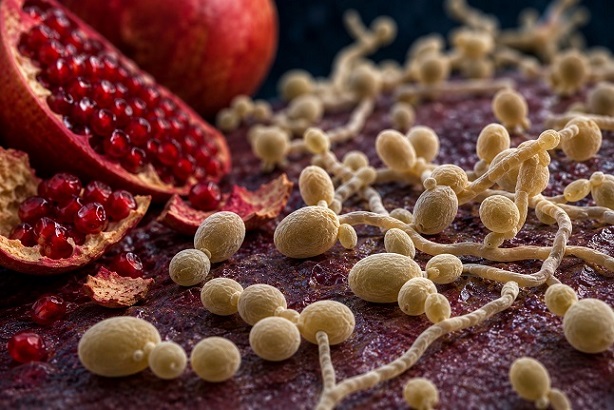 Turkish researchers develop a pomegranate nanoparticle therapy that shows potent activity against dangerous Candida fungi
The new study focused on combining pomegranate peel extract with chitosan nanoparticles to create a more powerful antifungal formulation capable of targeting multiple Candida species, including strains associated with resistance to commonly used antifungal drugs.
The research was conducted by scientists from the Department of Medical Microbiology, Faculty of Medicine, Recep Tayyip Erdogan University, the Department of Bioengineering, Faculty of Engineering and Architecture, Recep Tayyip Erdogan University, and the Faculty of Medicine at Recep Tayyip Erdogan University in Rize, Türkiye.
Candida Infections Becoming More Dangerous
Candida fungi are among the most important fungal pathogens affecting humans. While many Candida infections begin as mild oral or vaginal infections, they can become life-threatening once they spread into the bloodstream or internal organs.
Hospitalized patients, intensive care patients, cancer patients, transplant recipients, and individuals with weakened immune systems are especially vulnerable. According to the study, invasive candidiasis causes hundreds of thousands of severe infections annually and is associated with mortality rates that can reach as high as 72 percent in some patient groups.
The situation has become more concerning because several Candida species are developing resistance to frontline antifungal drugs. Species such as Candida glabrata, Candida tropicalis, and Candida parapsilosis are now considered high-priority fungal threats due to their increasing resistance profiles.
Why Researchers Turned to Pomegranate
Pomegranate peel is rich in biologically active phytochemical compounds known as polyphenols. Scientists identified extremely high levels of punicalagin compounds in the peel extract, together with ellagic acid, chlorogenic acid, gallic acid, quercetin, catechin, and other antioxidant compounds known to possess antimicrobial activity.
However, one major limitation of plant extracts is that they often degrade rapidly and may not penetrate tissues efficiently. To solve this issue, researchers encapsulated the pomegranate peel extract inside chitosan nanoparticles. Chitosan is a biodegradable material derived from chitin and is already known for its antimicrobial properties. The nanoparticles measured around 325 nanometers and carried a strong positive electrical charge that allowed them to bind more effectively to fungal cell walls.
Strong Antifungal Effects Observed
The researchers tested the formulation against five important Candida species: Candida albicans, Candida glabrata, Candida kefyr, Candida parapsilosis, and Candida tropicalis.
The nanoparticle-coated formulation demon
strated significantly enhanced antifungal activity compared to ordinary pomegranate peel extract alone. In several cases, the nanoformulation reduced the amount of extract needed to inhibit fungal growth by half.
Against Candida albicans, the minimum inhibitory concentration dropped from 8 micrograms per milliliter to 4 micrograms per milliliter after nanoparticle encapsulation. The minimum fungicidal concentration also dropped from 16 to 8 micrograms per milliliter. Similar improvements were observed against Candida parapsilosis and Candida tropicalis.
The formulation also produced larger inhibition zones than amphotericin B against several Candida species. Amphotericin B is considered one of the strongest hospital antifungal drugs currently available.
Researchers noted that the nanoparticle system appeared especially effective because the positively charged chitosan particles strongly interacted with negatively charged fungal cell membranes, disrupting fungal integrity and improving delivery of the active pomegranate compounds.
Microscopic Imaging Revealed Major Structural Changes
Scanning electron microscopy revealed dramatic physical differences between ordinary chitosan nanoparticles and the pomegranate-coated version.
The coated nanoparticles appeared smoother, more compact, and more uniform, with tiny nanometer-scale pore structures distributed across their surfaces. Scientists said these structural changes confirmed successful encapsulation of the pomegranate extract and likely contributed to the stronger antifungal activity observed in laboratory testing.
This
Medical News report notes that the nanoparticle formulation also demonstrated fungicidal activity rather than merely fungistatic effects. This distinction is clinically important because fungicidal therapies actually kill fungal cells instead of simply slowing their growth, an important factor in severe bloodstream infections.
Conclusions
The findings suggest that pomegranate-based nanotherapies could eventually emerge as promising complementary treatments for difficult Candida infections, especially as antifungal resistance continues rising worldwide. The study demonstrated that nanoencapsulation substantially boosted the antifungal power of pomegranate peel extract while improving its fungicidal effects against several medically important Candida species.
Researchers cautioned that the experiments were conducted entirely in laboratory settings and that additional animal studies, toxicity evaluations, and human clinical trials are still needed before the formulation could move toward medical use. Nevertheless, the study provides growing evidence that combining plant-derived compounds with nanotechnology may help create safer and more effective future antifungal therapies capable of addressing the growing crisis of drug-resistant fungal infections.
The study findings were published in the peer reviewed International Journal of Molecular Sciences.
https://www.mdpi.com/1422-0067/27/9/4127
For the latest on Herbs and Phytochemicals, keep on logging to Thailand
Medical News.
Read Also:
https://www.thailandmedical.news/articles/herbs-and-phytochemicals




 Share
Share
 Tweet
Tweet
 Share
Share

































