Copper Cell Death Discovery Raises New Questions About Alzheimer’s, Parkinson’s and ALS
Nikhil Prasad Fact checked by:Thailand Medical News Team Jul 12, 2026 1 month, 3 weeks, 7 hours, 55 minutes ago
Medical News: Researchers Explore How Copper Imbalance May Drive Brain Diseases
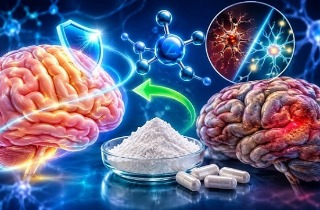
Scientists are taking a closer look at how disruptions in the body’s copper balance could contribute to devastating brain disorders such as Alzheimer’s disease, Parkinson’s disease, and amyotrophic lateral sclerosis (ALS). A new review suggests that a recently identified form of cell death called cuproptosis may help explain why nerve cells become damaged in these conditions, although researchers stress that much remains to be proven.
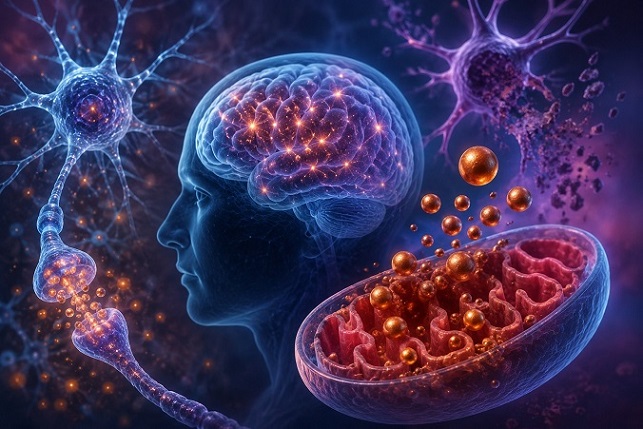 Scientists uncover growing evidence that disrupted copper balance and cuproptosis may contribute to the progression
of major neurodegenerative diseases
The research was conducted by scientists from Shandong Second Medical University in Weifang, China, and Brigham and Women’s Hospital, Harvard Medical School in Boston, Massachusetts, USA.
Why Copper Is Both Essential and Dangerous
Copper is an essential mineral that helps the brain produce energy, defend against harmful molecules, and support healthy nerve communication. Normally, the body tightly controls copper levels using specialized transport and storage systems.
Problems begin when this balance is disturbed. Too much free copper can become toxic, while too little can interfere with vital biological functions. According to the review, both copper overload and copper deficiency have been linked to damage in brain cells, making proper copper regulation crucial for long-term brain health.
A New Type of Cell Death
One of the most exciting developments discussed is cuproptosis, a newly recognized form of regulated cell death. Unlike other forms of cell death, cuproptosis occurs when excess copper accumulates inside mitochondria—the tiny energy-producing structures within cells.
This
Medical News report highlights that excess copper binds to important mitochondrial proteins involved in energy production. These proteins begin to clump together while essential iron-sulfur proteins break down, disrupting cellular energy generation. The result is severe mitochondrial failure, toxic protein accumulation, oxidative damage, and ultimately the death of vulnerable nerve cells.
Researchers also found that cells relying heavily on mitochondrial energy production appear especially sensitive to this process.
Links to Alzheimer’s, Parkinson’s and ALS
The review summarizes growing evidence that copper imbalance contributes to all three major neurodegenerative diseases through multiple pathways.
In Alzheimer’s disease, abnormal copper levels appear to encourage the buildup of amyloid-beta plaques and tau protein tangles while increasing inflammation and oxidative stress. Both excessive and insufficient copper may worsen disease progression.
In Parkinson’s disease, copper interacts with alpha-synu
clein, encouraging the protein to misfold and form toxic clumps that damage dopamine-producing neurons. Reduced antioxidant protection further increases vulnerability to cellular injury.
For ALS, disturbed copper metabolism affects the activity of SOD1 and other proteins that normally protect nerve cells. Changes in copper handling may accelerate motor neuron degeneration and disease progression.
Importantly, the researchers emphasize that although many cuproptosis-related genes are altered in these diseases, direct proof that cuproptosis itself causes widespread neuron loss is still limited.
Potential Treatments Under Investigation
Several experimental strategies aim to restore healthy copper balance. Copper-chelating drugs such as clioquinol, trientine, tetrathiomolybdate, and D-penicillamine are being investigated for reducing harmful copper accumulation.
Other approaches include copper-delivering compounds such as CuIIATSM, natural compounds, and therapies targeting proteins involved in copper transport and mitochondrial function.
Many of these treatments have shown encouraging results in laboratory and animal studies, but larger human clinical trials are still needed before they can become standard therapies.
Conclusion
The review provides compelling evidence that copper homeostasis plays a far greater role in brain health than previously appreciated, while cuproptosis offers an intriguing new biological mechanism that could eventually transform how neurodegenerative diseases are understood and treated if future studies confirm its direct involvement.
The study findings were published in the peer reviewed journal: Cells.
https://www.mdpi.com/2073-4409/15/14/1238
For the latest news on cuproptosis, keep on logging to Thailand
Medical News.
Read Also:
https://www.thailandmedical.news/articles/alzheimer,-dementia-




 Share
Share
 Tweet
Tweet
 Share
Share