Nikhil Prasad Fact checked by:Thailand Medical News Team Jun 19, 2026 3 months, 2 weeks, 1 day, 2 hours, 54 minutes ago
Medical News: High blood pressure remains one of the world’s biggest health threats, affecting an estimated 1.4 billion adults and contributing to heart disease, stroke, kidney damage, and premature death.
While existing medications help millions of people control their blood pressure, many can cause unwanted side effects or may not work equally well for everyone. Scientists are therefore searching for new and safer treatment options, and a surprising source has now emerged from the ocean.
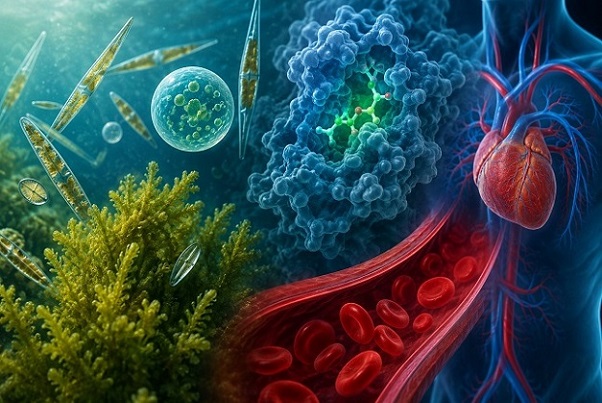 Scientists discover several marine microalgae compounds that may one day help fight high blood pressure through
ACE inhibition and vascular protection
Researchers from the Universidad Autónoma de Sinaloa, the Centro de Investigación y de Estudios Avanzados del Instituto Politécnico Nacional (CINVESTAV), and the Center for Scientific Research and Higher Education of Ensenada (CICESE) in Mexico have identified several compounds from the marine microalga Phaeodactylum tricornutum that could potentially help lower blood pressure.
Tiny Marine Organism with Big Potential
The study focused on Phaeodactylum tricornutum, a microscopic marine diatom known for producing a wide variety of biologically active molecules. The research team cultivated the microalga, extracted its chemical compounds, and then analyzed them using advanced metabolomic technologies capable of detecting hundreds of different molecules.
The scientists identified 662 chemical signals and narrowed these down to 162 promising compounds for further investigation.
Instead of immediately conducting laboratory or animal testing, the team used sophisticated computer-based techniques to predict how these compounds might interact with angiotensin-converting enzyme (ACE), a key target in blood pressure regulation.
ACE plays a crucial role in producing angiotensin II, a powerful substance that causes blood vessels to narrow and blood pressure to rise. Many commonly prescribed blood pressure drugs work by blocking this enzyme.
Several Compounds Showed Strong ACE Binding
Among the 162 compounds examined, several stood out for their ability to bind strongly to the ACE enzyme. The most promising candidates included Lehualide G, Val-Asn-Pro, Tanariflavanone B, Hydroxyterbinafine, and Anhydrovitamin A.
Computer simulations showed that these compounds could fit into the enzyme’s active site in a manner similar to established ACE-inhibiting drugs such as enalapril, lisinopril, and captopril. Some compounds also interacted with critical regions of the enzyme involved in its biological activity, suggesting they may be capable of reducing ACE function.
Importantly, the researchers found that compounds such as Hydroxyterbinafine and 3-hydroxylinoleoylcarnitine formed multiple interactions within the enzyme’s catalytic region, increasing confidence in their potential effectiveness.
Additional Signs of Cardiovascular Benefits
This
gt;Medical News report notes that the study went beyond enzyme binding and also evaluated whether the compounds might possess broader cardiovascular benefits.
One molecule, 3-hydroxylinoleoylcarnitine, emerged as particularly interesting. It showed strong predicted vasodilatory activity, meaning it may help blood vessels relax and widen. Other compounds, including Gingerdione, Lehualide G, and certain pyran derivatives, also demonstrated encouraging predictions related to blood vessel function and blood pressure control.
The team additionally assessed factors such as oral absorption, solubility, toxicity, and metabolic behavior. Many of the compounds showed favorable characteristics, including good predicted absorption and acceptable safety profiles.
Conclusions
The findings suggest that marine microalgae may represent an untapped source of future blood pressure treatments. Although the results are based on computational modeling and still require laboratory and clinical validation, several compounds identified in Phaeodactylum tricornutum displayed characteristics comparable to existing ACE inhibitors while also showing promising safety and pharmacological properties. These discoveries could help guide the development of a new generation of antihypertensive drugs derived from marine resources.
The study findings were published in the peer reviewed journal: Scientia Pharmaceutica.
https://www.mdpi.com/2218-0532/94/2/43
For the latest herbs and phytochemicals, keep on logging to Thailand
Medical News.
Read
Also:
https://www.thailandmedical.news/articles/herbs-and-phytochemicals




 Share
Share
 Tweet
Tweet
 Share
Share

































