Nikhil Prasad Fact checked by:Thailand Medical News Team Jan 19, 2026 8 months, 2 weeks, 2 days, 5 hours, 24 minutes ago
Medical News: A team of Japanese researchers has uncovered surprising evidence that common flavor and fragrance ingredients, especially those derived from cinnamon, may help reduce the risk of SARS-CoV-2 infection. The findings suggest that everyday food-related aromas could one day play a supportive role in limiting the spread of COVID-19, particularly through the mouth and upper respiratory tract.
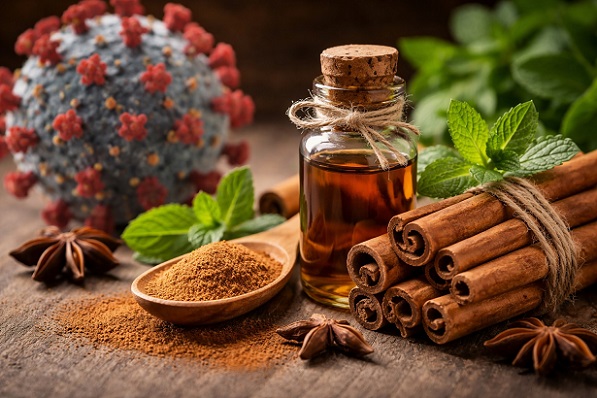 Cinnamon based food fragrances may help reduce coronavirus infection at its earliest entry point
Researchers And Institutions Behind the Study
Cinnamon based food fragrances may help reduce coronavirus infection at its earliest entry point
Researchers And Institutions Behind the Study
The research was conducted by Japanese scientists from the Department of Microbiology and Immunology at Nihon University School of Dentistry at Matsudo, the Department of Bacteriology I at the National Institute of Infectious Diseases in Tokyo, and the Department of Orthodontics at Nihon University Dental School at Matsudo in Chiba, Japan. Their work focused on simple, affordable strategies that could complement existing prevention methods.
Why New Preventive Ideas Are Still Needed
Although vaccines and basic hygiene measures have greatly reduced severe illness, COVID-19 continues to spread due to new variants and silent transmission by people without symptoms. Many infections begin in the oral cavity, where the virus attaches to a protein called ACE2 found in saliva glands and mouth tissues. This
Medical News report highlights how targeting this early stage of infection could be crucial in reducing transmission in daily life.
How Fragrances Were Tested Against the Virus
The scientists examined several well-known flavor and fragrance compounds to see if they could block the virus from infecting cells. In laboratory experiments, SARS-CoV-2 was mixed with different fragrance solutions and then added to cultured cells commonly used for virus research. The goal was to see whether these compounds could stop the virus from entering and damaging the cells.
Cinnamon Based Flavors Stand Out
Most of the tested fragrance compounds showed strong ability to reduce viral infection at certain concentrations. Among them, cinnamon flavor and cinnamon mint were especially effective, maintaining their protective effect even at lower doses compared to other compounds. Importantly, further testing confirmed that these fragrances did not harm the cells themselves, meaning the antiviral effect was not due to toxicity.
What Makes These Findings Important?
The researchers believe these fragrances may interfere with the physical process the virus uses to bind to human cells. Since the mouth is a major entry point for infection, foods or products containing such flavor compounds could potentially help lower the amount of virus in saliva and reduce spread, especially from people who do not yet feel sick.
Looking Toward Everyday Applications
The study also discusses how these findings could inspire new preventive habits. Products like candies, oral pastes,
or specially designed foods might one day deliver sufficient amounts of these beneficial flavor compounds. However, more work is needed to improve how these substances dissolve and remain active in real-life products.
Conclusions
Overall, the research suggests that cinnamon flavor and cinnamon mint could become part of simple, low-cost strategies to help reduce SARS-CoV-2 transmission. While not a replacement for vaccines or masks, such approaches may add another layer of protection in daily life, especially as new variants continue to emerge and long-term effects of infection remain a concern.
The study findings were published in the peer reviewed journal: Current Research in Microbial Sciences.
https://www.sciencedirect.com/science/article/pii/S2666517424001184
For the latest COVID-19 News, keep on logging to Thailand
Medical News.
Read Also:
https://www.thailandmedical.news/articles/coronavirus
https://www.thailandmedical.news/articles/herbs-and-phytochemicals




 Share
Share
 Tweet
Tweet
 Share
Share

































