Nikhil Prasad Fact checked by:Thailand Medical News Team Feb 10, 2026 7 months, 3 weeks, 1 day, 3 hours, 20 minutes ago
Medical News: Cancer remains one of the most pressing global health challenges of the modern era, affecting millions of individuals each year and placing immense strain on healthcare systems worldwide. Despite remarkable advances in surgery, chemotherapy, radiation therapy, immunotherapy, and precision medicine, cancer continues to claim lives at an alarming rate. Scientists are now increasingly turning their attention to a powerful but often underestimated source of medical innovation: nature itself. A newly published Special Issue in the International Journal of Molecular Sciences brings together cutting-edge research showing how compounds derived from plants, fungi, and everyday foods may help shape the next generation of cancer therapies.
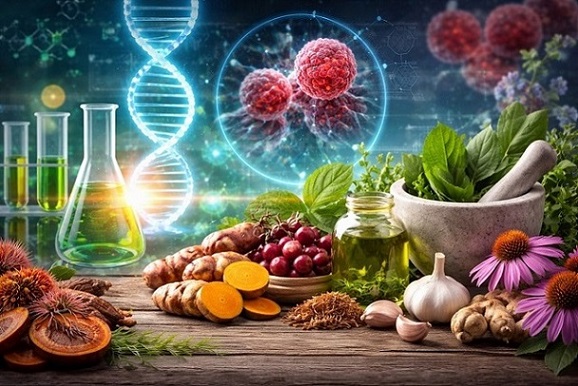 Scientists reveal how plant fungal and food-based compounds combined with modern technology could
reshape cancer therapy worldwide
A Renewed Focus on Nature in Cancer Drug Discovery
For centuries, traditional medicine systems relied on plants and natural substances to treat illness. Modern science has since validated many of these remedies, with some of today’s most effective cancer drugs originally sourced from nature. Paclitaxel, derived from the bark of the Pacific yew tree, revolutionized the treatment of breast and ovarian cancers. Vincristine, isolated from the Madagascar periwinkle, became a cornerstone therapy for childhood leukemia. These successes have encouraged researchers to revisit nature with modern scientific tools.
This
Medical News report highlights how scientists are now combining natural compounds with advanced technologies such as nanotechnology, molecular screening, and computational modeling. The goal is not to replace existing treatments, but to improve their effectiveness, reduce toxicity, and overcome drug resistance, which remains a major obstacle in cancer care.
Why Natural Compounds Offer Unique Advantages
Cancer is not a single disease but a complex group of disorders involving uncontrolled cell growth, genetic instability, immune evasion, and altered metabolism. Synthetic drugs often target one specific pathway, which cancer cells can eventually bypass. Natural compounds, however, tend to act on multiple cellular pathways simultaneously. This multi-target approach makes it harder for cancer cells to adapt and survive.
In addition, many natural compounds show selective toxicity, meaning they harm cancer cells while sparing healthy ones. This is especially important for improving patient quality of life, as conventional chemotherapy often damages rapidly dividing healthy cells in the gut, hair follicles, and bone marrow.
Nanotechnology Unlocks the Full Potential of Natural Drugs
One of the most exciting developments highlighted in the Special Issue is the use of nanotechnology to enhance natural cancer therapies. Nanoparticles are ultra-small carriers that can transport drugs directly to tumor sites, improving absorption and reducing side effects.
In one notable study, researchers developed solid
lipid nanoparticles loaded with a chlorophyll-derived compound used in photodynamic therapy. Photodynamic therapy works by activating a drug with a specific wavelength of light, triggering the production of toxic oxygen molecules that kill cancer cells. While effective, traditional photodynamic agents often suffer from poor stability and limited targeting ability.
By encapsulating the compound inside lipid nanoparticles, researchers achieved sustained drug release and precise control over activation. Laboratory tests showed no toxicity in the absence of light, but significant cancer cell death once activated. Cervical cancer and lung cancer cells were particularly sensitive, demonstrating how nanotechnology can dramatically enhance the safety and effectiveness of natural therapies.
Plant Extracts That Kill Cancer Cells Without Harming Healthy Tissue
Another major area of investigation involved screening plant extracts for anticancer activity. One study examined extracts from sea buckthorn roots, a plant long used in traditional medicine across Europe and Asia. Researchers discovered that the extracts significantly reduced the survival of head and neck cancer cells while leaving healthy human stem cells largely unaffected.
Further analysis revealed a two-stage process. First, cancer cell growth slowed as key regulatory pathways were disrupted. Then, the cells entered apoptosis, a form of programmed cell death. Importantly, this effect was not observed in normal cells, suggesting a high level of selectivity. Chemical analysis identified flavonoid compounds as the primary active agents, reinforcing growing evidence that flavonoids play an important role in cancer prevention and treatment.
Forcing Cancer Cells to Grow Up and Stop Dividing
A particularly innovative study focused on differentiation therapy, an approach that aims to transform cancer cells into mature, non-cancerous cells instead of killing them outright. This strategy is especially relevant for blood cancers such as acute myeloid leukemia, where immature cells multiply uncontrollably.
Researchers screened 200 plant extracts to identify compounds capable of triggering differentiation. An extract from Adina rubella emerged as the most effective. In laboratory experiments, leukemia cells treated with the extract showed clear signs of maturation and lost their ability to proliferate aggressively. The process was linked to controlled mitochondrial stress and increased expression of cell-cycle regulating proteins.
Advanced chemical analysis identified Picroside III as the main compound responsible. This finding offers a promising lead for the development of new leukemia therapies that may be less toxic than conventional chemotherapy.
Fungal Proteins Reveal Powerful Anti-Cancer Effects
Beyond plants, fungi are emerging as an important source of anticancer compounds. One study explored a newly discovered immunomodulatory protein derived from Ganoderma leucocontextum, a mushroom species found in the Tibetan Plateau.
The recombinant form of this protein significantly inhibited the growth of melanoma cells in laboratory studies. It also reduced melanin production, which is often linked to aggressive tumor behavior. Molecular analysis showed that the protein interfered with critical signaling pathways involved in cancer cell survival and spread. These findings suggest fungal proteins could form the basis of future biologic cancer therapies.
Mistletoe Lectin and The Tumor Immune Environment
Another study examined mistletoe lectin, a plant-derived protein already used as a complementary therapy in parts of Europe. Researchers investigated its effects in both traditional two-dimensional cell cultures and advanced three-dimensional tumor models that better mimic real tumors.
The results showed that mistletoe lectin increased breast cancer cell death while also reshaping the immune environment around the tumor. It encouraged immune cells known as macrophages to adopt a cancer-fighting role rather than a tumor-supporting one. This dual action is significant, as modern oncology increasingly focuses on therapies that both attack cancer cells and activate the immune system.
Natural Compounds Target DNA Repair Pathways
The Special Issue also reviewed natural compounds capable of inhibiting PARP enzymes, which help cancer cells repair damaged DNA. PARP inhibitors are already used in the treatment of breast, ovarian, and prostate cancers, but they often cause side effects and face resistance issues.
Natural compounds such as genistein from soy, quercetin from fruits and vegetables, and ellagic acid from berries showed PARP-inhibiting activity comparable to some synthetic drugs in laboratory models. Researchers proposed combining these compounds with nanoparticle delivery systems to improve absorption and reduce toxicity, opening new possibilities for combination therapies.
A Strong Warning on Herb and Drug Interactions
While the findings are promising, researchers also issued an important warning. A study on garlic extract revealed that, although it reduced the growth of certain prostate cancer cells, it interfered with standard cancer treatments including chemotherapy, hormone therapy, and targeted drugs.
The garlic extract increased the activity of liver enzymes responsible for drug metabolism, leading to reduced effectiveness of prescribed cancer medications. This highlights a critical message for patients: natural supplements should never be taken alongside cancer treatments without medical supervision.
Conclusions
Taken together, the research presented in this Special Issue underscores the vast and largely untapped potential of natural products in cancer drug discovery. By integrating traditional knowledge with advanced scientific technologies, researchers are uncovering safer, more effective, and more targeted approaches to cancer treatment. However, rigorous clinical testing and careful evaluation of drug interactions remain essential before these therapies can be widely adopted.
The South Korean researchers involved in these studies are affiliated with institutions including Sunchon National University, the Smart Beautytech Research Institute, the Research Institute of Life and Pharmaceutical Sciences, and numerous universities and research centers across Asia and Europe.
The study findings were published in the peer reviewed International Journal of Molecular Sciences.
https://www.mdpi.com/1422-0067/27/4/1675
For the latest on cancer research, keep on logging to Thailand
Medical News.
Read Also:
https://www.thailandmedical.news/articles/cancer
https://www.thailandmedical.news/articles/herbs-and-phytochemicals




 Share
Share
 Tweet
Tweet
 Share
Share

































