Nikhil Prasad Fact checked by:Thailand Medical News Team Oct 20, 2026 29 minutes ago
New research from Brazil has uncovered evidence that blood vessel dysfunction may persist for more than three years after COVID-19 infection, potentially explaining why some Long COVID patients continue experiencing severe fatigue, breathlessness, and difficulty exercising despite maintaining normal heart pumping function.
 Brazilian researchers identify persistent blood vessel dysfunction associated with reduced exercise capacity three years after
COVID-19 infection, despite preserved cardiac pumping function
The findings suggest that impaired blood circulation and reduced vascular responsiveness, rather than weakened heart muscle performance, could contribute significantly to prolonged exercise intolerance.
Researchers from the University of Brasília, Federal University of Rio Grande do Sul, and Hospital de Clínicas de Porto Alegre conducted the investigation.
Examining Long COVID Three Years After Infection
The study involved 21 adults aged 35 to 68, including 10 individuals with Long COVID and 11 previously infected participants without persistent symptoms.
Researchers conducted cardiopulmonary exercise tests, advanced cardiac ultrasound examinations, and assessments of endothelial function.
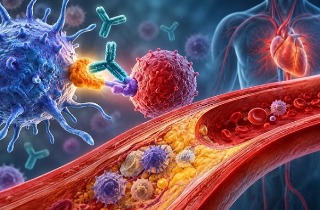
The endothelium is the thin cellular lining of blood vessels responsible for regulating vascular relaxation and blood flow.
As highlighted in this
Thailand Medical News report, researchers specifically investigated whether impaired endothelial function was associated with reduced exercise capacity despite preserved myocardial work.
Exercise Capacity Remained Significantly Reduced
Participants with Long COVID demonstrated substantially poorer aerobic fitness. Average peak oxygen consumption reached just 19.6 mL/kg/min, compared with 24.3 mL/kg/min among controls, representing approximately 19% lower exercise capacity.
Long COVID participants achieved only 61.1% of their predicted peak oxygen consumption, compared with 77% among controls.
Oxygen consumption at the first ventilatory threshold was similarly reduced, measuring 11.0 versus 13.7 mL/kg/min.
These findings indicate limitations during both demanding physical activity and lower-intensity exercise.
Persistent fatigue affected 60% of Long COVID participants, while 50% reported exercise intolerance and 40% experienced breathlessness.
Blood Vessel Dysfunction Emerges as a Major Finding
Researchers identified significantly impaired flow-mediated dilation, a measurement of how effectively arteries expand following increased blood flow.
Endothelial responsiveness was substantially reduced in Long COVID participants (p < 0.001).
Peak shear rate, reflecting blood-flow-related stimulation of vessel walls, was also lower (p = 0.01).
Additional measurements demonstrated reduced cumulative shear stimulation (p = 0.04)
and stimulation preceding maximum arterial dilation (p = 0.001).
Importantly, better endothelial function correlated with greater peak oxygen consumption (r = 0.68) and predicted exercise capacity (r = 0.64).
These relationships suggest that vascular abnormalities may interfere with oxygen delivery to working muscles.
Heart Pumping Function Remained Preserved
Despite substantial exercise limitations, advanced echocardiography revealed no statistically significant differences in myocardial work or conventional cardiac measurements.
Both groups demonstrated an average left ventricular ejection fraction of 69%. This suggests that peripheral vascular dysfunction may contribute more prominently to exercise intolerance than impaired resting cardiac pumping performance.
Conclusions and Clinical Implications
The findings indicate that endothelial dysfunction and reduced vascular responsiveness can persist approximately three years after COVID-19 infection, potentially contributing to prolonged exercise intolerance despite preserved myocardial work.
However, the small observational study cannot establish causation or confirm structural blood vessel damage. Larger studies must determine whether improving vascular function can restore exercise capacity and reduce persistent Long COVID symptoms.
The study findings were published in the peer reviewed journal: Physiological Reports.
https://physoc.onlinelibrary.wiley.com/doi/10.14814/phy2.71103
Read Also:
https://www.thailandmedical.news/articles/long-covid 



 Share
 Tweet
 Share