Nikhil Prasad Fact checked by:Thailand Medical News Team Mar 05, 2026 6 months, 4 weeks, 1 day, 16 hours, 54 minutes ago
Medical News: Scientists are now uncovering how tiny power stations inside our cells could hold the key to preventing major diseases such as cancer, diabetes, and Alzheimer’s. A major new scientific review is shedding light on how the “Krebs cycle,” also known as the citric acid cycle, is controlled not only by our genes but also by what we eat.
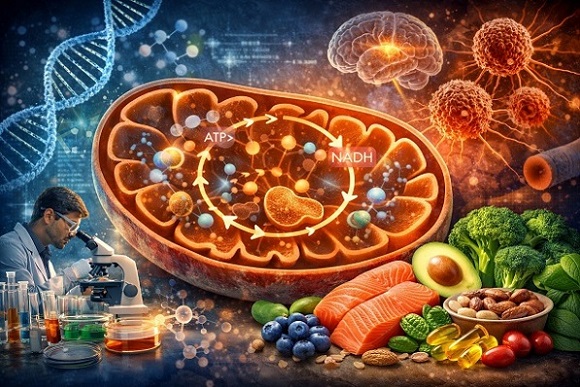 New research reveals how genes and nutrients control the body’s core energy cycle and influence major diseases
Researchers from the DNA Sequencing and Genomics Laboratory, Food Technology Institute, Institute of NBICS-Technologies, Department of TNSMD Theory and Methods, and Laboratory of Biocatalysis at Kemerovo State University in Russia have published an extensive review exploring how genes and nutrition interact to influence this critical energy-producing system.
The Body’s Hidden Energy Engine
The Krebs cycle takes place inside mitochondria, which are often described as the power plants of our cells. This cycle helps convert food into energy in the form of ATP, which fuels everything from breathing and thinking to muscle movement.
When the cycle functions properly, cells maintain balance and health. But when it is disrupted, problems begin. The researchers explain that disturbances in this cycle are linked to obesity, type 2 diabetes, cardiovascular disease, neurodegenerative disorders like Parkinson’s and Alzheimer’s, and even cancer.
The review analyzed 45 years of global research and identified key genes that control the enzymes of the Krebs cycle. These genes include ACO2, IDH1, IDH2, FH, SDH, MDH, and others that regulate different stages of energy production.
Genetic Changes That Raise Disease Risk
The study highlights specific genetic mutations that may increase disease risk. Variants in the ACO2 gene, such as Arg18Trp and Ser87Leu, have been associated with neurodegenerative conditions.
Meanwhile, mutations in IDH1 and IDH2 genes can lead to the production of a harmful substance called 2-hydroxyglutarate, which can promote tumor growth by altering how genes are switched on or off.
Mutations in the FH gene may cause a buildup of fumarate, another molecule linked to cancer development. According to this
Medical News report, these so-called “oncometabolites” can interfere with normal gene regulation through epigenetic changes—chemical modifications that affect gene activity without altering the DNA sequence itself.
How Diet Influences Gene Activity
One of the most fascinating discoveries is that nutrition can directly affect how Krebs cycle genes behave. Certain nutrients act as helpers or regulators of the enzymes involved.
Magnesium supports several key enzymes in the cycle and helps maintain stability. Riboflavin (vitamin B2) assists in energy reactions, while nicotinamide (vitamin B3) increases NAD+ levels, a molecule essential for energy metabolism.
Omega-3 fatty acids were shown to improve mitochondrial function and reduce inflammation in obese individuals. Compounds like resveratrol, curcumin, quercetin, arginine, leucine, and alpha-lipoic acid activate pathways that enhance mitochondrial biogenesis and energy output.
However, the researchers caution that some of these compounds have low bioavailability, meaning the body may not absorb them efficiently without improved delivery methods.
A New Direction in Preventive Medicine
The findings suggest that personalized nutrition based on genetic makeup—known as nutrigenetics—could help reduce the risk of chronic diseases by supporting mitochondrial health. Understanding which genetic variations a person carries may one day guide tailored dietary strategies to maintain optimal energy metabolism.
Conclusion
This comprehensive review makes it clear that the Krebs cycle is far more than a basic biology concept learned in school. It is a central hub connecting genes, metabolism, aging, and chronic disease. The research emphasizes that while genetic mutations may increase vulnerability to illness, lifestyle and dietary choices play a powerful role in modifying risk. By targeting mitochondrial function through proper nutrition and understanding genetic differences, future preventive strategies could significantly reduce the global burden of metabolic, neurodegenerative, and oncological diseases. Continued interdisciplinary research will be crucial in turning these insights into practical clinical solutions.
The study findings were published in the peer reviewed International Journal of Molecular Sciences.
https://www.mdpi.com/1422-0067/27/5/2360
For the latest health news, keep on logging to Thailand
Medical News.
Read Also:
https://www.thailandmedical.news/articles/diets-and-nutrition
https://www.thailandmedical.news/articles/health-news




 Share
Share
 Tweet
Tweet
 Share
Share

































