Nikhil Prasad Fact checked by:Thailand Medical News Team Apr 26, 2026 5 months, 1 week, 23 hours, 26 minutes ago
Medical News: Hidden Quality Crisis in Popular Supplements
Bromelain, a natural enzyme extracted from pineapple, has long been promoted for its anti-inflammatory and healing benefits. It is commonly found in dietary supplements used for reducing swelling, boosting immunity, and aiding recovery. However, a new scientific investigation has uncovered a troubling reality - many bromelain products on the market may not contain what they claim.
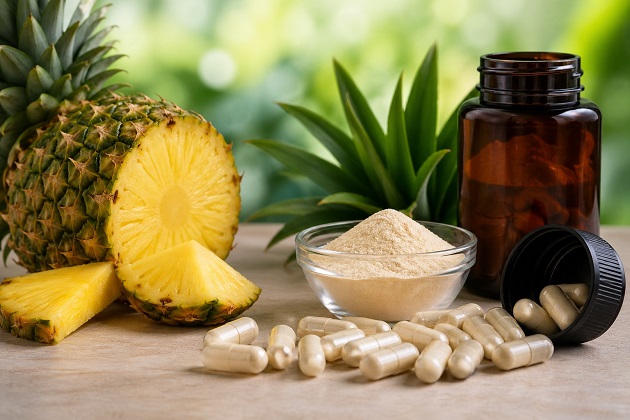 Many bromelain supplements may be fake, inactive, or replaced with other enzymes, raising serious health and safety
concerns
Researchers from ECSIN-ECAMRICERT SRL Laboratory in Padua, Italy, the Department of Food and Drug at the University of Parma in Italy, the Italian Society of Phytotherapy in Siena, and the Biopharmanet-TEC Research Center for the Innovation of Health Products at the University of Parma conducted a detailed analysis of commercially available bromelain ingredients. Their findings raise serious concerns about product authenticity and consumer safety.
What the Scientists Discovered
The research team tested four different bromelain samples using advanced laboratory techniques. At first glance, two of the products appeared to meet their labeled enzyme activity levels. However, deeper analysis revealed a different story.
Only one sample actually contained genuine bromelain that matched both its claimed activity and protein composition. Two samples showed almost no enzyme activity at all, meaning they were essentially ineffective. The most alarming case involved a product that showed strong enzyme activity - but it turned out the activity came from a completely different enzyme called papain, not bromelain.
Papain, derived from papaya, can mimic bromelain in basic tests, making it a convenient but misleading substitute. While it is also a proteolytic enzyme, it does not provide the same biological effects as bromelain, meaning consumers may not receive the benefits they expect.
Why Standard Testing Is Not Enough
Traditionally, bromelain quality has been judged mainly by measuring its enzymatic activity. But this study clearly shows that such testing can be misleading. Enzyme activity alone cannot confirm whether the product truly contains bromelain.
The researchers used a combination of methods, including protein analysis and antibody-based testing, to identify the exact enzymes present. One key finding was that some products had very low protein content - indicating poor quality or heavy dilution. In one case, a sample had virtually no detectable protein at all, explaining its lack of effectiveness.
Another critical discovery came from protein profiling techniques. Authentic bromelain has a distinct molecular signature, but several samples lacked this signature entirely. This proves that relying on a single test method can allow adulterated or fake products to pass as genuine.
This
Medical News report highlights how deceptive labeling and weak quality control standards can misle
ad consumers. The study demonstrates that even products that appear compliant based on standard tests may still be fraudulent or inferior.
Health and Safety Implications
The consequences of such adulteration go beyond wasted money. The presence of undeclared enzymes like papain could potentially trigger allergic reactions or produce unexpected side effects. Since different enzymes behave differently in the body, replacing bromelain with another substance could alter how the supplement works.
Furthermore, low-quality or inactive products may fail to deliver any health benefits, leaving users without the support they are seeking for inflammation, recovery, or immune health.
Call for Stronger Regulations
The researchers emphasize the urgent need for stricter quality control in the supplement industry. They recommend adopting a more comprehensive testing approach that evaluates not only enzyme activity but also protein identity and purity.
Such measures would help ensure that products are authentic, effective, and safe for consumers. Without stronger regulations, the risk of adulteration and misleading labeling will likely continue to grow.
Conclusion
This study reveals a widespread issue in the bromelain supplement market, where products often fail to meet their claims. Only one out of four tested samples was truly authentic, while others were inactive or adulterated with different enzymes. These findings highlight the limitations of current testing methods and the need for more advanced and reliable quality checks. For consumers, this means being cautious when choosing supplements and recognizing that not all products are created equal. Ensuring transparency, stricter standards, and better enforcement will be essential to protect public health and restore trust in the growing nutraceutical industry.
The study findings were published in the peer reviewed International Journal of Molecular Sciences.
https://www.mdpi.com/1422-0067/27/9/3830
For the latest about supplements, keep on logging to Thailand
Medical News.
Read Also:
https://www.thailandmedical.news/articles/supplements




 Share
Share
 Tweet
Tweet
 Share
Share

































