Nikhil Prasad Fact checked by:Thailand Medical News Team Apr 08, 2026 5 months, 3 weeks, 5 days, 3 hours, 15 minutes ago
Medical News: A growing body of research is revealing that certain naturally occurring compounds found in foods and supplements may play a powerful role in protecting vision, particularly in conditions like glaucoma. A new study using advanced computational analysis has uncovered how these compounds work together at a molecular level, offering fresh insights into preventing optic nerve damage.
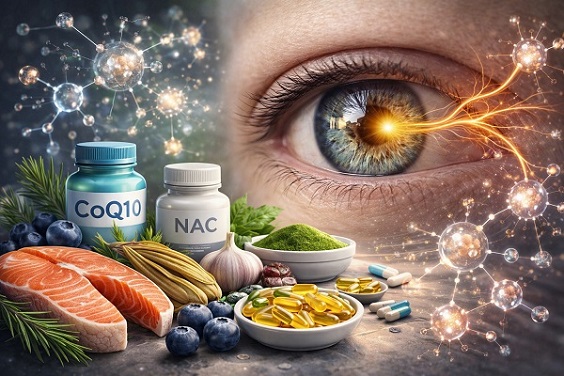 Natural compounds may work together to protect vision by targeting multiple damage pathways in glaucoma
Research Teams and Institutions
Natural compounds may work together to protect vision by targeting multiple damage pathways in glaucoma
Research Teams and Institutions
The study was conducted by researchers from the Department of Health Care at Medical College, Trakia University in Stara Zagora, Bulgaria; the Department of Pharmaceutical Chemistry, the Department of Microbiology and Virology, and the Medical College at Medical University of Varna, Bulgaria; along with the Faculty of Public Health at Medical University Prof. Dr. P. Stoyanov in Varna, Bulgaria.
Why Glaucoma Remains a Major Concern
Glaucoma affects tens of millions of people worldwide and is one of the leading causes of irreversible blindness. It damages the optic nerve, often without early symptoms. While treatments exist to lower eye pressure, many patients continue to lose vision, suggesting other underlying mechanisms are involved.
Scientists now understand that oxidative stress, chronic inflammation, disrupted lipid metabolism, and mitochondrial dysfunction all contribute to the gradual death of retinal ganglion cells - critical neurons responsible for transmitting visual signals to the brain.
A Shift Beyond Single-Compound Thinking
Rather than examining one compound at a time, the researchers analyzed multiple nutraceuticals together, including astaxanthin, alpha-lipoic acid, epigallocatechin gallate, omega-3 fatty acids such as DHA and EPA, coenzyme Q10, cyanidin-3-glucoside, and N-acetylcysteine.
The results showed that these compounds do not act independently. Instead, they influence interconnected biological pathways, forming a coordinated defense system inside cells.
This
Medical News report highlights how these compounds converge on shared mechanisms that are critical to protecting the optic nerve.
Key Mechanisms Behind Their Protective Effects
-Inflammation and Lipid Regulation
Several compounds, particularly alpha-lipoic acid and omega-3 fatty acids, were found to target pathways involved in inflammation and lipid signaling. These pathways play a central role in chronic damage to the optic nerve. By regulating enzymes linked to prostaglandin and eicosanoid production, these nutraceuticals may reduce harmful inflammatory responses.
-Mitochondrial Support and Energy Balance
Compounds such as coenzyme Q10 and DHA were strongly linked to mitochondrial function. Retinal ganglion cells have high energy demands, making them especially
vulnerable to mitochondrial damage. Supporting these energy systems may help maintain cell survival and prevent degeneration.
-Epigenetic and Stress Adaptation
N-acetylcysteine and EGCG were associated with pathways that regulate gene expression and cellular stress responses. These mechanisms allow cells to adapt to injury over time, potentially offering longer-term protection rather than just immediate antioxidant effects.
A Network-Based Approach to Neuroprotection
One of the most important findings of the study is that nutraceuticals work through a “network effect.” Instead of targeting a single pathway, they influence multiple interconnected systems. This means combining different compounds could provide broader and more effective protection than using one alone. For example, one compound may reduce inflammation while another improves mitochondrial stability, together creating a more resilient cellular environment.
Limitations and What Comes Next
Despite these promising insights, the study was based on computational modeling rather than clinical trials. This means the findings are predictive and require further validation in laboratory and human studies.
Additionally, factors such as absorption, dosage, and how well these compounds reach the retina remain unclear and could affect real-world outcomes.
Conclusions
The findings suggest that antioxidant nutraceuticals may play a significant role in protecting against glaucoma by targeting multiple biological pathways simultaneously. Their ability to influence inflammation, mitochondrial health, and gene regulation highlights their potential as complementary strategies alongside conventional treatments. However, these results should be interpreted cautiously until confirmed through clinical research. The study ultimately supports a shift toward multi-target therapeutic approaches that better reflect the complex nature of optic nerve degeneration and may pave the way for more effective prevention strategies in the future.
The study findings were published in the peer reviewed journal: Antioxidants.
https://www.mdpi.com/2076-3921/15/4/445
For the latest on glaucoma, keep on logging to Thailand
Medical News.
Read Also:
https://www.thailandmedical.news/articles/glaucoma-news




 Share
Share
 Tweet
Tweet
 Share
Share

































