Nikhil Prasad Fact checked by:Thailand Medical News Team Jun 19, 2026 3 months, 2 weeks, 1 day, 1 hour, 3 minutes ago
Medical News: Researchers in Serbia have found that a combination of vitamin B6 and folic acid may help lower harmful homocysteine levels and improve certain heart-related markers, but the supplements also produced some unexpected effects linked to oxidative stress in the heart. The findings are raising new questions about how these commonly used vitamins influence cardiovascular health.
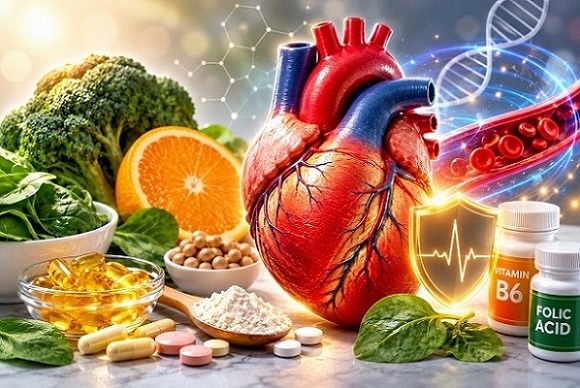 New research shows vitamin B6 and folic acid can lower harmful homocysteine levels while producing
unexpected effects on heart oxidative stress
The study was conducted by scientists from the Institute of Medical Physiology “Richard Burian,” Faculty of Medicine, University of Belgrade; the Institute of Chemistry in Medicine “Petar Matavulj,” Faculty of Medicine, University of Belgrade; the Institute of Histology and Embryology “Aleksandar Đ. Kostić,” Faculty of Medicine, University of Belgrade; the Center for Medical Biochemistry, University Clinical Center of Serbia; and the Faculty of Medical Sciences, University of Kragujevac, Serbia.
Why Homocysteine Matters
Homocysteine is a naturally occurring amino acid in the body. However, when its levels become too high, a condition known as hyperhomocysteinemia develops. Elevated homocysteine has been linked to heart disease, stroke, blood vessel damage, inflammation, and increased oxidative stress.
Because vitamin B6 and folic acid play important roles in the body's ability to process and remove homocysteine, researchers wanted to determine whether supplementing these vitamins could protect the heart from damage caused by elevated homocysteine levels.
Testing the Vitamins in an Experimental Model
The researchers used male laboratory rats divided into four groups. Some animals received homocysteine to induce elevated blood levels, while others received vitamin B6 and folic acid supplementation. The study examined blood biomarkers, cholesterol levels, oxidative stress markers, heart metabolism, and structural changes in heart tissue.
The most striking finding was that vitamin B6 and folic acid dramatically lowered homocysteine concentrations. Animals that received the vitamin combination showed homocysteine levels far below those seen in untreated animals exposed to excess homocysteine.
The supplements also reduced levels of LDL cholesterol, often referred to as “bad cholesterol.” This suggests that the vitamins may offer benefits beyond simply lowering homocysteine and could potentially improve cardiovascular risk profiles.
Protective Changes Seen in the Heart
The study revealed that elevated homocysteine triggered significant changes in heart tissue. One important marker, superoxide dismutase (SOD), increased sharply in response to homocysteine exposure. SOD is an antioxidant enzyme that rises when cells are under oxidative stress.
Interestingly, vitamin B6 and folic acid reduced this excessive SOD response, suggesting that the supplements may lessen some of the oxidative burden placed on the heart.
;
Researchers also observed that homocysteine increased the thickness of the right ventricular wall of the heart. Supplementation with vitamin B6 and folic acid prevented this abnormal change, indicating a potential protective effect on heart structure.
This
Medical News report notes that the vitamin combination also significantly lowered LDL cholesterol and kept homocysteine levels below the threshold typically associated with hyperhomocysteinemia.
An Unexpected Discovery
Despite several positive findings, the researchers identified a surprising downside. Animals receiving vitamin B6 and folic acid showed markedly higher levels of malondialdehyde (MDA), a marker of lipid peroxidation and oxidative damage. In simple terms, while the vitamins appeared to improve some aspects of heart health, they were also associated with increased evidence of damage to fats within heart tissue.
The researchers also found alterations in heart energy metabolism. Activity of the enzyme malate dehydrogenase increased in supplemented animals, suggesting that vitamin treatment influenced how heart cells generate and use energy.
Importantly, no major tissue damage, heart cell death, or significant abnormalities in the aorta were detected.
Conclusions
The study highlights the complex relationship between vitamin supplementation and cardiovascular health. Vitamin B6 and folic acid successfully reduced homocysteine and LDL cholesterol while preventing certain structural and oxidative changes linked to elevated homocysteine. However, the unexpected rise in lipid peroxidation markers suggests that the biological effects of these vitamins are more complicated than previously believed. The researchers say further studies are needed to determine whether these mixed effects translate into benefits or risks in humans and to better understand the long-term consequences of supplementation.
The study findings were published in the peer reviewed journal: Biomedicines.
https://www.mdpi.com/2227-9059/14/6/1373
For the latest on the effects of Vitamin B6 and folic acid on the human heart, keep on logging to Thailand
Medical News.
Read Also:
https://www.thailandmedical.news/articles/supplements
https://www.thailandmedical.news/articles/cardiology




 Share
Share
 Tweet
Tweet
 Share
Share

































