Thailand Medical Study Finds Brahmi and Thai Berries May Help Fight Brain Damage Caused by Stress
Nikhil Prasad Fact checked by:Thailand Medical News Team Jun 25, 2026 3 months, 1 week, 1 day, 21 hours, 25 minutes ago
Thailand Medical: A new medical study has found that a combination of the traditional medicinal herb Bacopa monnieri, better known as Brahmi, and extracts from antioxidant-rich Thai berries could help protect the brain from the harmful effects of long-term stress. While the research was conducted in laboratory rats rather than humans, the findings provide encouraging evidence that natural plant compounds may one day play a role in protecting memory and reducing stress-related brain damage.
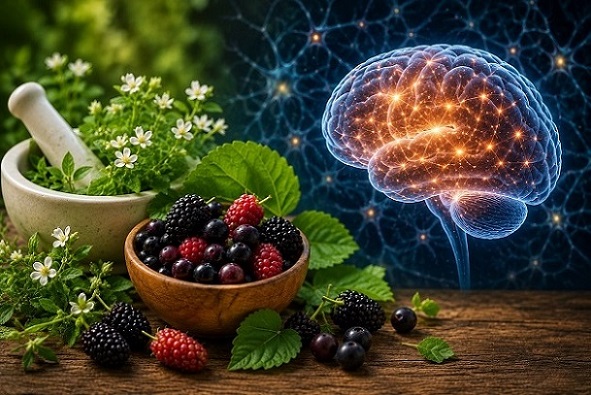 Thai researchers discover that Brahmi and antioxidant-rich native berries may help protect the brain
from chronic stress and memory decline
The research was conducted by
Thailand Medical scientists from the Department of Pharmaceutical Chemistry and Pharmacognosy, Faculty of Pharmaceutical Sciences, Naresuan University, the Research and Innovation Cluster for Natural Health Products, Naresuan University, the Department of Anatomy, Faculty of Medical Science, Naresuan University, and the Center of Excellence in Medical Biotechnology, Naresuan University, all in Phitsanulok, Thailand.
Why Chronic Stress Damages the Brain
Chronic stress is far more than simply feeling overwhelmed. Prolonged exposure to stress hormones can damage important brain regions responsible for learning, memory, emotional control, and decision-making. Two of the most vulnerable areas are the hippocampus, which is essential for memory formation, and the prefrontal cortex, which helps regulate thinking and emotions.
Scientists believe much of this damage is driven by excessive oxidative stress and inflammation, which gradually injure brain cells and reduce their ability to communicate properly.
Testing a Traditional Herb with Native Thai Berries
To investigate whether natural plant compounds could reduce this damage, researchers used a well-established animal model that mimics the effects of chronic stress.
The team tested standardized extracts of Bacopa monnieri together with a specially prepared mixed Thai berry extract containing mulberry (Morus alba), mamao (Antidesma ghaesembilla), and ma-kiang (Syzygium nervosum). These berries are naturally rich in anthocyanins, the colorful plant pigments responsible for their deep purple and red colors, which are also known for powerful antioxidant activity.
Both the herbal extract and berry mixture were tested individually as well as together.
Low-Dose Berry Extract Produced Surprisingly Strong Results
Before testing the animals, researchers carefully measured the antioxidant content of each berry. Ma-kiang contained the highest levels of beneficial phenolic compounds and anthocyanins, while the mixed berry extract provided a balanced combination of protective plant chemicals.
Behavioral testing showed several encouraging findings. Animals exposed to chronic stress displayed increased anxiety-like behavior and poorer performance in memory-related tasks. However, rats receiving th
e natural extracts generally performed much better.
Interestingly, the low-dose mixed Thai berry extract consistently produced the strongest improvements in recognition memory. The treated animals spent more time exploring unfamiliar objects, recognized new objects more accurately, and demonstrated healthier curiosity compared to untreated stressed animals.
Brahmi alone also reduced several signs of anxiety, while the combination of Brahmi and berries provided additional benefits in preserving brain tissue.
This Medical News report highlights an especially interesting observation from the study: bigger doses did not necessarily produce better results. In several memory tests, the lower berry dose outperformed the higher dose, suggesting that natural compounds may work best within an optimal dosage range rather than at maximum concentrations.
Brain Cells Were Better Protected
The researchers also examined brain tissue under a microscope. Untreated stressed animals showed widespread injury in both the prefrontal cortex and hippocampus. Many nerve cells appeared shrunken, darkened, and damaged—classic signs of stress-induced degeneration.
Animals treated with Brahmi or berry extracts showed noticeably healthier brain tissue. Even more striking, those receiving the combined treatment demonstrated some of the best preservation of normal brain structure, with fewer damaged neurons and better-organized brain tissue.
The hippocampus, which plays a central role in learning and memory, showed particularly impressive protection in animals receiving the herbal treatments.
A Promising Natural Strategy
The researchers believe Brahmi and anthocyanin-rich Thai berries may protect brain cells through multiple mechanisms. Their powerful antioxidant activity likely helps neutralize harmful free radicals while also reducing inflammation and supporting healthy communication between nerve cells.
Although the study does not prove that these extracts will work the same way in humans, it provides valuable evidence supporting further clinical research into natural therapies for stress-related cognitive decline.
The findings also suggest that combining different plant compounds may preserve brain structure even when improvements in behavior are more modest, indicating multiple biological pathways may be involved.
Conclusion
This study provides compelling evidence that both Brahmi and antioxidant-rich Thai berry extracts can reduce some of the harmful effects of chronic stress on the brain. While the low-dose berry extract delivered the strongest improvements in memory-related behavior, combination therapy offered the greatest protection against physical damage to brain tissue. Although these findings are limited to animal research, they strengthen the growing scientific interest in traditional medicinal plants and native Thai fruits as potential future strategies for supporting brain health, preserving memory, and protecting against the long-term neurological consequences of chronic stress.
The study findings were published in the peer reviewed journal: Pharmaceuticals.
https://www.mdpi.com/1424-8247/19/7/981
For the latest Thai medical research, keep on logging to
Thailand Medical News.
Read Also:
https://www.thailandmedical.news/articles/thailand-medical
https://www.thailandmedical.news/articles/herbs-and-phytochemicals




 Share
Share
 Tweet
Tweet
 Share
Share

































