Natural Compounds from Siphonostegia Chinensis Show Strong Potential Against COVID-19 Enzyme
Nikhil Prasad Fact checked by:Thailand Medical News Team Apr 11, 2026 5 months, 3 weeks, 1 day, 20 hours, 28 minutes ago
Medical News: A new scientific investigation has identified naturally occurring compounds from a traditional medicinal herb that may help inhibit a critical enzyme used by the virus responsible for COVID-19. The findings offer fresh insight into how plant-derived substances could contribute to future antiviral drug development.
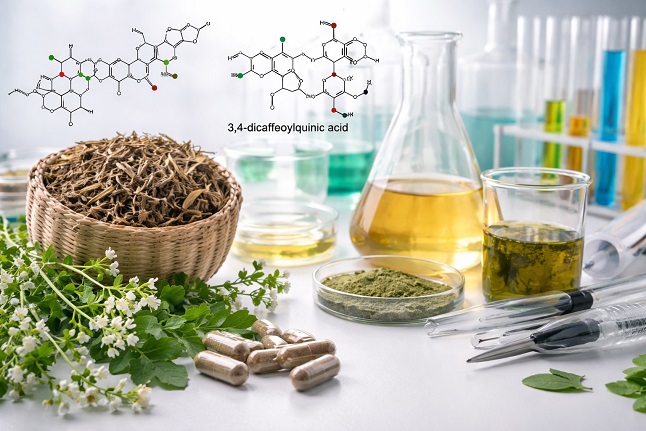 Plant-based compounds demonstrate strong ability to block a key enzyme required for COVID-19 viral replication
Targeting a Critical Viral Enzyme
Plant-based compounds demonstrate strong ability to block a key enzyme required for COVID-19 viral replication
Targeting a Critical Viral Enzyme
The virus that causes COVID-19 relies on a key enzyme known as the main protease (Mpro) to replicate within the human body. This enzyme plays an essential role in processing viral proteins required for replication. Blocking Mpro effectively disrupts the virus’s ability to multiply, making it one of the most important targets in antiviral research.
Scientists in this study focused on Siphonostegia chinensis, a plant widely used in traditional Chinese medicine for treating respiratory and inflammatory conditions. Previous studies have suggested that this herb contains bioactive compounds, but its potential antiviral effects had not been fully explored.
Identification of Active Antiviral Compounds
Through a series of laboratory analyses, researchers identified two key compounds - verbascoside and 3,4-dicaffeoylquinic acid - as the most active components against the viral enzyme.
Both compounds demonstrated strong binding affinity to Mpro, meaning they were able to attach effectively to the enzyme and interfere with its function. Laboratory enzyme inhibition tests confirmed that these compounds significantly reduced Mpro activity.
Verbascoside emerged as the more potent of the two, showing stronger inhibitory effects at lower concentrations. Its IC50 value - a measure of how much of a substance is needed to inhibit an enzyme by half - was notably low, indicating high effectiveness. The second compound, 3,4-dicaffeoylquinic acid, also showed meaningful activity but required slightly higher concentrations to achieve similar effects.
Understanding How These Compounds Work
Further computational modeling revealed that both compounds bind within the enzyme’s active site. They form stable interactions with critical amino acids responsible for the enzyme’s function. These interactions prevent the enzyme from processing viral proteins, effectively halting replication.
Importantly, the compounds act through non-covalent interactions, meaning they bind reversibly. This type of binding is often associated with safer drug profiles and fewer long-term side effects compared to irreversible inhibitors.
Differences in Extraction Methods
The study also found that how the plant is processed significantly affects its antiviral potential. The ethanol-based extract of Siphonostegia chinensis showed much stronger inhibitory activity compared to water-based extracts.
This suggests that the most effective antiviral compounds are more soluble in alcohol and may not be fully extracted through
traditional preparation methods such as boiling in water. This finding could influence how herbal medicines are formulated in the future to maximize their therapeutic benefits.
Safety and Drug Development Considerations
Preliminary safety predictions indicate that both compounds have relatively favorable profiles, including low risk of genetic toxicity. However, some concerns remain, such as potential effects on heart-related ion channels and possible liver toxicity, particularly with verbascoside.
Additionally, both compounds showed limited absorption in predicted models, which could affect how well they work inside the human body. These challenges highlight the need for further optimization and testing before clinical use.
Implications for Future Antiviral Therapies
This
Medical News report underscores the growing importance of natural products in modern drug discovery. The study demonstrates that compounds derived from traditional medicinal plants can directly target essential viral mechanisms with high specificity and potency.
The conclusions are highly encouraging. These findings provide strong evidence that naturally occurring compounds such as verbascoside and 3,4-dicaffeoylquinic acid can serve as promising lead candidates for the development of new antiviral therapies. While additional research, including clinical trials, is necessary, the results lay a solid scientific foundation for future drug development. Furthermore, the study highlights the value of integrating traditional medicine knowledge with modern scientific techniques to accelerate the discovery of effective treatments for emerging viral diseases.
The study findings were published in the peer reviewed journal: Frontiers in Chemistry.
https://www.frontiersin.org/journals/chemistry/articles/10.3389/fchem.2026.1790228/full
For the latest COVID-19 news, keep on logging to Thailand
Medical News.
Read Also:
https://www.thailandmedical.news/articles/coronavirus
https://www.thailandmedical.news/articles/herbs-and-phytochemicals




 Share
Share
 Tweet
Tweet
 Share
Share

































