Thailand Medical News Team Fact checked by:Thailand Medical News Team Aug 28, 2026 23 minutes ago
Systemic sclerosis may damage the heart through a more interconnected network than previously recognized, with evidence linking ventricular dysfunction to microvascular injury, mitochondrial abnormalities, fibrosis, and circulating cardiac biomarkers.
 Systemic sclerosis heart disease may involve interconnected ventricular, microvascular, mitochondrial, and biomarker
abnormalities developing before obvious cardiac failure
A Multi-Layered Threat to the Heart
The integrative review examined primary research published from 2015 through March 2026, combining findings from echocardiography, cardiovascular magnetic resonance (CMR), capillaroscopy, mitochondrial research, and biomarker studies. The evidence suggests systemic sclerosis cardiac disease involves several overlapping processes that may develop before conventional testing reveals obvious heart failure.
As highlighted in this
Thailand Medical News report, advanced echocardiography appears particularly important. In a prospective cohort of 131 patients, impaired left- and right-ventricular global longitudinal strain independently predicted death and major cardiovascular events. Right-ventricular strain was the stronger prognostic signal, while left-ventricular strain worse than −18% identified higher-risk patients.
Tiny Blood Vessels May Reveal Heart Damage
Microvascular damage also emerged as a potential warning sign. Among 244 patients, a late nailfold capillaroscopy pattern and capillary density below 3.5 capillaries per millimeter were independently associated with pulmonary arterial hypertension.
More strikingly, CMR research found that lower nailfold capillary density correlated with greater myocardial extracellular volume and higher T2 values, measures associated with fibrosis and edema. The findings suggest abnormalities visible in tiny peripheral blood vessels may reflect disease occurring within cardiac tissue.
Mitochondria Add Another Piece
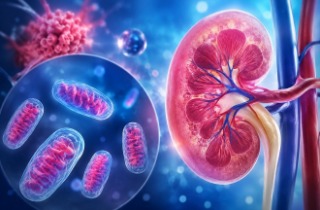
The review describes substantial mitochondrial disturbances. Systemic sclerosis fibroblasts displayed increased mitochondrial respiration and fusion, while TGF-β1 intensified a shift toward oxidative phosphorylation that may promote fibrosis. Immune cells showed respiratory-chain abnormalities, oxidative stress, and mitochondrial DNA changes.
The GRIM-19/STAT3/PINK1-Parkin pathway is particularly intriguing because experimental evidence connects it with mitochondrial quality control, immune signaling, and fibrosis. However, whether these mitochondrial abnormalities directly cause fibrosis in human cardiac tissue remains unproven.
Biomarkers Could Strengthen Early Detection
Blood markers may improve detection when combined with imaging. NT-proBNP and high-sensitivity cardiac troponin T were associated with cardiac abnormalities and adverse outcomes. Importantly, models combining ventricular strain with both biomarkers performed better than individual measurements, suggesting multidimensional screening could identify patients overlooked by sin
gle-test approaches.
Institutions Behind the Review
The researchers are affiliated with the University of Modena and Reggio Emilia; National Institute for Cardiovascular Research; Guglielmo da Saliceto Hospital; G. d’Annunzio University of Chieti-Pescara; Modena Policlinico Hospital; University of Bologna–Alma Mater Studiorum; Azienda Ospedaliero Universitaria di Parma; Sapienza University of Rome; Azienda Ospedaliero-Universitaria Policlinico di Modena; Mashhad University of Medical Sciences; Fasa University of Medical Sciences; and Valiasr Hospital.
Conclusions
The evidence supports broader systemic sclerosis cardiac surveillance combining ventricular mechanics, microvascular injury, CMR findings, and blood biomarkers rather than relying on one measurement. Mitochondrial pathways could eventually offer important therapeutic targets, but direct cardiac evidence and prospective clinical trials remain necessary before these approaches can become routine care.
The study findings were published in the peer reviewed International Journal of Molecular Sciences.
https://www.mdpi.com/1422-0067/27/17/7683
Read Also:
https://www.thailandmedical.news/articles/cardiology




 Share
Share
 Tweet
Tweet
 Share
Share