Nikhil Prasad Fact checked by:Thailand Medical News Team Jan 18, 2026 8 months, 2 weeks, 3 days, 3 hours ago
Medical News: Hydrogen sulfide, a gas naturally produced in the human body and often known for its rotten egg smell, may play a powerful protective role in preventing stomach cancer caused by Helicobacter pylori infection, according to new research. Scientists have discovered that this gas can stop harmful changes in stomach support cells that are known to drive cancer development.
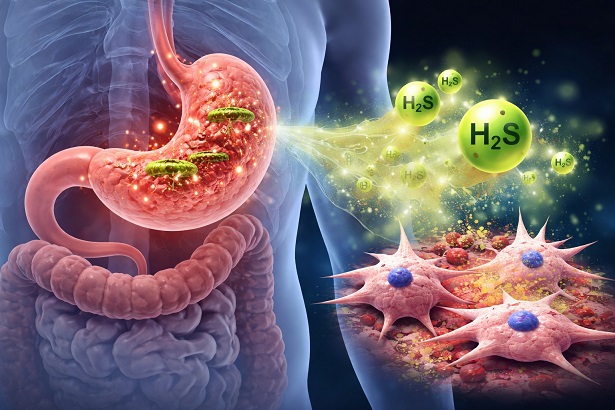 Hydrogen sulfide stops bacteria driven changes in stomach cells that fuel cancer development
How a Common Bacterium Triggers Cancer Risk
Hydrogen sulfide stops bacteria driven changes in stomach cells that fuel cancer development
How a Common Bacterium Triggers Cancer Risk
Helicobacter pylori is a widespread bacterium that infects the stomach lining of billions of people worldwide. While many infected individuals show no symptoms, long term infection is a major risk factor for gastric cancer. The bacterium causes chronic inflammation and gradually changes the stomach environment, allowing cancer to develop over time.
The new study shows that H pylori does not only damage stomach lining cells but also aggressively alters gastric fibroblasts. These fibroblasts are support cells that normally help maintain healthy stomach tissue. Under infection, they are reprogrammed into cancer associated fibroblasts that release inflammatory and tumor promoting substances.
Researchers Identify a Key Protective Signal
This
Medical News report highlights findings from scientists at Jagiellonian University Medical College in Krakow Poland, including the Department of Physiology, the Department of Medical Biochemistry, the Department of Cell Biology, and the University Hospital surgical research units. Their work focused on hydrogen sulfide signaling as a possible way to block this dangerous fibroblast transformation.
Using human gastric fibroblasts infected with a highly aggressive strain of H pylori, the researchers observed sharp increases in cancer related markers such as Twist, IL-6, IL-8, HGF, and activation of NF-kappa-B and STAT3 signaling pathways. These signals are well known for driving inflammation, cell reprogramming, and tumor growth.
Hydrogen Sulfide Stops Dangerous Cell Reprogramming
When researchers added controlled doses of a hydrogen sulfide donor, they saw a dramatic reversal of these harmful effects. The gas suppressed inflammatory signaling, blocked activation of cancer promoting genes, and restored fibroblasts closer to their normal healthy state. Importantly, hydrogen sulfide also prevented the cells from becoming reactivated during repeated bacterial exposure.
At higher doses, hydrogen sulfide reduced the ability of H pylori to stick to stomach cells and made the bacteria more sensitive to the antibiotic metronidazole. This suggests hydrogen sulfide may enhance existing treatments rather than interfere with them.
Protection Without Toxic Effects
The study also found that hydrogen sulfide did not harm healthy fibroblasts. Instead, it improved cell survival during infection related stress and helped stabilize internal sulfur metabolism systems that protect cells from oxidative damag
e.
Conclusions and Future Implications
The conclusions of the study suggest that hydrogen sulfide signaling plays a crucial role in controlling inflammation and preventing harmful fibroblast activation during H pylori infection. By calming the NF-kappa-B and STAT3 pathways, hydrogen sulfide helps maintain tissue balance, reduces cancer promoting signals, and may lower long term gastric cancer risk. These findings open the door to new preventive strategies that could complement antibiotics, especially in patients with chronic infection or antibiotic resistance.
The study findings were published in the peer reviewed journal: Cells.
https://www.mdpi.com/2073-4409/15/2/167
For the latest cancer research, keep on logging to Thailand
Medical News.
Read Also:
https://www.thailandmedical.news/articles/cancer




 Share
Share
 Tweet
Tweet
 Share
Share

































