Nikhil Prasad Fact checked by:Thailand Medical News Team Jul 01, 2026 2 months, 1 day, 17 hours, 58 minutes ago
Medical News: A major new scientific discovery is changing how experts understand Parkinson’s disease, revealing that damage to brain support cells may play a far bigger role than previously believed—and could open the door to entirely new treatments.
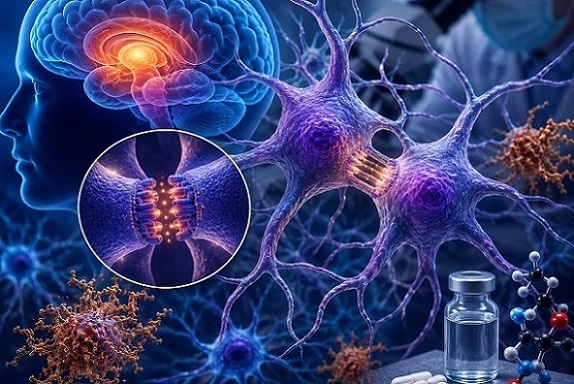 Scientists uncover how damaged astrocyte communication may drive Parkinson’s disease and reveal a
new treatment target
A New Way to Understand Parkinson’s
Parkinson’s disease affects more than 10 million people globally and is best known for symptoms such as tremors, stiffness, and slowed movement. For decades, research has focused mainly on the loss of dopamine-producing neurons in the brain.
However, scientists from leading institutions including the University of Cambridge (UK), University of Manchester (UK), Sciomics GmbH (Germany), and Atuka Inc (Canada) have now uncovered evidence that other brain cells—called astrocytes—may be just as important in driving the disease.
Astrocytes are support cells that help maintain a healthy brain environment. This new research shows that when these cells malfunction, the effects can be widespread and damaging.
Breakdown in Brain Cell Communication
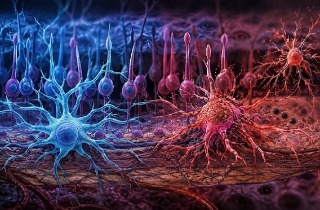
At the center of the study is a protein known as Connexin 43 (Cx43). This protein allows astrocytes to communicate with each other through tiny channels called gap junctions, forming a network that helps regulate brain activity.
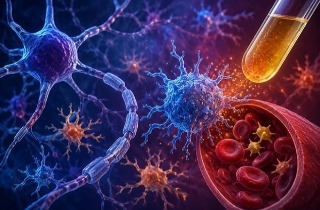
The researchers discovered that exposure to inflammation and toxic protein clumps—particularly alpha-synuclein, which is strongly linked to Parkinson’s—causes a significant drop in Cx43 levels. As a result, astrocytes lose their ability to communicate effectively.
Over time, this disruption becomes progressively worse. Long-term experiments showed that the damage builds gradually, closely resembling how Parkinson’s disease develops in humans.
Why This Matters for Brain Health
When astrocytes stop communicating properly, the consequences are serious and far-reaching. The study found that disrupted Cx43 function leads to abnormal calcium signaling inside cells, reduced energy production, and increased buildup of harmful protein aggregates.
Additionally, inflammation becomes more pronounced, and connections between neurons begin to weaken. These changes create a toxic environment in the brain that accelerates disease progression.
This
Medical News report highlights that these effects are not merely side consequences but appear to actively drive the disease process itself.
Strong Evidence That the Damage Drives Disease
To better understand the role of Cx43, the researchers deliberately reduced its levels in laboratory models.
The results were striking. Cells with reduced Cx43 showed u
nstable signaling patterns, simplified and weakened structures, and a clear increase in toxic alpha-synuclein buildup. There was also a noticeable decline in synaptic connections, which are essential for communication between brain cells.
These findings strongly suggest that the breakdown of astrocyte networks is not just linked to Parkinson’s disease but is a key contributor to its progression.
Promising New Treatment Approach
One of the most exciting aspects of the study was the testing of a compound called danegaptide, which helps restore communication between astrocytes.
When applied in experimental models, danegaptide improved cell-to-cell communication, reduced harmful protein accumulation, and lowered levels of inflammatory signals. It also helped stabilize abnormal calcium activity within cells.
Interestingly, the compound does not directly target the toxic proteins. Instead, it strengthens the brain’s internal support systems, allowing it to better resist damage.
Evidence Confirmed in Animal Studies
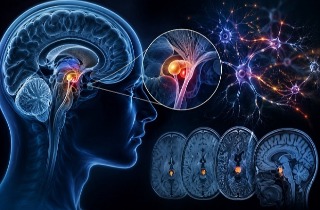
The researchers also validated their findings in animal models of Parkinson’s disease. Rats exposed to disease-like conditions showed reduced levels of Cx43 in critical brain regions involved in movement.
Inflammation in these animals further disrupted astrocyte communication, reinforcing the idea that multiple disease triggers converge on the same damaging pathway involving Cx43.
Conclusion
This study provides compelling new insight into Parkinson’s disease by demonstrating that the breakdown of astrocyte communication networks plays a central and active role in disease progression. By shifting the focus beyond neurons to include the broader cellular environment, the findings highlight a new therapeutic direction that could transform how the disease is treated. Targeting Connexin 43 and restoring astrocyte function may offer a promising strategy not only to slow progression but potentially to protect brain function more effectively over time.
The study findings were published in the peer reviewed journal: Experimental Neurology.
https://www.sciencedirect.com/science/article/pii/S0014488626002621
For the latest on Parkinson’s disease and other neurodegenerative diseases, keep on logging to Thailand
Medical News.
Read Also:
https://www.thailandmedical.news/articles/alzheimer,-dementia-




 Share
Share
 Tweet
Tweet
 Share
Share