Vitamin D Analog Shows Promise in Overcoming Pancreatic Cancer Treatment Resistance
Nikhil Prasad Fact checked by:Thailand Medical News Team Jun 04, 2026 3 months, 4 weeks, 1 day, 15 hours, 24 minutes ago
Medical News: Pancreatic cancer is one of the most aggressive and difficult cancers to treat, with survival rates remaining stubbornly low despite advances in chemotherapy and targeted therapies. One of the reasons this cancer is so deadly is that pancreatic tumors create a highly protective environment around themselves, effectively shielding cancer cells from drugs and the body's immune defenses. Now, a new clinical study suggests that an FDA-approved vitamin D analog called paricalcitol, could help dismantle some of these defenses, potentially improving treatment outcomes for patients with advanced pancreatic cancer.
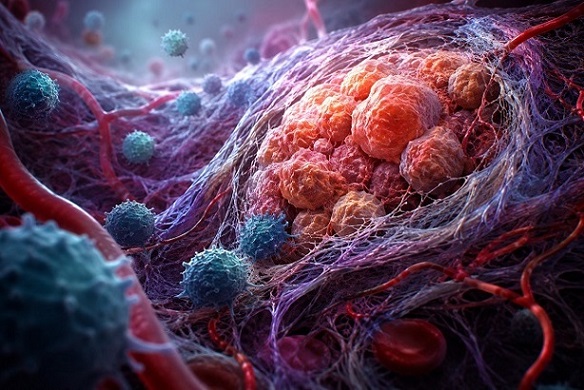 An FDA-approved vitamin D analog may help weaken pancreatic tumors’ protective barriers, potentially
improving chemotherapy effectiveness and patient outcomes
Researchers from Dana-Farber Cancer Institute in Boston, Massachusetts, and the Salk Institute for Biological Studies in La Jolla, California, have found that paricalcitol, a synthetic vitamin D analog already approved for other medical conditions, can alter the tumor microenvironment in ways that may help chemotherapy work more effectively. Their findings offer a promising new avenue for addressing one of the greatest challenges in pancreatic cancer treatment: therapeutic resistance.
Why Pancreatic Cancer Is So Hard to Treat
Pancreatic cancer has long frustrated oncologists because of its unique biology. Unlike many other cancers, pancreatic tumors are surrounded by dense fibrotic tissue, often referred to as a stromal barrier. This barrier consists largely of connective tissue cells known as fibroblasts, along with extracellular matrix proteins that form a thick physical shield around the tumor.
The consequences of this protective barrier are profound. Chemotherapy drugs often struggle to penetrate deep into the tumor, limiting their effectiveness. At the same time, immune cells that could potentially attack cancer cells are kept at a distance. This creates a hostile environment for treatment and contributes significantly to poor patient outcomes.
Scientists have increasingly recognized that overcoming pancreatic cancer may require not only attacking the cancer cells themselves but also modifying the supportive environment that helps tumors survive and resist therapy.
The Key Role of the Vitamin D Receptor
The new study builds upon years of research conducted by Dr. Ronald Evans and colleagues at the Salk Institute. Evans is widely recognized for discovering the nuclear receptor superfamily, a group of molecules that respond to hormones, vitamins, and lipids by controlling gene activity throughout the body.
One member of this family, the vitamin D receptor (VDR), has emerged as an important regulator of fibroblast behavior. Previous laboratory studies conducted by the Salk team demonstrated that VDR is highly active in specific populations of tissue-resident fibroblasts found in organs such as the pancreas and liver.
These studies revealed that activation of the vitamin D receptor can push fibroblasts into a more stable and less inflammatory state. Importantly, synthetic vitamin D analogs such as paricalcitol can acti
vate this pathway while resisting rapid breakdown within the body.
Researchers previously showed that these compounds could reduce fibrosis in liver disease and pancreatitis. They also discovered that vitamin D receptor activation could reverse the abnormal behavior of cancer-associated fibroblasts in pancreatic cancer models, leading to improved responses to chemotherapy.
These findings laid the scientific foundation for testing the approach in human patients.
Clinical Trial Evaluates Safety and Biological Effects
To investigate whether paricalcitol could safely be combined with standard chemotherapy, researchers at Dana-Farber Cancer Institute launched a randomized, multi-arm clinical trial involving patients with previously untreated metastatic pancreatic cancer.
The study enrolled 36 participants who received the standard chemotherapy combination of gemcitabine and nab-paclitaxel. Patients were randomly assigned to receive either chemotherapy plus placebo, chemotherapy plus intravenous paricalcitol, or chemotherapy plus oral paricalcitol.
Although the primary objective was to evaluate safety, researchers also sought to determine whether paricalcitol could produce measurable changes within the tumor microenvironment.
To achieve this, tumor biopsies were collected before treatment and again after four to six weeks of therapy. Investigators then used sophisticated technologies including multiplex immunofluorescence and spatial transcriptomics to examine cellular and molecular changes within the tumors.
Treatment Was Generally Well Tolerated
One of the most encouraging findings was that paricalcitol could be administered safely alongside chemotherapy.
The main treatment-related concern involved elevated blood calcium levels, a known side effect associated with vitamin D-related therapies. Five of the twelve patients receiving oral paricalcitol developed moderate to severe hypercalcemia. However, these cases were successfully managed through standard dose reductions and monitoring.
Overall, researchers concluded that combining paricalcitol with chemotherapy was feasible and generally well tolerated, meeting the primary goal of the study.
Significant Changes Observed Within Tumors
The most important findings emerged from analyses of tumor tissue collected during treatment.
Researchers found that paricalcitol reduced the activation of fibroblasts within tumors. Notably, the drug did not eliminate fibroblasts altogether. Instead, it appeared to reprogram these cells, reducing their cancer-promoting activity while preserving their normal functions.
This distinction is important because previous attempts to completely remove fibroblasts from pancreatic tumors have sometimes produced unexpected negative effects. By reprogramming rather than destroying fibroblasts, paricalcitol may offer a safer and more effective strategy.
The findings confirmed predictions made in earlier laboratory studies and provided direct evidence that vitamin D receptor activation can reshape the tumor microenvironment in patients.
Enhanced Immune Cell Infiltration
Another significant discovery involved immune cells known as CD8-positive T cells, which play a critical role in recognizing and destroying cancer cells.
Pancreatic tumors are notorious for excluding these immune cells, creating an immune-suppressive environment that limits the effectiveness of anti-cancer immune responses.
The study demonstrated that tumors from patients receiving paricalcitol contained higher densities of CD8-positive T cells. Researchers also observed increased spatial colocalization between T cells and tumor cells, indicating that immune cells were gaining greater access to the cancer.
These observations suggest that vitamin D analog therapy may not only improve chemotherapy effectiveness but could also potentially enhance responses to future immunotherapy combinations.
Early Signs of Improved Clinical Outcomes
Although the trial was not specifically designed to measure treatment efficacy, several encouraging trends emerged.
Among patients treated with paricalcitol plus chemotherapy, 10 out of 24 patients achieved partial tumor responses, representing a response rate of 42 percent. In contrast, only one of twelve patients receiving placebo experienced a partial response, corresponding to a response rate of 9 percent.
Researchers also found that five patients receiving paricalcitol remained free from disease progression after one year, whereas no patients in the placebo group achieved this outcome.
While these findings require confirmation in larger studies, they provide preliminary evidence that modifying the tumor microenvironment could translate into meaningful clinical benefits.
Vitamin D Receptor Levels May Predict Benefit
One of the most intriguing findings involved the variability of vitamin D receptor expression among patients.
Investigators discovered that VDR levels differed substantially from one tumor to another. Patients whose tumors expressed higher levels of the receptor appeared to derive the greatest benefit from paricalcitol treatment.
These patients demonstrated better responses to chemotherapy and achieved the longest overall survival times observed in the study.
The discovery raises the possibility that VDR expression could serve as a predictive biomarker, helping physicians identify which patients are most likely to benefit from vitamin D analog-based therapies before treatment begins.
Conclusion
The findings from this clinical trial provide compelling evidence that targeting the tumor microenvironment may represent a promising new strategy for overcoming treatment resistance in pancreatic cancer. Rather than directly attacking cancer cells, paricalcitol works by reprogramming the fibroblasts and supportive tissues that help tumors survive and evade therapy. The study demonstrated that the vitamin D analog could be safely combined with standard chemotherapy while producing significant biological changes within tumors, including reduced fibroblast activation and increased infiltration of cancer-fighting immune cells. Importantly, patients receiving paricalcitol also showed encouraging improvements in response rates and progression-free survival, although larger studies will be required to confirm these benefits. This
Medical News report highlights how an existing FDA-approved drug may be repurposed to address one of the greatest challenges in pancreatic cancer care. The identification of vitamin D receptor expression as a potential biomarker further strengthens the case for personalized treatment approaches. If future trials validate these findings, vitamin D analog therapy could emerge as an important addition to the therapeutic arsenal against one of the world's deadliest malignancies.
The study findings were published in the peer reviewed journal: Nature Cancer.
https://www.nature.com/articles/s43018-026-01165-8
For the latest on Pancreatic Cancer, keep on logging to Thailand
Medical News.
Read Also:
https://www.thailandmedical.news/articles/cancer




 Share
Share
 Tweet
Tweet
 Share
Share

































