Nikhil Prasad Fact checked by:Thailand Medical News Team Jul 20, 2026 1 month, 2 weeks, 1 day, 16 hours, 46 minutes ago
Medical News: Natural Compound Shows Promise Against Diabetes-Linked Heart Damage
A natural plant compound called baicalein may help protect the heart from one of the most damaging effects of diabetes, according to new research by scientists from the School of Integrative Medicine at Shanghai University of Traditional Chinese Medicine, China, and the Department of Electrical and Computer Engineering, P.C. Rossin College of Engineering and Applied Science at Lehigh University, United States.
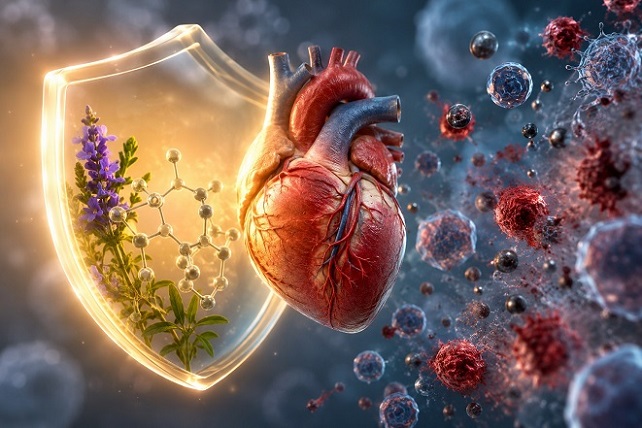 Researchers found that baicalein protected diabetic heart cells by blocking iron-driven ferroptosis and restoring key
cellular defense mechanisms
The study focused on diabetic cardiomyopathy, a serious heart condition caused by diabetes that can gradually weaken the heart muscle even in people without blocked arteries or high blood pressure. As diabetes rates continue to climb worldwide, researchers are searching for treatments that directly protect heart cells rather than simply controlling blood sugar.
Stopping a Dangerous Form of Cell Death
The scientists investigated a type of cell death known as ferroptosis. Unlike ordinary cell death, ferroptosis is triggered by excess iron and destructive fat oxidation inside cells. As iron builds up, harmful molecules attack the cell membrane, eventually causing heart cells to die.
To recreate diabetic conditions, the researchers exposed human AC16 heart cells and rat H9c2 heart cells to high glucose levels together with sodium palmitate, a saturated fatty acid commonly associated with metabolic stress. These conditions dramatically reduced cell survival and increased cell damage.
Baicalein, a phytochemical extracted from the roots of Scutellaria baicalensis, significantly improved cell survival, lowered cell death, and reduced the release of lactate dehydrogenase, a marker of damaged cells.
Multiple Tests Confirm Protective Effects
This
Medical News report highlights that the team combined laboratory experiments with computer-based drug discovery methods, network pharmacology, molecular docking, molecular dynamics simulations, and genetic pathway analysis to understand exactly how baicalein worked.
Their analyses consistently pointed toward ferroptosis as the major process being blocked.
Further experiments strengthened this conclusion. When researchers treated damaged heart cells with Ferrostatin-1, a known ferroptosis inhibitor, cell survival improved in much the same way as with baicalein. However, when they added Erastin, a chemical that promotes ferroptosis, much of baicalein's protective effect disappeared.
These findings strongly suggest that preventing ferroptosis is central to baicalein's ability to protect heart muscle cells.
Key Protective Pathway Restored
The researchers also uncovered the molecular pathway responsible for the benefits.
/>
High glucose and fat exposure disrupted the important Nrf2/SLC7A11/GPX4 signaling pathway, which normally protects cells against oxidative stress. Under diabetic conditions, damaging iron accumulated, lipid oxidation increased, glutathione levels dropped, and protective proteins declined.
Baicalein largely reversed these harmful changes. It restored glutathione balance, reduced iron accumulation, lowered lipid oxidation, decreased malondialdehyde levels, and reduced activity of the ferroptosis-related genes ACSL4 and PTGS2. It also restored production of the protective proteins Nrf2, SLC7A11 and GPX4.
When researchers blocked Nrf2 using the inhibitor ML385, many of baicalein's protective effects were weakened, confirming that this pathway plays a major role in preventing heart cell injury.
Computer simulations further suggested that baicalein could interact stably with all three protective proteins, although additional experiments will be needed to confirm direct binding.
What These Findings Mean
Although the research was performed in cultured heart cells rather than living patients, the findings provide compelling evidence that baicalein targets several damaging processes simultaneously instead of acting through a single mechanism. Its ability to reduce iron-driven oxidative damage while restoring the heart's natural antioxidant defenses makes it an attractive candidate for future therapies aimed at diabetic cardiomyopathy.
The study findings were published in the peer reviewed International Journal of Molecular Sciences.
https://www.mdpi.com/1422-0067/27/14/6391
For the latest on herbs and phytochemicals, keep on logging to Thailand
Medical News.
Read Also:
https://www.thailandmedical.news/articles/herbs-and-phytochemicals
https://www.thailandmedical.news/articles/diabetes
https://www.thailandmedical.news/articles/cardiology
Medical Disclaimer: All content published by Thailand Medical News is based on scientific research and is intended for informational and educational purposes only. It is not medical advice, diagnosis, or treatment. Readers must not attempt to use, apply, or experiment with any protocols, compounds, or therapies mentioned without first consulting a qualified and licensed medical doctor. Many findings discussed are experimental or preliminary, and only a licensed healthcare professional can determine what is safe and appropriate for an individual’s specific medical condition.




 Share
Share
 Tweet
Tweet
 Share
Share