Nikhil Prasad Fact checked by:Thailand Medical News Team Mar 01, 2026 6 months, 1 day, 20 hours, 52 minutes ago
Medical News: A groundbreaking new study has revealed that a heart attack does far more than damage the heart. It also rapidly reshapes the brain’s immune system in ways scientists are only beginning to understand. Researchers found that just five days after a heart attack, key immune cells in the brain undergo major internal changes, potentially altering how the brain responds to stress and inflammation.
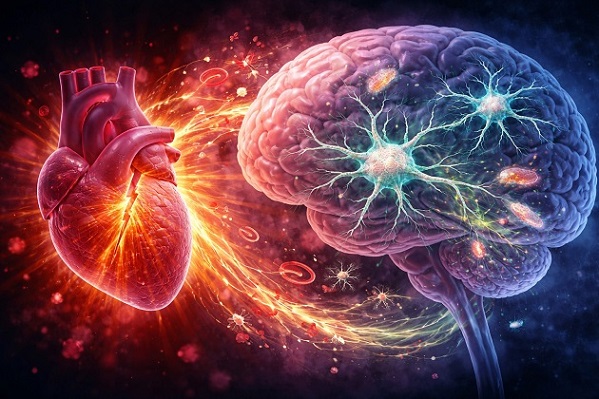 Heart attack rapidly alters brain immune cell metabolism and protein production patterns
The study was conducted by scientists from the Department of Internal Medicine I and the Comprehensive Heart Failure Center at University Hospital Würzburg; the Institute of Experimental Biomedicine at University Hospital Würzburg; the Paris Cardiovascular Research Center (PARCC), Inserm U970, Université Paris Cité; the Helmholtz Institute for RNA-Based Infection Research, Helmholtz Centre for Infection Research; the Institute of Molecular Infection Biology at the University of Würzburg; and the Max Planck Research Group at the Würzburg Institute of Systems Immunology, University of Würzburg.
The Brain Feels a Heart Attack Too
Heart attacks, medically known as myocardial infarctions, are widely recognized for damaging heart muscle. But growing evidence shows they also trigger inflammation throughout the body. The brain is not spared.
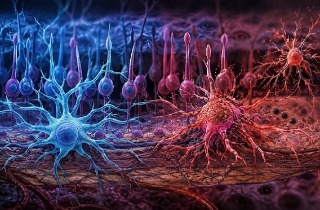
The researchers focused on microglia, specialized immune cells that live in the brain and act as its frontline defenders. These cells constantly monitor their surroundings and respond to injury, infection, or stress. When the heart is injured, signals travel through the bloodstream and nervous system that can influence these brain cells.
Using advanced single-cell RNA sequencing technology, scientists examined thousands of microglial cells from mice five days after an induced heart attack. They compared these to cells from healthy control animals.
A Surprising Slowdown in Protein Production
One of the most striking findings was a strong reduction in genes responsible for protein production in cortical microglia, the cells located in the outer layer of the brain. Protein production is one of the most energy-demanding processes inside a cell. The data showed widespread suppression of ribosomal genes and other components required for translation, the process by which cells build proteins.
In simple terms, the brain’s immune cells appeared to slow down their internal “factory machinery.” A specific subgroup of microglia known as “low translational microglia” significantly increased after heart attack. In the cortex, this subgroup rose from 15.9% in healthy animals to 20.9% after heart attack. In deeper brain regions, it rose from 16.7% to 20.1%.
Overall, 397 genes were differently expressed in cortical microglia and 302 genes in subcortical microglia after heart attack, showing widespread molecular remodeling.
Trouble Managing Protein Quality
In deeper brain regions, the changes were slightly different. Instead of primarily affecting protei
n production, genes involved in protein folding and stress response were reduced. Protein folding is essential for keeping cells healthy. When proteins are misfolded, cells can malfunction.
The researchers calculated a protein-folding score and found a statistically significant reduction in subcortical microglia. This suggests that after a heart attack, these brain immune cells may struggle to maintain proper protein quality control.
Energy Factories Also Affected
Because protein production requires energy, scientists examined the mitochondria, the cell’s energy-producing structures. Microglia from heart attack animals showed significantly reduced mitochondrial mass. This indicates fewer or smaller energy-producing units inside the cells.
Although some metabolic tests showed trends toward reduced glucose uptake and altered fuel usage, not all differences reached statistical significance. Still, the overall pattern suggests that microglia may shift toward a more energy-conserving state after heart injury.
According to this
Medical News report, these findings suggest that systemic heart damage sends signals to the brain that cause immune cells there to adapt quickly at a molecular level.
What This Means for Patients
While this study was conducted in mice, the findings raise important questions about how heart attacks might influence mood, memory, and long-term brain health in humans. Previous research has linked heart attacks to cognitive decline, anxiety, and depression. These newly discovered microglial changes may be part of that connection.
Conclusion
This study demonstrates that a heart attack triggers rapid and region-specific molecular remodeling of brain immune cells. Microglia reduce protein production pathways, show impaired protein quality control in deeper brain regions, and display signs of altered energy regulation. These changes likely represent an early adaptive response to systemic stress following heart injury. However, whether these alterations help protect the brain or contribute to long-term neurological complications remains unclear. Larger and longer-term studies are needed to determine if these molecular shifts persist and whether targeting microglial metabolism could reduce post-heart attack cognitive or emotional complications.
The study findings were published in the peer reviewed International Journal of Molecular Sciences.
https://www.mdpi.com/1422-0067/27/5/2257
For the latest on brain health, keep on logging to Thailand
Medical News.
Read Also:
https://www.thailandmedical.news/articles/cardiology
https://www.thailandmedical.news/articles/alzheimer,-dementia-




 Share
Share
 Tweet
Tweet
 Share
Share