Arterial Stiffness Identified as Key Driver Linking Hypertension to Heart Failure
Nikhil Prasad Fact checked by:Thailand Medical News Team Apr 18, 2026 3 months, 5 days, 15 hours, 51 minutes ago
Medical News: Arterial stiffness is emerging as a critical but often overlooked factor in the progression from high blood pressure to heart failure, challenging the long-standing reliance on conventional blood pressure readings alone to assess cardiovascular risk. A new scientific review highlights that stiffened arteries are not merely a sign of aging or damage, but an active contributor to worsening heart function and disease progression.
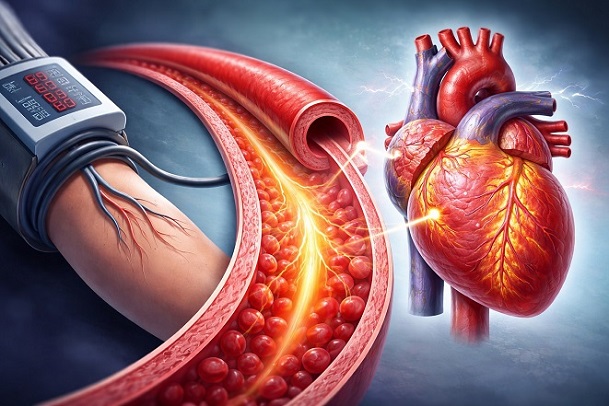 Arterial stiffness plays a central role in silently driving heart damage and progression to heart failure beyond
traditional blood pressure readings
Understanding Arterial Stiffness
Healthy arteries expand and contract with each heartbeat, helping to cushion blood flow and reduce strain on the heart. However, when arteries lose this flexibility, pressure waves travel faster and return earlier, increasing the workload on the heart.
This results in elevated central systolic pressure, forcing the heart to pump harder. Over time, this added stress leads to structural changes such as thickening of the heart muscle and reduced efficiency in pumping blood. Importantly, individuals with similar arm blood pressure readings can have very different levels of arterial stiffness, and therefore very different cardiovascular risks.
Early Vascular Damage Often Goes Unnoticed
One of the most important findings is that arterial stiffness can develop long before obvious symptoms of heart disease appear. Evidence from large population studies shows that even individuals with controlled or mild hypertension may already exhibit vascular changes and early signs of cardiac remodeling.
These early changes include increases in left ventricular mass and subtle alterations in heart structure, even when overall pumping function appears preserved. This suggests that cardiovascular damage begins silently and progresses over time without clear warning signs.
Pulsatile Stress and Organ Damage
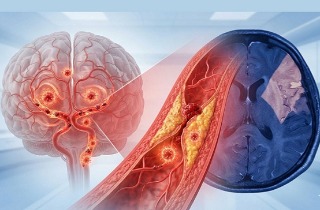
Arterial stiffness reflects the pulsatile load placed on the cardiovascular system, which is not captured by standard blood pressure measurements. As arteries stiffen, more pulsatile energy is transmitted to delicate organs such as the heart, brain, and kidneys.
This increased stress can lead to microvascular damage and contribute to serious conditions including stroke, kidney disease, and heart failure. This
Medical News report emphasizes that this mechanism helps explain why some individuals develop complications despite having apparently well-controlled blood pressure in clinical settings.
Present Across Hypertension Phenotypes
Arterial stiffness is consistently observed across different types of hypertension, including masked hypertension, nocturnal hypertension, and isolated systolic hypertension.
In each of these conditions, stiff arteries amplify the harmful effects of elevated blood pressure by increasing cardiac workload and ac
celerating structural damage. This makes arterial stiffness a common underlying factor that connects various blood pressure patterns with long-term cardiovascular complications.
Progression Toward Heart Failure
As the disease advances, arterial stiffness plays a central role in disrupting the relationship between the heart and blood vessels, a concept known as ventricular–vascular coupling.
When arteries are flexible, they help the heart pump efficiently. However, stiffened arteries increase resistance and late systolic load, leading to left ventricular hypertrophy, impaired relaxation, and eventually heart failure.
In more advanced stages, heightened sympathetic nervous system activity further worsens arterial stiffness, creating a self-reinforcing cycle that accelerates cardiovascular decline.
Clinical Implications and Future Directions
The findings suggest that assessing arterial stiffness could significantly improve cardiovascular risk evaluation. Techniques such as pulse wave velocity and cardio-ankle vascular index allow clinicians to detect early vascular damage before symptoms become apparent.
Although no therapies specifically target arterial stiffness as a primary endpoint, certain medications and lifestyle interventions show promise. Drugs that influence the renin–angiotensin system, along with structured exercise programs, have been associated with improvements in arterial flexibility.
Conclusion
Arterial stiffness should no longer be viewed as a passive consequence of aging or long-term blood pressure exposure. Instead, it represents a dynamic and influential factor that actively drives cardiovascular disease progression. By altering how pressure is transmitted through the vascular system, it contributes to heart remodeling, organ damage, and the eventual development of heart failure. Recognizing its role provides a more comprehensive understanding of cardiovascular risk and highlights the need for earlier detection and more targeted treatment strategies to reduce disease burden and improve long-term outcomes.
The study findings were published in the peer reviewed journal: Life.
https://www.mdpi.com/2075-1729/16/4/682
For the latest on arterial stiffness, keep on logging to Thailand
Medical News.
Read Also:
https://www.thailandmedical.news/news/covid-19-impairs-artery-flow-mediated-dilation-increases-systolic-blood-pressure-and-arterial-stiffness-in-young-adults
https://www.thailandmedical.news/news/16-percent-of-individuals-with-arterial-stiffness-will-develop-glaucoma
https://www.thailandmedical.news/news/covid-19-news-study-of-carotid-femoral-pulse-wave-velocity-shows-that-sars-cov-2-infections-causes-arterial-stiffness




 Share
Share
 Tweet
Tweet
 Share
Share