Nikhil Prasad Fact checked by:Thailand Medical News Team Aug 11, 2026 1 month, 3 weeks, 4 days, 15 hours, 8 minutes ago
Scientists have uncovered a striking way in which a SARS-CoV-2 protein can interfere with the tiny energy-producing structures inside human cells. The study focused on ORF7a, an accessory protein made by the virus, and found that it can dramatically reprogram cellular metabolism while weakening mitochondrial energy production.
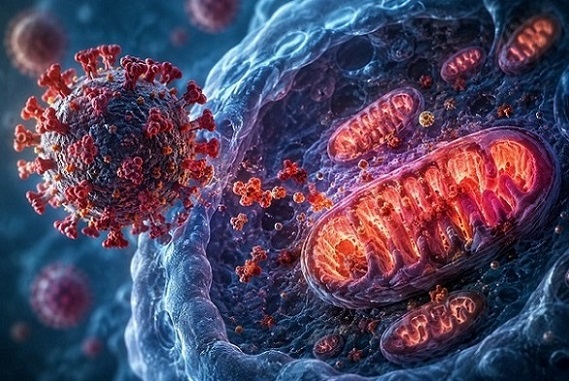 SARS-CoV-2 protein ORF7a can rewire cellular metabolism and disrupt the mitochondrial machinery
responsible for efficient energy production
Mitochondria are often described as cellular power plants because they convert nutrients into usable energy. The researchers found that ORF7a pushes cells away from efficient mitochondrial respiration and toward greater dependence on glycolysis, a less efficient process that breaks down glucose outside mitochondria.
Researchers From Multiple Spanish Institutions
The research team included scientists from the University of Córdoba; Maimónides Biomedical Research Institute of Córdoba; Centro Nacional de Investigaciones Cardiovasculares Carlos III; CIBER-CIBERFES, Instituto Carlos III; Margarita Salas Center for Biological Research, CIB-CSIC; National Institute for Aerospace Technology; Reina Sofia University Hospital; and associated research units in Córdoba and Madrid, Spain.
Researchers studied human A549 lung epithelial cells and THP1 immune cells engineered to produce ORF7a, combining protein, gene, metabolite and mitochondrial-function analyses.
ORF7a Forces Cells to Change Their Fuel Strategy
One major finding was increased glycolysis. ORF7a increased several proteins involved in processing glucose and strengthened activity involving HIF-1α, an important regulator that helps cells switch their metabolism under stressful conditions.
The metabolic disruption was extensive. Researchers identified 244 significantly altered proteins in A549 cells, including 179 that increased and 65 that decreased. They also detected 218 significantly altered metabolites. Glucose 1-phosphate rose almost threefold, while important antioxidant molecules, including glutathione, declined.
As this Thailand
Medical News report highlights, ORF7a was not simply changing how cells consumed glucose. It affected lipid metabolism, nucleotide production, antioxidant defenses and mitochondrial energy generation simultaneously.
Mitochondrial Power Production Takes a Major Hit
ORF7a significantly reduced basal mitochondrial respiration, ATP-linked respiration, maximum respiratory capacity and the cells' spare capacity for coping with increased energy demands.
The researchers also found increased reactive oxygen species, potentially damaging molecules commonly associated with oxidative stress. Importantly, mitochondria were not simply disappearing or becoming obviously structurally abnormal. Instead, their machinery was functioning poorly.
A key mechanism involved PDK4. ORF7a increased PDK4, which effectively applies a metabolic brake to the pyruva
te dehydrogenase complex. This restricts pyruvate from entering mitochondrial pathways that normally generate energy.
Yet blocking PDK4 with dichloroacetate did not restore respiration. That observation pointed investigators toward another problem.
Complex I Emerges as a Critical Target
Detailed experiments revealed selective impairment of mitochondrial complex I, a crucial component of the electron transport chain. Complex II and complex IV activity remained comparatively preserved. ORF7a also reduced the incorporation of complex I into larger respiratory “supercomplexes” required for efficient energy production.
The findings therefore suggest a double disruption: ORF7a restricts fuel entering mitochondrial metabolism through PDK4 while independently damaging the machinery needed to convert that fuel efficiently into cellular energy.
Conclusions
The results identify ORF7a as a potentially important driver of SARS-CoV-2-related metabolic dysfunction, but the experiments were mainly conducted in laboratory cell systems rather than patients. Further studies are needed to determine how strongly these mechanisms operate during actual human infection and whether targeting these metabolic pathways could eventually have therapeutic value.
The study findings were published in the peer reviewed journal: Cell Reports.
https://www.cell.com/cell-reports/fulltext/S2211-1247%2826%2900833-8
Read Also:
https://www.thailandmedical.news/articles/coronavirus
https://www.thailandmedical.news/articles/long-covid




 Share
Share
 Tweet
Tweet
 Share
Share