Nikhil Prasad Fact checked by:Thailand Medical News Team May 22, 2026 3 months, 1 week, 4 days, 20 hours, 32 minutes ago
Medical News: A new study from researchers in Uzbekistan has revealed that many people with high blood pressure who previously had COVID-19 may be silently developing early kidney damage long before standard medical tests can detect it. The findings are raising concerns among doctors because millions of people worldwide continue to live with lingering effects of the virus years after infection.
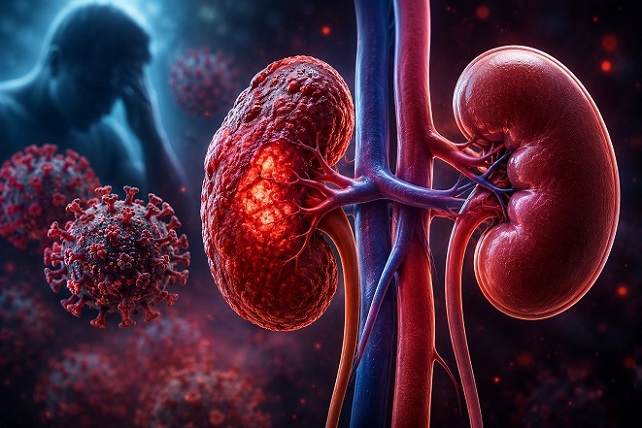 Scientists warn that COVID-19 may silently trigger early kidney damage in people with hypertension long before
standard tests detect it
The study, conducted by scientists from the Bukhara State Medical Institute, Bukhara State University, Asia International University, the National University of Uzbekistan, Chirchik State Pedagogical University, and the Tashkent State University of Oriental Studies, focused on a little-known urinary protein marker called nephrinuria. Researchers discovered that this marker appeared far earlier than traditional warning signs of kidney disease in patients with hypertension who had recovered from COVID-19.
Scientists Investigate Hidden Kidney Injury
Doctors have long relied on tests such as creatinine, estimated glomerular filtration rate (eGFR), and microalbuminuria to monitor kidney health. However, these markers usually become abnormal only after substantial kidney damage has already occurred.
The new study examined 120 adults aged between 30 and 60 years with stage I to stage III hypertension. Half of the participants had previously recovered from COVID-19, while the other half had never been infected. Researchers monitored kidney biomarkers, blood pressure, hormone levels, and kidney blood flow over six months.
What shocked researchers most was that nephrinuria levels were already significantly elevated even in patients with mild hypertension who still showed normal kidney function on conventional laboratory tests.
COVID-19 May Be Attacking Kidney Cells Earlier Than Expected
Nephrin is a special protein found in podocytes, tiny cells that help the kidneys filter waste while preventing important proteins from leaking into urine. When these podocytes become damaged, nephrin starts appearing in urine.
Researchers found that stage I hypertensive patients who had recovered from COVID-19 showed nephrinuria levels averaging 126.5 pg/mL compared to only 91.9 pg/mL in non-COVID patients. Meanwhile, standard kidney markers such as creatinine and eGFR still appeared normal.
The study suggests that SARS-CoV-2 may quietly injure kidney filtration cells long before symptoms appear or routine blood tests detect trouble.
Scientists believe the virus may trigger this damage by disrupting ACE2 receptors found in kidney tissues. These receptors also help regulate blood pressure and kidney blood flow. When disrupted by COVID-19, harmful inflammation, oxidative stress, and fibrosis may begin damaging kidney structures.
Dangerous Links Found Between Kidney Injury and Inflammation
The researchers also uncovered strong connections between nephrinuria and several harmful biological changes.
>
Patients with higher nephrinuria also had:
-Worse kidney filtration ability.
-Higher blood pressure.
-Elevated aldosterone levels.
-Increased VEGF-A, a marker linked to blood vessel damage.
-Increased TGF-β1, a protein associated with fibrosis and scarring.
This
Medical News report highlights that nephrinuria strongly correlated with declining kidney reserve and worsening kidney filtration, suggesting the damage may already be progressing even when patients feel healthy.
The researchers noted that post-COVID patients consistently showed more severe abnormalities than hypertensive patients who never had COVID-19. In many cases, the kidney damage appeared to worsen as hypertension stage increased.
Treatment Helped but Severe Cases Responded Poorly
Participants received six months of standard blood pressure treatment, including ACE inhibitors, angiotensin receptor blockers, calcium channel blockers, and diuretics.
The good news was that patients with early-stage hypertension showed meaningful improvement. Nephrinuria, blood pressure, inflammatory markers, and kidney blood flow all improved after treatment.
However, patients with stage III hypertension improved far less. Some biomarker changes were not statistically significant, suggesting that once structural kidney damage becomes advanced, reversing it may become far more difficult.
Researchers believe this finding emphasizes the importance of identifying kidney injury as early as possible after COVID-19 infection.
Conclusions
The study provides growing evidence that COVID-19 may leave behind silent but potentially dangerous kidney damage in people with hypertension, even months after recovery. Importantly, the injury may begin far earlier than current medical screening methods can detect. The findings suggest nephrinuria could become an important early warning biomarker for doctors monitoring post-COVID patients at risk of chronic kidney disease. Although larger international studies are still needed, the research raises serious concerns that millions of former COVID-19 patients worldwide may unknowingly carry early kidney damage that could worsen over time if left untreated.
The study findings were published in the peer reviewed journal: COVID.
https://www.mdpi.com/2673-8112/6/5/87
For the latest COVID-19 news, keep on logging to Thailand
Medical News.
Read Also:
https://www.thailandmedical.news/articles/coronavirus
https://www.thailandmedical.news/articles/long-covid




 Share
Share
 Tweet
Tweet
 Share
Share