Herbal Tea That is Falsely Promoted for Breast Cancer Sparks Safety Fears After Study
Nikhil Prasad Fact checked by:Thailand Medical News Team Jul 11, 2026 1 month, 3 weeks, 1 day, 20 hours, 15 minutes ago
Medical News: For generations, Ipomoea pes-caprae, a creeping coastal plant widely used in traditional medicine throughout tropical regions, has been brewed into herbal tea to help relieve kidney disorders, inflammation, rheumatism, asthma, wounds, and other ailments. It was recently falsely promoted in North and South America as a remedy for breast cancer. A new preclinical study is raising fresh questions about its safety after researchers found that although the tea possesses antioxidant properties, it also caused severe toxic effects in laboratory animals and failed to significantly slow the growth of an aggressive form of breast cancer.
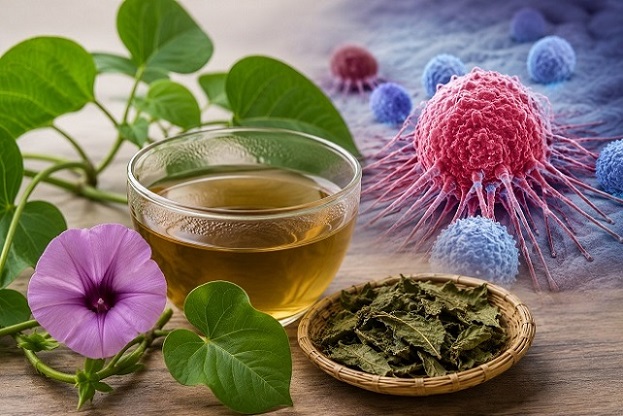 A new study found that Ipomoea pes-caprae tea has antioxidant properties but also caused severe toxicity without
significantly slowing aggressive breast cancer growth in laboratory animals
The research was conducted by scientists from the Department of Molecular Medicine and Faculty of Chemical Sciences at the University of Colima, the State Cancerology Institute of Colima (IMSS-BIENESTAR), the Molecular Medicine Laboratory at the Autonomous University of Zacatecas, the Mexican Institute of Social Security, and Florida International University's Research Center in Minority Institutions and Robert Stempel College of Public Health and Social Work.
Traditional Remedy Under Scientific Scrutiny
Triple-negative breast cancer is one of the most difficult forms of breast cancer to treat because it lacks the common receptors targeted by many modern therapies. Since current treatments often cause serious side effects, researchers continue searching for safer plant-derived compounds that might offer therapeutic benefits.
Ipomoea pes-caprae has attracted scientific interest because previous laboratory studies suggested it contains biologically active compounds with antioxidant and anti-inflammatory properties. In this latest investigation, researchers evaluated a traditionally prepared leaf infusion to determine both its anti-cancer potential and its safety.
Rich Source of Natural Antioxidants
Chemical analysis showed that the tea contains abundant flavonoids, moderate levels of saponins, along with tannins and terpenoids. It also contained measurable amounts of polyphenols, compounds known for their antioxidant activity.
Laboratory testing demonstrated that the infusion neutralized approximately 72.25 percent of free radicals in a standard antioxidant assay. Researchers also identified numerous chemical components through chromatographic and spectroscopic analyses, although additional studies will be needed to fully identify all of the active compounds responsible for the observed biological effects.
Antioxidant Benefits Did Not Translate into Cancer Control
The team implanted mice with human triple-negative breast cancer cells before dividing them into groups that received either the herbal infusion, cisplatin chemotherapy, or saline.
While the herbal tea produced a slight early trend toward slower tumor growth, the effect quickly disappeared and never reached statistical significance. By comparison, cisplatin significan
tly reduced tumor growth during the study.
This
Medical News report underscores an important lesson in cancer research: strong antioxidant activity does not necessarily mean a substance can effectively stop cancer growth. The researchers emphasized that no meaningful anti-tumor benefit was demonstrated under the experimental conditions used in the study.
Severe Toxicity Became the Biggest Finding
The most unexpected outcome was the herb's safety profile. Although an initial high-dose screening produced no immediate severe reactions, repeated daily administration of the tea resulted in serious systemic toxicity. Around 40 percent of treated mice developed severe ulcer-like and blistering skin lesions on the chest, accompanied by reduced movement, worsening health, and obvious clinical deterioration.
Even more concerning, mortality reached 70 percent by the fifteenth day of treatment. Because of the severity of these adverse effects, researchers terminated treatment earlier than originally planned. Neither the untreated animals nor those receiving cisplatin developed similar skin damage or experienced comparable mortality.
The investigators believe the toxicity may result from one or more biologically active compounds present in the crude infusion, although the responsible substances have not yet been identified.
Researchers Urge Careful Evaluation
The scientists cautioned that these findings should not be interpreted as direct evidence that people who traditionally consume Ipomoea pes-caprae tea face the same risks. Traditional preparations often involve different methods, lower doses, less frequent consumption, and are typically used by individuals without advanced cancer.
Nevertheless, the findings demonstrate that traditional use alone cannot be considered proof of safety, particularly when medicinal plants are standardized, concentrated, or repeatedly administered under experimental conditions. Future research will focus on identifying the toxic compounds, optimizing safer doses, conducting comprehensive toxicology studies, and determining whether individual purified plant compounds may retain beneficial properties without causing serious harm.
Conclusion
Although Ipomoea pes-caprae tea demonstrated notable antioxidant activity, the study found no statistically significant evidence that it could effectively suppress aggressive triple-negative breast cancer. Instead, repeated administration produced severe systemic toxicity and high mortality in the experimental model, highlighting the urgent need for rigorous safety testing before this traditionally consumed herbal preparation can be considered for therapeutic or nutraceutical use.
The study findings were published in the peer reviewed journal: Nutrients.
https://www.mdpi.com/2072-6643/18/14/2248
For the latest on herbs and phytochemicals, keep on logging to Thailand
Medical News.
Read Also:
https://www.thailandmedical.news/articles/herbs-and-phytochemicals
https://www.thailandmedical.news/articles/cancer




 Share
Share
 Tweet
Tweet
 Share
Share