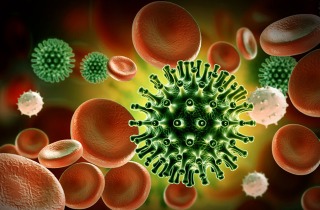
Epicatechin Identified as Potential Inhibitor of Epstein-Barr Virus’s Cancer-Causing Protein Called LMP1
Nikhil Prasad Fact checked by:Thailand Medical News Team Apr 09, 2026 5 months, 3 weeks, 5 days, 12 hours, 12 minutes ago
Medical News: A new scientific study has uncovered promising evidence that a naturally occurring compound found in green tea may help target a key cancer-promoting protein linked to the Epstein-Barr virus (EBV). The findings highlight Epicatechin as a potential therapeutic candidate against EBV-associated malignancies, offering new hope in the search for safer and more effective treatments.
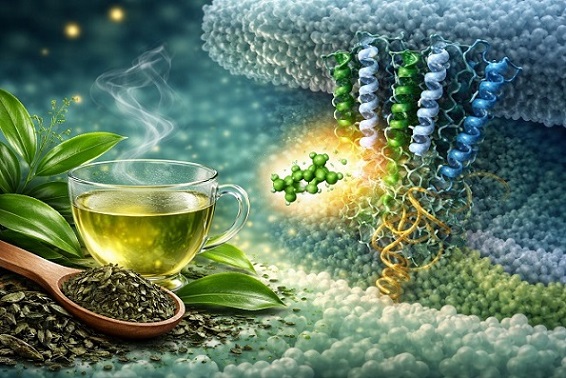 Epicatechin shows strong potential to block a key cancer-driving viral protein
A Common Virus with Serious Cancer Risks
Epicatechin shows strong potential to block a key cancer-driving viral protein
A Common Virus with Serious Cancer Risks
The Epstein-Barr virus infects the majority of the global population, often without causing symptoms. However, it is strongly associated with several cancers, including nasopharyngeal carcinoma, gastric cancer, and certain lymphomas. Central to its cancer-causing ability is a protein called Latent Membrane Protein 1 (LMP1), which continuously activates pathways that promote cell survival, growth, and resistance to cell death.
Because LMP1 acts as a major driver of tumor development, it has become a key target for researchers. Yet, finding compounds that can safely and effectively block it has remained a major challenge.
Research Approach and Institutions
The study was conducted by researchers from the Faculty of Engineering, Computing and Science at Swinburne University of Technology, Sarawak, Malaysia.
Using advanced computational techniques, the researchers screened more than 700 compounds, including vitamins, plant extracts, and tea-derived molecules. They employed molecular docking and extended molecular dynamics simulations to analyze how these compounds interact with the LMP1 protein in a realistic biological environment.
This approach allowed the team to move beyond static predictions and evaluate how stable and effective each compound might be over time.
Epicatechin Shows Strong Binding and Stability
Among the tested compounds, Epicatechin emerged as the most promising candidate. The simulations revealed that it binds strongly to critical regions of the LMP1 protein, particularly areas responsible for activating cancer-related signaling pathways.
The compound demonstrated the most favorable binding energy, indicating a strong and stable interaction. It also formed consistent hydrogen bonds with key amino acid residues, helping anchor it firmly within the protein structure. These interactions suggest that Epicatechin could interfere with the protein’s function and potentially disrupt the virus’s ability to promote cancer.
Supporting Role of Vitamin D Compounds
The study also identified Vitamin D2 and related compounds as noteworthy candidates. While their binding strength was lower than that of Epicatechin, they showed excellent structural stability and compact interaction with the protein.
This indicates that Vitamin D compounds may contribute to therapeutic strategies by stabilizing or altering the protein’s behavior in complementary ways.
Safety and Drug Development Potential&l
t;br />
A critical aspect of the study was evaluating how these compounds might behave in the human body. Epicatechin demonstrated a relatively favorable safety profile, with minimal interference in key metabolic pathways and lower risk of harmful drug interactions.
Other compounds, while effective in certain areas, showed higher risks related to metabolism or toxicity. This positions Epicatechin as a more balanced and potentially safer starting point for future drug development.
This
Medical News report emphasizes that naturally derived compounds may provide a valuable pathway toward developing targeted therapies with fewer side effects.
Broader Implications for Treatment
The findings reinforce the growing interest in nutraceuticals - natural compounds derived from foods and plants - as potential therapeutic agents. By targeting LMP1, Epicatechin may help disrupt the mechanisms that allow EBV to drive cancer progression.
The study also highlights the potential of combining multiple compounds to target different aspects of the virus, which could improve treatment effectiveness.
Conclusion
The identification of Epicatechin as a strong inhibitor of the EBV LMP1 protein represents a significant step forward in the search for targeted therapies against virus-related cancers. Its ability to bind stably, interact with critical protein regions, and maintain a favorable safety profile makes it a compelling candidate for further investigation. However, these findings are based on computational models, and extensive laboratory and clinical validation will be required. If future studies confirm these results, Epicatechin could become part of a new generation of safer, more accessible treatments for EBV-associated malignancies, potentially transforming current therapeutic approaches.
The study findings were published in the peer reviewed Journal of Molecular Graphics and Modelling.
https://www.sciencedirect.com/science/article/pii/S1093326326001269
For the latest on EBV, keep on logging to Thailand
Medical News.
Read Also:
https://www.thailandmedical.news/articles/herbs-and-phytochemicals




 Share
Share
 Tweet
Tweet
 Share
Share