Nikhil Prasad Fact checked by:Thailand Medical News Team Aug 10, 2026 1 month, 3 weeks, 5 days, 13 hours, 11 minutes ago
Doctors are drawing attention to a rare but potentially serious blood complication that can appear weeks or even months after SARS-CoV-2 infection. A newly published case and review suggest that COVID-19 may trigger pure red cell aplasia (PRCA), a disorder in which the bone marrow suddenly becomes unable to produce enough red blood cells.
 Doctors report that SARS-CoV-2 may rarely trigger severe post-COVID red cell aplasia, with rituximab producing
lasting recovery in a treatment-resistant case
The report is particularly noteworthy because the latest patient developed the condition after mild COVID-19, showing that this unusual complication is not necessarily restricted to people who become severely ill with the infection.
When the Bone Marrow Stops Making Red Blood Cells
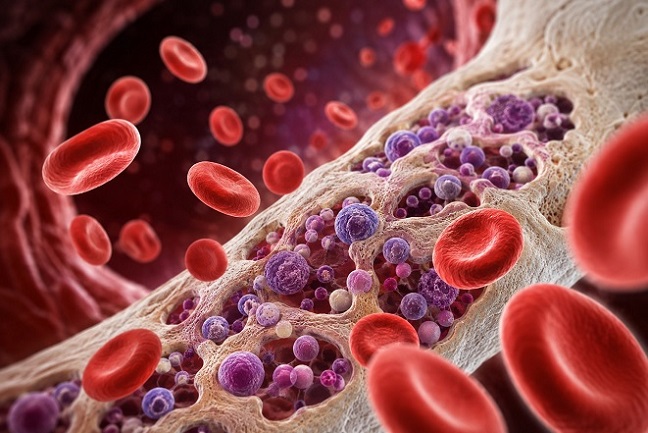
PRCA is different from many other forms of anemia. In this condition, the bone marrow largely stops producing the immature cells needed to make new red blood cells, while production of white blood cells and platelets can remain relatively normal.
The researchers were from Hamad Medical Corporation (HMC), Doha, Qatar; the National Centre for Cancer Care and Research (NCCCR), Doha, Qatar; and Weill Cornell Medicine–Qatar, Doha, Qatar.
Their report involved a 72-year-old man who developed fatigue, weakness and palpitations approximately four weeks after recovering from mild COVID-19. His infection had lasted around seven to ten days and had not required hospitalization.
Blood testing revealed that his hemoglobin had fallen to 7.0 grams per deciliter, far below the normal range of 13 to 17. More importantly, his absolute reticulocyte count was only 3,100 per microliter, compared with a normal range of approximately 50,000 to 100,000. Reticulocytes are newly produced red blood cells, so extremely low numbers indicated that his body was failing to replace them.
Extensive Tests Pointed Toward PRCA
Doctors investigated numerous alternative explanations. Nutritional deficiencies, abnormal destruction of red blood cells, autoimmune and connective tissue disorders, HIV, hepatitis, parvovirus B19 and medication-related causes were excluded. Imaging found no thymoma or solid cancer, while extensive genetic testing found no evidence of myelodysplastic or myeloproliferative blood disorders.
Bone marrow examination provided the strongest evidence. Production of white blood cells and platelet-forming cells remained active, but red blood cell development was dramatically reduced and largely restricted to very early precursor cells.
As highlighted in this Thailand
Medical News report, the findings support the possibility that SARS-CoV-2 can occasionally provoke prolonged immune abnormalities that interfere specifically with red blood cell production.
Rituximab Succeeded After Other Treatments Failed
Treatment initially proved difficult. Intravenous immunoglobulin and corticosteroids failed to produce a meaningful improvement, and the patient's hemoglobin eventually dropped to
a dangerous 4.9 grams per deciliter, leaving him dependent on repeated blood transfusions.
Cyclosporine produced only a partial response before the disease returned approximately eight weeks later. Doctors subsequently introduced rituximab, a medicine that targets CD20-positive B immune cells.
After four weekly doses, the results were striking. His hemoglobin increased to 12 grams per deciliter within four weeks, and the remission remained sustained at the one-year follow-up.
Earlier Cases Reveal a Similar Pattern
The researchers reviewed eight previously reported cases of COVID-19-associated PRCA. Patients were between 28 and 77 years old, and seven of the eight were men. Anemia appeared from two weeks to seven months after SARS-CoV-2 infection, although onset was most commonly within four to eight weeks.
Patients developed extremely severe anemia, with hemoglobin ranging from 3.4 to 7.4 grams per deciliter. Bone marrow examinations repeatedly demonstrated severely reduced red blood cell precursors while other blood-forming cell lines remained relatively preserved.
Importantly, seven of the eight patients experienced hematological recovery, while the outcome of one patient remained uncertain because follow-up information was unavailable.
Conclusions
The findings suggest that post-COVID PRCA remains exceptionally rare but should be considered when severe, unexplained anemia develops after SARS-CoV-2 infection. Its occurrence following mild disease also indicates that the severity of the original COVID-19 episode may not predict this complication. The successful use of rituximab further suggests that targeting abnormal immune activity could help patients who fail conventional treatments, although additional research involving more patients is needed.
The study findings were published in the peer reviewed journal: SAGE Open Medical Case Reports.
https://journals.sagepub.com/doi/10.1177/2050313X251412704#tab-contributors
Read Also:
https://www.thailandmedical.news/articles/coronavirus
https://www.thailandmedical.news/articles/long-covid




 Share
Share
 Tweet
Tweet
 Share
Share