Nikhil Prasad Fact checked by:Thailand Medical News Team Jun 05, 2026 4 months, 11 hours, 47 minutes ago
Medical News: Heart failure remains one of the leading causes of illness and death worldwide, affecting millions of people despite major advances in modern medicine. While existing treatments have improved survival rates and quality of life for many patients, significant gaps remain, especially among individuals with different forms of heart failure. Now, a new scientific review is drawing attention to a little-known biological process called protein S-nitrosylation, suggesting it could play a far more important role in heart failure than previously recognized.
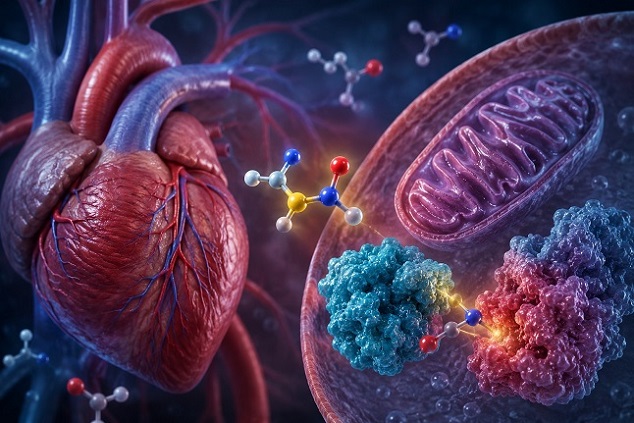
Researchers reveal how disruptions in protein S-nitrosylation may influence energy production, calcium handling, and
disease progression in heart failure.
The review was conducted by researchers from the Department of Cardiology, Lanzhou University Second Hospital, Lanzhou University, Lanzhou, China, and the Department of Cardiac Surgery, Lanzhou University Second Hospital, Lanzhou, China.
Understanding Protein S-Nitrosylation
Protein S-nitrosylation is a reversible chemical modification that occurs when nitric oxide-related molecules attach to specific amino acids known as cysteines within proteins. Although this process may sound highly technical, it essentially acts as a molecular switch that can alter how proteins behave inside cells.
The researchers explain that protein S-nitrosylation influences a wide range of biological activities, including energy production, calcium regulation, cellular communication, stress responses, and blood vessel function. All of these processes are essential for maintaining a healthy heart.
Unlike traditional nitric oxide signaling, which operates more broadly throughout the cardiovascular system, protein S-nitrosylation often occurs within highly specialized cellular compartments, allowing it to fine-tune the behavior of individual proteins.
A Growing Link to Heart Failure
According to the review, mounting evidence suggests that disruptions in protein S-nitrosylation may contribute to many of the biological changes seen in heart failure.
Researchers found that altered S-nitrosylation has been associated with microvascular dysfunction, impaired mitochondrial energy production, abnormal calcium handling, fibrosis, inflammation, and stress-related signaling pathways. These abnormalities are all known contributors to heart failure progression.
Importantly, the review highlights that changes in protein S-nitrosylation do not necessarily mirror changes in traditional nitric oxide signaling pathways. This means that even when nitric oxide-related signaling appears normal, disruptions in protein S-nitrosylation may still be occurring deep within heart cells.
Mitochondria and Energy Production Under Threat
One of the most compelling areas discussed in the review involves mitochondria, the energy-producing structures found inside cells.
The researchers describe evidence showing that abnormal protein S-nitrosylation can affect key mitochondrial proteins involved in energy generation. Some studies found that altered S-nitrosylati
on interferes with oxidative phosphorylation, the process through which cells generate most of their energy supply.
When the heart cannot efficiently produce energy, its ability to pump blood effectively becomes compromised. This may contribute to worsening symptoms and declining cardiac function in patients with heart failure.
The review also notes that proteins involved in mitochondrial quality control and repair appear to be influenced by S-nitrosylation, suggesting that disruptions could accelerate cellular damage over time.
Calcium Imbalances and Irregular Heart Function
Another important finding involves calcium regulation. Every heartbeat depends on tightly controlled movements of calcium ions within heart muscle cells. The review discusses evidence that abnormal S-nitrosylation may alter the behavior of proteins responsible for controlling calcium release and reuptake.
Particular attention was given to a protein known as ryanodine receptor 2 (RyR2). Studies have shown that reduced S-nitrosylation of this protein may contribute to calcium leakage inside heart cells, leading to weakened contractions and potentially dangerous heart rhythm disturbances.
Researchers believe that such disruptions may play a role in both the mechanical and electrical dysfunction that characterizes many forms of heart failure.
Evidence Remains Strong but Incomplete
This
Medical News report notes that one of the most important messages from the review is the need for caution when interpreting existing findings. While numerous studies have linked protein S-nitrosylation to heart failure-related processes, much of the available evidence comes from laboratory experiments, animal studies, and cellular models. Direct confirmation in human heart tissue remains relatively limited.
The researchers therefore emphasize that many proposed mechanisms should currently be viewed as promising hypotheses rather than fully established causes of heart failure.
The review also highlights significant technical challenges in measuring protein S-nitrosylation accurately. Different analytical techniques can produce varying results, making it difficult to compare findings across studies and identify the most clinically relevant targets.
New Opportunities for Future Therapies
Despite these challenges, scientists believe that protein S-nitrosylation could become an important therapeutic target.
Rather than broadly increasing nitric oxide levels, future treatments may focus on restoring normal S-nitrosylation patterns within specific regions of heart cells.
Such precision-based approaches could potentially improve energy metabolism, reduce fibrosis, stabilize calcium handling, and protect heart muscle function.
Researchers also suggest that protein S-nitrosylation profiles may eventually serve as biomarkers that help identify patients at risk of disease progression or treatment failure.
Conclusions
The new review provides compelling evidence that protein S-nitrosylation is emerging as an important regulatory mechanism in heart failure biology. Although many questions remain unanswered, the accumulated research suggests that disruptions in this molecular signaling system may influence multiple pathways involved in disease progression, including energy production, calcium regulation, fibrosis, inflammation, and cellular stress responses. The researchers stress that future investigations must focus on human heart tissue, precise site-specific measurements, and stronger clinical validation. If these challenges can be addressed, protein S-nitrosylation may eventually become both a valuable biomarker and a promising therapeutic target capable of transforming how heart failure is diagnosed, monitored, and treated.
The study findings were published in the peer reviewed journal: Antioxidants.
https://www.mdpi.com/2076-3921/15/6/716
For the latest on Heart Failures, keep on logging to Thailand
Medical News.
Read Also:
https://www.thailandmedical.news/articles/cardiology




 Share
Share
 Tweet
Tweet
 Share
Share