Nikhil Prasad Fact checked by:Thailand Medical News Team Feb 15, 2026 6 months, 2 weeks, 1 day, 16 hours, 37 minutes ago
Medical News: Scientists uncover powerful cartilage-protecting effects from a mushroom
Osteoarthritis is one of the most common causes of joint pain and disability worldwide, especially among older adults. It occurs when cartilage—the smooth tissue that cushions joints—gradually breaks down. Once cartilage is damaged, joints become stiff, swollen, and painful, often leading to long-term mobility problems. Now, scientists in China have discovered that a natural compound derived from a traditional medicinal mushroom may slow or even prevent this destructive process. This
Medical News report highlights how the phytochemical, called poricoic acid A, could represent a promising new approach for treating osteoarthritis at its root cause.
 Natural mushroom compound protects cartilage and slows joint degeneration in breakthrough osteoarthritis study
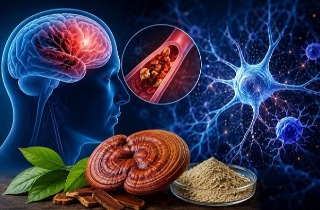
The study was conducted by researchers from the Department of Orthopaedic Surgery at Tongji Hospital, Tongji Medical College, Huazhong University of Science and Technology in Wuhan, China. Their work focused on poricoic acid A, a naturally occurring molecule extracted from the fungus Poria cocos, which has long been used in traditional medicine for its anti-inflammatory and protective properties.
How osteoarthritis destroys cartilage and joints
Osteoarthritis develops when cartilage cells, known as chondrocytes, become damaged by inflammation and abnormal signaling processes. These cells normally produce important structural molecules like collagen and proteoglycans, which keep cartilage strong and flexible. However, during osteoarthritis, inflammation causes chondrocytes to produce destructive enzymes that break down cartilage faster than it can be repaired.
One of the most harmful signaling pathways involved in this damage is called the PI3K/AKT pathway. When overactivated, this pathway accelerates inflammation, cell stress, and cartilage breakdown. The researchers wanted to determine whether poricoic acid A could block this harmful process and protect cartilage cells.
Laboratory experiments show strong cartilage protection
The research team first tested poricoic acid A on cartilage cells exposed to inflammatory conditions designed to mimic osteoarthritis. They found that the compound significantly restored the production of important cartilage components such as collagen type II and aggrecan, which are essential for cartilage strength and elasticity. At the same time, it reduced harmful enzymes like MMP3 and MMP13, which normally destroy cartilage tissue.
Importantly, the compound did not harm healthy cells, even at higher concentrations. This indicates that poricoic acid A is well tolerated and does not cause toxic effects in cartilage cells.
Animal studies confirm major protective effects
To confirm these results, the scientists tested poricoic acid A in mice with surgically induced osteoarthritis. The results were remarkable. Mice treated with the compound showed significantly less cartilage damage
compared to untreated animals. Their joints maintained smoother cartilage surfaces, better structural integrity, and fewer abnormal bone growths.
Advanced imaging revealed that poricoic acid A also protected underlying bone structures and prevented the abnormal bone thickening commonly seen in osteoarthritis. Overall, treated mice had healthier joint tissues and slower disease progression.
Key discovery reveals how the compound works
The researchers discovered that poricoic acid A works by stabilizing a protective protein called PTEN. This protein acts as a natural brake on the harmful PI3K/AKT pathway. Under inflammatory conditions, PTEN levels normally drop, allowing joint damage to accelerate. However, poricoic acid A preserved PTEN levels and prevented excessive activation of the destructive pathway.
When scientists artificially blocked PTEN, the protective effects of poricoic acid A disappeared. This confirmed that stabilizing PTEN is essential for preventing cartilage damage.
Conclusions and future implications
The findings demonstrate that poricoic acid A can directly protect cartilage, reduce inflammation, and slow osteoarthritis progression by targeting a critical molecular pathway. This is significant because current treatments mainly relieve symptoms but do not stop the underlying disease process. By preserving cartilage and blocking destructive signaling, poricoic acid A could potentially serve as a disease-modifying therapy rather than just a pain reliever. While more research is needed to confirm its safety and effectiveness in humans, this natural compound offers real hope for developing safer, more effective treatments that address the root cause of osteoarthritis and help millions maintain mobility and quality of life.
The study findings were published in the peer reviewed International Journal of Molecular Sciences.
https://www.mdpi.com/1422-0067/27/4/1835
For the latest on Osteoarthritis, keep on logging to Thailand
Medical News.
Read Also:
https://www.thailandmedical.news/articles/arthritis
https://www.thailandmedical.news/articles/herbs-and-phytochemicals




 Share
Share
 Tweet
Tweet
 Share
Share