The Supplement HMB and the Diabetes Drug Liraglutide Together Counter Diabetic Muscle Loss
Nikhil Prasad Fact checked by:Thailand Medical News Team Jun 11, 2026 1 month, 3 weeks, 1 day, 20 hours, 12 minutes ago
Medical News: A new study by researchers in Taiwan has found that combining the nutritional supplement HMB with the diabetes drug liraglutide may offer powerful protection against muscle loss associated with type 2 diabetes. The findings are particularly significant as growing numbers of patients using GLP-1 receptor agonists such as liraglutide face concerns about losing not only fat but also valuable muscle mass during treatment.
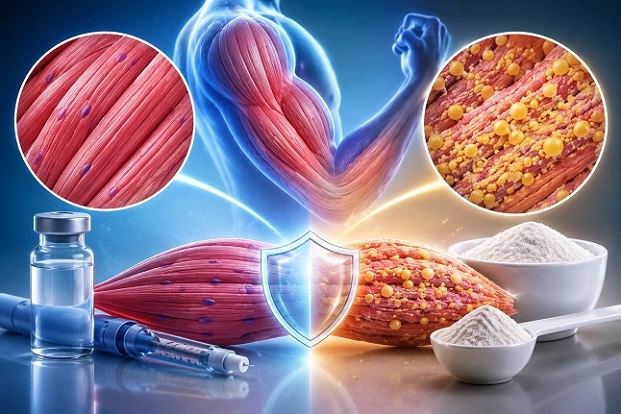 Scientists find that combining HMB with liraglutide protects muscle cells from diabetic damage while improving
metabolism and reducing muscle-wasting signals
The research was conducted by scientists from Chung Shan Medical University, Chung Shan Medical University Hospital, National Taiwan University of Sport, and National Chung Hsing University in Taiwan. Their study explored whether HMB could help preserve muscle health under diabetic conditions characterized by high blood sugar levels, elevated fatty acids, insulin resistance, and ongoing metabolic stress.
The Overlooked Muscle Crisis in Type 2 Diabetes
Type 2 diabetes is widely known for causing complications involving the heart, kidneys, eyes, and nervous system. However, one of its most overlooked complications is sarcopenia, a progressive condition involving the loss of muscle mass, muscle strength, and physical function.
Muscles play a crucial role in regulating blood sugar by absorbing glucose from the bloodstream. When muscle mass declines, blood sugar control often worsens. At the same time, high blood sugar and elevated fatty acid levels further damage muscle tissue, creating a vicious cycle that accelerates both diabetes progression and physical decline.
Scientists have increasingly recognized that excess fatty acids can accumulate inside muscle cells, leading to a condition known as lipotoxicity. This accumulation disrupts normal cellular processes, damages mitochondria, increases oxidative stress, impairs insulin signaling, and activates pathways that promote muscle breakdown.
What Is HMB and Why Are Scientists Interested in It?
HMB, or β-hydroxy-β-methylbutyrate, is a naturally occurring compound produced when the body metabolizes leucine, an essential amino acid found in protein-rich foods such as meat, fish, eggs, and dairy products.
Although only a small fraction of dietary leucine is converted into HMB, scientists have long been interested in HMB because of its unique effects on muscle tissue. Unlike conventional protein supplements, HMB not only supports muscle protein synthesis but also reduces muscle protein breakdown.
Previous studies have shown that HMB may help preserve muscle mass in older adults, athletes, hospitalized patients, and individuals suffering from muscle-wasting disorders. Research suggests that HMB works by activating muscle-building pathways such as mTOR while suppressing catabolic pathways responsible for muscle destruction.
Because muscle wasting is common among diabetic patients, researchers wanted to determine whether HMB could serve as a protective companion to liraglutide therapy.
t;
Investigating Muscle Damage Under Diabetic Conditions
To examine this possibility, the research team exposed cultured skeletal muscle cells to extremely high glucose levels together with elevated free fatty acids. This created a diabetic-like environment that closely mimics the metabolic stress experienced by many individuals with type 2 diabetes.
The muscle cells were then treated with liraglutide alone, HMB alone, or a combination of both compounds.
The diabetic conditions rapidly triggered significant cellular damage. Fat droplets accumulated inside muscle cells, insulin signaling pathways became impaired, glucose uptake declined, mitochondrial function deteriorated, oxidative stress increased, and muscle-wasting pathways became activated.
Researchers also observed increases in atrogin-1 and MuRF1, two proteins strongly associated with muscle atrophy and degradation.
Liraglutide and HMB Show Different Strengths
The study revealed that liraglutide and HMB appear to protect muscles through different but complementary mechanisms.
Liraglutide reduced the accumulation of large fat droplets within muscle cells and partially restored insulin signaling. It also improved glucose utilization, helping cells regain some of their ability to process sugar effectively.
However, liraglutide alone showed limited ability to preserve overall muscle structure. Important markers of healthy muscle tissue remained suppressed, and muscle-wasting signals continued to be activated.
HMB produced a different pattern of benefits. While it had only modest effects on fat accumulation, it significantly preserved muscle cell size and structure. Muscle fibers exposed to HMB maintained a larger healthy area and showed greater resistance to diabetic stress.
Combination Therapy Produces Superior Results
The most impressive findings emerged when HMB and liraglutide were administered together.
The combination significantly reduced lipid accumulation inside muscle cells, restored insulin signaling pathways, improved glucose uptake, and helped normalize mitochondrial function. Researchers also observed a major reduction in reactive oxygen species, highly damaging molecules that contribute to cellular aging and tissue destruction.
In addition, the combination restored the activity of antioxidant defense genes including SOD1, SOD2, and catalase, all of which had been severely suppressed by diabetic stress.
Perhaps most importantly, combined treatment preserved muscle fiber diameter, maintained expression of key muscle proteins such as MyHC, MyoD, and myogenin, and significantly reduced levels of the muscle-wasting proteins atrogin-1 and MuRF1.
Further analysis revealed that these protective effects were closely linked to activation of the mTOR pathway and suppression of FOXO signaling, two major biological systems that regulate whether muscle tissue grows or undergoes breakdown.
This
Medical News report highlights that the combined therapy addressed not only metabolic dysfunction but also the fundamental molecular mechanisms driving diabetic muscle loss.
Conclusion
The findings suggest that HMB and liraglutide may represent a promising combination strategy for combating diabetes-associated sarcopenia. While liraglutide primarily improves metabolic abnormalities by reducing lipid accumulation and enhancing insulin signaling, HMB appears to directly protect muscle tissue by preserving muscle structure, promoting anabolic activity, and suppressing catabolic pathways. Together, the two compounds provided substantially greater protection against lipotoxicity, oxidative stress, mitochondrial dysfunction, insulin resistance, and muscle atrophy than either treatment alone. Although these findings were generated in laboratory muscle cell models and require confirmation in animal studies and human clinical trials, they provide compelling evidence that HMB supplementation may help preserve muscle mass and function in diabetic patients receiving GLP-1-based therapies. As concerns continue to grow regarding muscle loss during weight-loss treatment, this combination approach could eventually become an important strategy for maintaining both metabolic health and physical strength.
The study findings were published in the peer reviewed journal: Nutrients.
https://www.mdpi.com/2072-6643/18/12/1865
For the latest research on diabetes, keep on logging to Thailand
Medical News.
Read Also:
https://www.thailandmedical.news/articles/diabetes




 Share
Share
 Tweet
Tweet
 Share
Share