Nikhil Prasad Fact checked by:Thailand Medical News Team Mar 13, 2026 4 months, 3 weeks, 12 hours, 31 minutes ago
Medical News: Scientists Investigate Strange Neurological Condition Appearing After COVID
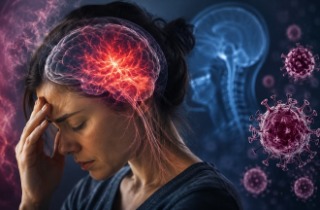
Doctors and scientists around the world are increasingly paying attention to a rare but alarming neurological condition that may appear after COVID-19 infections. The condition, known as catatonia, can dramatically affect a person’s ability to move, speak, or respond to the world around them. In some cases, patients suddenly stop talking, become rigid or motionless, or resist simple instructions without explanation.
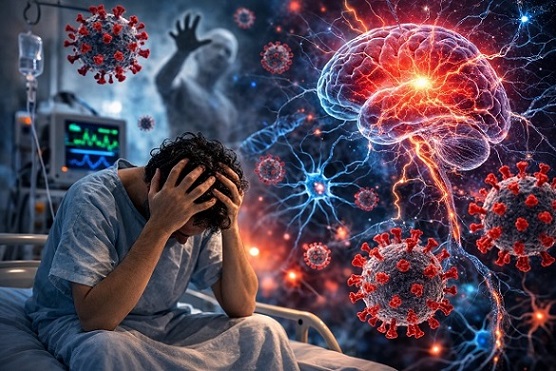 New research investigates whether COVID-19 infection could trigger rare catatonia symptoms affecting
speech, movement and behavior
Although catatonia has been recognized in medicine for more than a century, its possible connection to COVID-19 has only recently started drawing scientific attention. Researchers are now examining whether the virus can trigger neurological disruptions that lead to this unusual syndrome. This
Medical News report highlights new research that attempts to answer that question.
What Exactly Is Catatonia
Catatonia is a complex condition that affects the brain’s control of movement and behavior. People experiencing catatonia may show a wide range of symptoms. Some individuals become completely silent, a symptom called mutism. Others may freeze in unusual body positions or resist attempts by caregivers to move them.
Doctors have identified nearly forty different symptoms associated with the condition. Some patients show repetitive movements or mimic the speech and actions of others. In severe cases, the disorder can affect vital body functions, leading to unstable heart rate or fever.
For many years, catatonia was thought to be linked mainly to schizophrenia. However, modern psychiatric research has revealed that the syndrome can occur in many conditions, including severe depression, bipolar disorder, neurological illnesses, and infections. Scientists now believe catatonia occurs when the brain’s motor regulation system stops functioning properly.
Brain Chemistry May Play a Key Role
Researchers suspect that disruptions in several important brain chemicals may contribute to catatonia. These include gamma-aminobutyric acid (GABA), dopamine, and glutamate, which all help regulate movement and emotional responses.
When these chemical systems malfunction, communication between different parts of the brain can break down. This may cause the unusual motor symptoms and behavioral changes seen in catatonia.
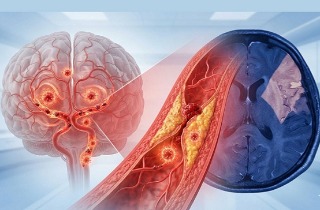
COVID-19 has already been linked to a wide range of neurological and psychiatric complications. Scientists believe inflammation triggered by the infection may affect the nervous system, which could potentially contribute to rare conditions like catatonia.
Inside the New Study
To better understand whether COVID-19 might influence the appearance of catatonia, researchers conducted a four-year investigation examining patient records fr
om psychiatric services. The study involved scientists from Kocaeli University Faculty of Medicine in Türkiye, Iğdır Dr. Nevruz Erez State Hospital in Türkiye, Erenköy Training and Research Hospital for Mental Health and Neurological Disorders in Istanbul, the University of Health Sciences Van Training and Research Hospital in Türkiye, and the University of Alberta in Canada.
The research team reviewed cases treated between 2018 and 2022, allowing them to compare patients diagnosed before the COVID-19 pandemic with those diagnosed afterward. In total, forty individuals diagnosed with catatonia were included in the study.
The patients had an average age of about forty years, and the group contained an equal number of men and women. Many of them already had underlying psychiatric conditions such as schizophrenia, depressive disorders, or bipolar disorder.
Key Symptoms Observed in Patients
When doctors examined the symptoms of the patients, several patterns emerged. The most common symptom was mutism, which affected more than ninety percent of patients. Many patients also displayed catalepsy, a condition where the body maintains rigid or abnormal positions for extended periods.
Another frequently observed symptom was negativism, where patients resist instructions or attempts to move them. Other symptoms such as unusual facial expressions, agitation, or mimicry of speech were seen far less frequently.
Did COVID-19 Increase Catatonia Cases
One of the main goals of the study was to determine whether the COVID-19 pandemic caused an increase in catatonia cases. Surprisingly, the results showed no clear rise in cases during the pandemic years.
Before the pandemic began, doctors recorded eighteen catatonia cases. During the following two years, twenty-two cases were identified. Although the number increased slightly, the difference was not considered statistically significant.
Only two patients in the study had experienced COVID-19 infection in the month before developing catatonic symptoms. Because the infections occurred outside the strict timeframe defined by the researchers, they could not be conclusively linked to the syndrome.
Why Catatonia May Be Underdiagnosed
Experts believe catatonia may actually be more common than currently recognized. In many hospitals, the condition is overlooked because its symptoms can resemble other psychiatric disorders.
Doctors say improved awareness and screening tools may help identify more patients who are experiencing catatonia. Early recognition is important because effective treatments exist, including medications that affect brain chemistry and specialized therapies that restore normal brain activity.
Conclusion
The new research suggests that while catatonia has occasionally appeared after COVID-19 infection, there is currently no strong evidence showing that the pandemic significantly increased the number of cases. Nevertheless, the study highlights the need for continued research into the neurological effects of viral infections. Understanding how viruses interact with the brain could help doctors better diagnose and treat complex psychiatric conditions like catatonia. As scientists continue to explore these connections, future studies involving larger patient groups and multiple hospitals may finally clarify whether COVID-19 can trigger this unusual neurological syndrome and how doctors should respond when it occurs.
The study findings were published in the peer reviewed journal: Frontiers in Psychiatry.
https://www.frontiersin.org/journals/psychiatry/articles/10.3389/fpsyt.2026.1755846/full
For the latest COVID-19 News, keep on logging to Thailand
Medical News.
Read Also:
https://www.thailandmedical.news/articles/coronavirus
https://www.thailandmedical.news/articles/long-covid




 Share
Share
 Tweet
Tweet
 Share
Share