Nikhil Prasad Fact checked by:Thailand Medical News Team Feb 19, 2026 6 months, 1 week, 4 days, 7 hours, 34 minutes ago
Medical News: A new study by scientists in Germany and Switzerland has uncovered troubling evidence that COVID-19 can disrupt the body’s immune and blood clotting systems in ways that significantly increase the risk of stroke. The research was conducted by experts from Hannover Medical School, the University of Veterinary Medicine Hannover, the Research Center for Emerging Infections and Zoonoses, University Medical Center Göttingen, Goethe University Frankfurt, University Hospital of Augsburg, and University Hospital Basel. Their findings shed new light on how SARS-CoV-2, the virus behind COVID-19, can trigger dangerous changes in the blood that may block blood flow to the brain.
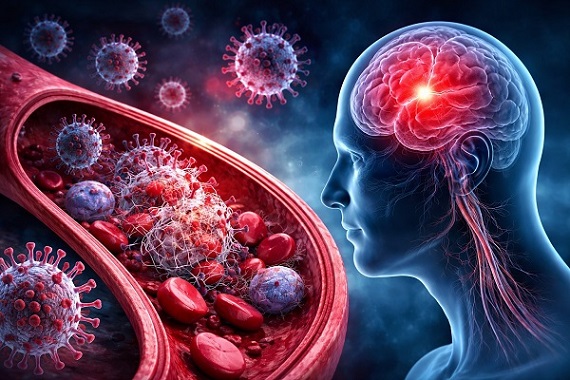 Study reveals COVID-19 triggers immune traps that increase stroke risk
How COVID-19 Can Trigger Stroke
Study reveals COVID-19 triggers immune traps that increase stroke risk
How COVID-19 Can Trigger Stroke
Doctors have known since early in the pandemic that COVID-19 patients faced a higher risk of blood clots. These clots can travel through blood vessels and block circulation, causing serious conditions such as heart attacks or strokes. However, until now, the precise biological mechanisms behind this increased risk were not fully understood.
This
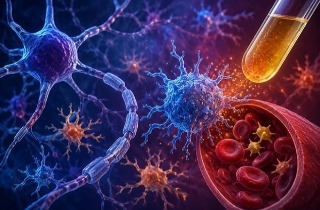
Medical News report highlights that the immune system plays a major role in this process. When the body detects an infection, certain immune cells called neutrophils release web-like structures known as neutrophil extracellular traps, or NETs. These NETs are meant to capture and destroy invading viruses and bacteria. However, when produced in excess, they can instead promote blood clot formation.
These NETs act like sticky nets in the bloodstream, trapping not only viruses but also platelets and clotting proteins. This increases the chance that a clot will form and block important blood vessels, including those supplying the brain.
How The Study Was Conducted
The researchers examined blood samples from 84 patients divided into three groups. The first group included patients who had both COVID-19 and an ischemic stroke or transient ischemic attack, which is often called a mini-stroke. The second group consisted of stroke patients who did not have COVID-19, while the third group included COVID-19 patients without stroke.
The team carefully measured several biological markers in the blood. These included markers linked to NET formation such as citrullinated histone H3 and neutrophil elastase, as well as DNase, an enzyme responsible for breaking down NETs. They also analyzed inflammatory molecules known as cytokines.
Patients who had COVID-19, whether or not they experienced stroke, showed significantly higher levels of NET-related markers. For example, elastase levels reached as high as 433.1 ng/mL in COVID-19 patients compared to only 195.1 ng/mL in stroke patients without infection. Elevated citrullinated histone levels were also clearly observed in COVID-19 patients. These findings confirmed that COVID-19 strongly activates NET formation.
Dangerous Breakdown in The Body’s Defense Balance
Perhaps even more concerning was th
e discovery that patients who had both COVID-19 and stroke showed reduced activity of DNase, the enzyme that normally breaks down NETs. DNase activity dropped to 6.12 pmol/mL/min in patients with both COVID-19 and stroke, compared to more than 7.16 pmol/mL/min in stroke patients without infection.
This imbalance means the body was producing more NETs while simultaneously losing its ability to clear them efficiently. This created a dangerous environment where excessive immune traps accumulated in the bloodstream, increasing clot risk.
The researchers also observed that inflammatory signaling molecules contributed to clot formation. These inflammatory chemicals can activate clotting pathways and damage blood vessels, further increasing the chances of stroke.
Why Some COVID-19 Patients Are More at Risk
Interestingly, many patients in the study who developed stroke during COVID-19 did not show severe respiratory symptoms. This suggests that even mild or unnoticed COVID-19 infections can trigger hidden immune and clotting abnormalities.
The study also found that stroke risk was not simply due to traditional risk factors like age or hypertension. Instead, the virus itself appeared to directly alter immune and clotting processes, making patients vulnerable regardless of other conditions.
Major Implications for Future Treatment
These findings reveal that COVID-19 does more than infect the lungs. It can disrupt the delicate balance between immune defense and clot prevention, increasing the risk of dangerous brain blockages. The discovery that reduced DNase activity and excessive NET formation contribute to stroke risk opens the door for new treatments.
Future therapies could focus on restoring DNase activity or limiting NET formation. Such treatments may help prevent clot-related complications not only in COVID-19 patients but also in other viral infections that trigger similar immune responses.
Conclusion
The study provides important new evidence that COVID-19 can disrupt the body’s immune and clotting systems in dangerous ways. Excessive immune trap formation combined with reduced breakdown mechanisms creates a perfect environment for blood clots to develop. This helps explain why some COVID-19 patients suddenly suffer strokes even without severe respiratory symptoms. These findings highlight the urgent need for new medical strategies targeting immune-driven clot formation to reduce stroke risk and improve patient outcomes during viral infections.
The study findings were published in the peer reviewed journal: Frontiers in Immunology.
https://www.frontiersin.org/journals/immunology/articles/10.3389/fimmu.2026.1662418/full
For the latest COVID-19 news, keep on logging to Thailand
Medical News.
Read Also:
https://www.thailandmedical.news/articles/coronavirus
https://www.thailandmedical.news/articles/long-covid




 Share
Share
 Tweet
Tweet
 Share
Share