Nikhil Prasad Fact checked by:Thailand Medical News Team Jan 21, 2026 8 months, 2 weeks, 6 hours, 2 minutes ago
Medical News: A new laboratory study has revealed how a natural compound found in mangosteen fruit may cripple one of the world’s most dangerous bacteria, offering fresh hope in the fight against drug resistant infections. Researchers have uncovered in detail how the phytochemical alpha-mangostin attacks Staphylococcus aureus, including methicillin resistant strains, by shutting down the bacteria’s internal power system rather than simply damaging its outer surface.
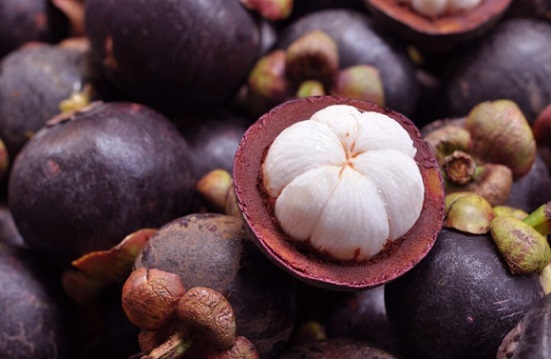 A natural mangosteen molecule cripples dangerous staph bacteria by shutting down its energy supply
A Natural Weapon from Mangosteen
A natural mangosteen molecule cripples dangerous staph bacteria by shutting down its energy supply
A Natural Weapon from Mangosteen
Alpha-mangostin is a plant flavonoid extracted from Garcinia mangostana, commonly known as mangosteen. It has long been known to kill bacteria, but until now scientists did not fully understand how it worked. The new study shows that this compound targets a critical energy producing pathway inside Staphylococcus aureus, making it extremely difficult for the bacteria to survive.
The research team came from the Biotechnological Engineering Center for Pharmaceutical Research and Development at Jiangxi Agricultural University in Nanchang, China, and the Laboratory of Natural Medicine and Microbiological Drug at the College of Bioscience and Bioengineering, also at Jiangxi Agricultural University.
How the Bacteria Is Starved of Energy
Inside Staphylococcus aureus is a respiratory chain, similar in concept to a power line, that produces energy the bacteria needs to grow and divide. A key enzyme in this system is NDH 2, which helps move electrons to a structure called the quinone pool. This movement is essential for energy generation.
The study found that alpha-mangostin competes directly with a natural molecule called menaquinone for binding sites on NDH 2. By occupying these sites, alpha mangostin blocks the flow of electrons. Without this flow, the bacteria cannot produce enough energy to stay alive.
Laboratory tests showed that alpha-mangostin inhibited NDH 2 activity at very low concentrations, even more effectively than some known experimental inhibitors. This confirms that the compound is not acting randomly, but is precisely targeting a vital bacterial process.
More Than One Way to Kill Bacteria
In addition to blocking energy production, the researchers observed another important effect. Alpha-mangostin caused a collapse of the bacterial membrane potential, which is the electrical balance across the cell membrane. This imbalance weakens the bacterial membrane and accelerates cell death. However, the researchers emphasized that this membrane damage appears to be a secondary effect caused by energy failure, not the primary killing mechanism.
This
Medical News report highlights why this finding is so important. Many existing antibiotics attack bacterial walls or protein production, areas where resistance develops quickly. By targeting energy metabolism instead, alpha-mangostin represents a different strategy that bacteria may find harder to
evade.
Why This Discovery Matters
Drug resistant Staphylococcus aureus continues to cause severe skin infections, bloodstream infections, and hospital outbreaks worldwide. Natural compounds like alpha mangostin offer a promising starting point for developing new treatments with novel mechanisms.
Conclusions
The study clearly demonstrates that alpha-mangostin kills Staphylococcus aureus by blocking electron transfer at the quinone pool through direct competition at the NDH 2 enzyme. This energy shutdown weakens the bacterial membrane, disrupts vital processes, and leads to rapid bacterial death. The findings strongly support the idea that targeting bacterial energy systems could be a powerful and underused approach in future antibiotic development.
The study findings were published on a preprint server and are currently being reviewed.
https://www.preprints.org/manuscript/202601.0151
For the latest on new antibiotics, keep on logging to Thailand
Medical News.
Read Also:
https://www.thailandmedical.news/articles/herbs-and-phytochemicals




 Share
Share
 Tweet
Tweet
 Share
Share

































