Researchers from Netherlands Warn That COVID-19 is Linked to Lasting Brain Damage and Neurological Risks
Nikhil Prasad Fact checked by:Thailand Medical News Team Apr 26, 2026 5 months, 1 week, 19 hours, 44 minutes ago
Medical News: Emerging scientific evidence is strengthening concerns that COVID-19 may leave behind significant and long-lasting effects on the human brain. A comprehensive new review examining hundreds of postmortem brain samples has uncovered widespread neurological changes tied to the infection, raising alarms about potential long-term cognitive and neurological complications.
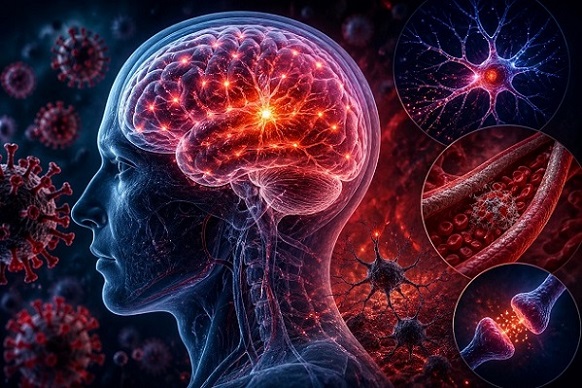 New research reveals that COVID-19 may trigger inflammation, vascular damage, and neuron loss, leading
to long-term brain health concerns
Large-Scale Analysis Reveals Widespread Brain Impact
The study analyzed brain tissue from 352 individuals who died from severe COVID-19, making it one of the most extensive investigations into the neurological effects of the virus. Researchers also incorporated findings from imaging studies and biological samples from long COVID patients to understand ongoing effects after recovery.
One of the key findings is that COVID-19 does not need to directly infect brain cells to cause harm. In fact, many studies found little to no viral presence in brain tissue. Instead, the damage appears to result from indirect mechanisms such as inflammation, disrupted blood flow, and immune system overreaction.
Breakdown of the Brain’s Protective Barriers
A major discovery involves damage to the blood-brain barrier—a critical defense system that protects the brain from harmful substances. In COVID-19 patients, this barrier becomes weakened and “leaky,” allowing proteins, immune cells, and inflammatory molecules to enter brain tissue.
Researchers detected leakage of substances such as fibrinogen and immunoglobulins into the brain, clear signs that the barrier had been compromised. This breakdown contributes to swelling, tissue injury, and increased vulnerability of brain cells.
At the same time, the study identified damage to another important structure, the blood-cerebrospinal fluid barrier. This further increases inflammation within the brain and disrupts normal brain chemistry.
Vascular Damage and Oxygen Deprivation
The brain’s blood vessels appear to be a major target of COVID-19-related damage. Scientists observed a wide range of vascular abnormalities, including microbleeds, small clots, and signs of stroke.
Many patients showed evidence of hypoxic–ischemic injury, meaning brain tissue was damaged due to a lack of oxygen. This type of injury is particularly dangerous because it can lead to permanent loss of brain cells.
In several cases, imaging studies revealed microvascular dysfunction even months after infection. These lingering abnormalities may explain persistent symptoms such as fatigue, confusion, and memory problems.
Severe and Persistent Neuroinflammation
Inflammation within the brain emerged as a central feature of COVID-19-related damage. The study found widespread activation of immune cells such as microglia and astrocytes, which normally help protect the brain.
/>
This
Medical News report notes that in COVID-19, these cells become overactive and begin releasing high levels of inflammatory substances, including cytokines like interleukin-6. This creates a toxic environment that can damage neurons.
Clusters of activated immune cells were observed in key brain regions, including the olfactory bulb, brainstem, cerebellum, and frontal cortex. These areas are involved in smell, breathing, coordination, and higher thinking—closely matching the symptoms reported by many patients.
Evidence of Neuronal Injury and Brain Cell Loss
The review found strong evidence that COVID-19 can lead to direct injury of neurons, even without viral invasion. Elevated levels of neurofilament light chain—a marker of nerve damage—were detected in blood and cerebrospinal fluid.
Detailed analysis of brain tissue showed structural damage, including shrunken neurons, fragmented nerve fibers, and loss of protective myelin. In some cases, researchers observed reduced branching of neurons, which could impair communication between brain cells.
Damage was particularly pronounced in the hippocampus, a region essential for memory, as well as in the brainstem and cerebellum. These findings provide a biological explanation for cognitive symptoms such as memory loss and “brain fog.”
Concerning Signs of Neurodegeneration
One of the most alarming findings is the presence of abnormal protein accumulations in some patients’ brains. These include amyloid-beta plaques and tau tangles—hallmarks of Alzheimer’s disease—as well as alpha-synuclein deposits linked to Parkinson’s disease.
While these changes were more common in older individuals or those with pre-existing conditions, researchers warn that COVID-19 may accelerate underlying neurodegenerative processes.
In addition, disruptions in brain chemistry were observed, including reduced serotonin levels and accumulation of neurotoxic compounds. These changes may contribute to mood disorders, fatigue, and cognitive decline in long COVID patients.
Long COVID and Lasting Brain Changes
The study also sheds light on long COVID, a condition affecting millions worldwide. Patients with persistent symptoms showed ongoing inflammation, immune dysfunction, and altered protein levels in their blood.
Brain imaging studies revealed structural changes such as reduced gray matter volume and altered connectivity between brain regions. These changes may underlie the persistent neurological symptoms experienced by many survivors.
How COVID-19 Affects the Brain Without Direct Infection
Despite the extensive damage observed, the virus itself is rarely found in brain tissue. This suggests that most neurological effects are caused indirectly. Possible mechanisms include immune system overactivation, damage to blood vessels, and reduced oxygen supply. The virus may also influence the brain through pathways such as the olfactory system and gut-brain axis.
Conclusion
The findings from this large-scale review provide compelling evidence that COVID-19 can have serious and lasting effects on the brain, even in the absence of direct viral invasion. The combination of vascular injury, chronic inflammation, and neuronal damage creates a complex and potentially long-term neurological burden. These effects may contribute not only to immediate symptoms but also to an increased risk of cognitive decline and neurodegenerative diseases in the future. Continued research is essential to fully understand these mechanisms and to develop strategies that can protect brain health in those affected by COVID-19.
The study findings were published in the peer reviewed journal: Brain Pathology.
https://onlinelibrary.wiley.com/doi/10.1111/bpa.70101
For the latest COVID-19 news, keep on logging to Thailand
Medical News.
Read Also:
https://www.thailandmedical.news/articles/coronavirus
https://www.thailandmedical.news/articles/long-covid




 Share
Share
 Tweet
Tweet
 Share
Share

































