Nikhil Prasad Fact checked by:Thailand Medical News Team Mar 01, 2026 5 months, 1 day, 14 hours, 32 minutes ago
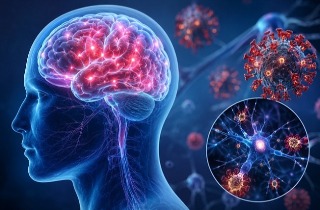
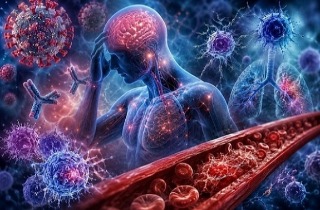
Medical News: A tiny protein inside our brain cells is now taking center stage in the fight against some of the world’s most feared brain diseases. Scientists have discovered that a molecule called T-cell intracellular antigen 1, or TIA1, plays a surprisingly powerful role in conditions such as Alzheimer’s disease, ALS, multiple sclerosis, Huntington’s disease, Parkinson’s disease, and even stroke.
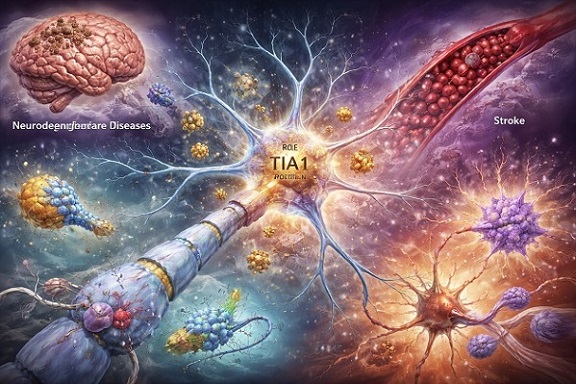 A key stress-response protein in brain cells may hold the secret to treating both neurodegenerative diseases
and stroke
Researchers from the School of Basic Medical Sciences, Hangzhou Normal University, Hangzhou, China, and the School of Pharmacy, Hangzhou Normal University, Hangzhou, China, have published an extensive review explaining how this single protein can either protect brain cells or push them toward destruction.
This
Medical News report explores how TIA1 works and why it may become a major target for future treatments.
What Exactly Is TIA1?
TIA1 is a special type of protein that binds to RNA, the molecule that helps cells produce other proteins. Under normal conditions, TIA1 mostly stays inside the nucleus of brain cells, where it helps control how genes are turned into proteins. It carefully regulates processes such as RNA splicing, stability, and translation, which are all essential for healthy brain development and function.
When brain cells are under stress, such as during inflammation, lack of oxygen, or toxic protein buildup, TIA1 quickly moves into the cell’s outer area, the cytoplasm. There, it helps form protective clusters called stress granules. These granules temporarily pause protein production, conserving energy and shielding the cell from further harm.
When Protection Turns Dangerous
While stress granules are protective at first, problems begin when they fail to dissolve properly. In diseases like amyotrophic lateral sclerosis, certain mutations in the TIA1 gene make the protein stick together too strongly. Instead of forming flexible stress granules, it creates rigid clumps that damage motor neurons, leading to muscle weakness and paralysis.
In Alzheimer’s disease, TIA1 interacts closely with abnormal tau protein. Tau normally supports the internal structure of neurons. But when it becomes overly phosphorylated, it forms tangles inside brain cells. TIA1 binds to this toxic tau, helping it cluster into stress granules. Over time, this prevents the cell from clearing tau properly. The result is a vicious cycle of protein buildup, inflammation, and neuron death.
In multiple sclerosis, TIA1 appears to amplify inflammation. It activates specific signaling pathways that worsen immune attacks on nerve fibers and reduce the brain’s ability to repair damaged myelin. In Huntington’s disease, mutant huntingtin protein disrupts RNA balance, likely involving TIA1-driven stress granule dysfunction. In Parkinson’s disease, stress granule imbalance may also influence alpha-synuclein aggre
gation.
A Surprising Role in Stroke
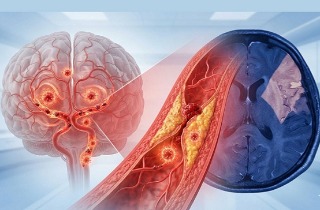
Stroke presents a different picture. When blood flow to the brain is suddenly cut off, cells face extreme stress. Here, TIA1 may actually help. It forms stress granules that trap inflammatory molecules and reduce harmful immune activation. It also appears to limit certain types of cell death.
However, if stress granules persist too long, they may shift from protective to harmful. This delicate balance makes TIA1 both a defender and a potential threat, depending on timing and context.
The Bigger Picture
The researchers emphasize that TIA1 sits at the crossroads of many key brain processes, including inflammation, oxidative stress, protein clearance, and cell survival. Its dual nature makes it especially intriguing. Carefully controlling TIA1 activity could potentially slow neurodegeneration or improve recovery after stroke.
Importantly, the review highlights that most findings so far come from laboratory and animal studies. More human research is urgently needed to confirm whether targeting TIA1 can safely benefit patients.
Conclusion
In conclusion, TIA1 represents a powerful but double-edged player in brain health. Under normal conditions, it protects cells by managing RNA and forming temporary stress granules. Under disease conditions, however, genetic mutations or prolonged stress can push TIA1 into forming persistent toxic aggregates that disrupt protein balance, fuel inflammation, impair autophagy, and accelerate neuron loss. Because this single protein influences multiple pathways shared across Alzheimer’s disease, ALS, multiple sclerosis, Huntington’s disease, Parkinson’s disease, and stroke, it stands out as a promising but complex therapeutic target. Future precision therapies aimed at restoring proper stress granule dynamics without triggering harmful aggregation may open new hope for millions affected by neurological disorders.
The study findings were published in the peer reviewed International Journal of Molecular Sciences.
https://www.mdpi.com/1422-0067/27/5/2252
For the latest new on neurological issues and brain diseases, keep on logging to Thailand
Medical News.
Read Also:
https://www.thailandmedical.news/articles/alzheimer,-dementia-




 Share
Share
 Tweet
Tweet
 Share
Share