Nikhil Prasad Fact checked by:Thailand Medical News Team Jan 29, 2026 8 months, 6 days, 7 hours, 44 minutes ago
Medical News: Scientists from Yantai University School of Life Sciences and Tarim University College of Life Sciences, China, have uncovered compelling evidence that a natural compound found in lotus leaves could significantly reduce heart damage linked to unhealthy diets and metabolic disorders. This new research highlights how nuciferine, an alkaloid extracted from Nelumbo nucifera, protects heart tissue during and after heart attacks, especially in people with high blood sugar and fat levels.
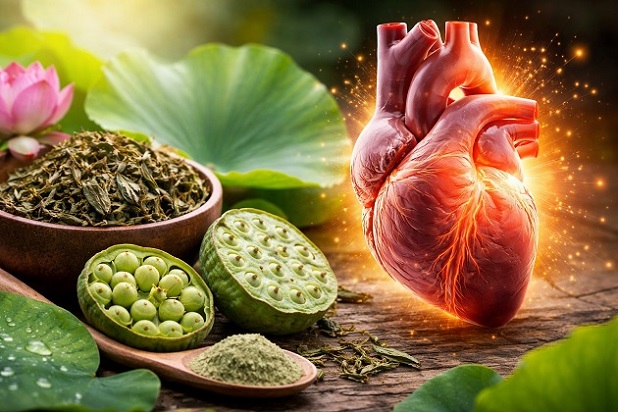 A natural lotus leaf compound may help shield the heart from severe damage after heart attacks, especially
in people with diabetes or high-fat diets.
Why Heart Damage is Worse in Metabolic Disorders
Heart attacks occur when blood flow to the heart is blocked. While restoring blood flow is lifesaving, the sudden return of oxygen can paradoxically cause further injury, a process known as ischemia reperfusion injury. This damage is far more severe in individuals with diabetes or high-fat diets. Elevated glucose and fatty acids overload heart cells, weaken their defenses, and trigger excessive production of harmful molecules called reactive oxygen species.
The Role of Mitochondria and Toxic Succinate
At the center of this damage are mitochondria, the energy factories of cells. During oxygen deprivation, heart cells accumulate a substance called succinate. When blood flow resumes, succinate rapidly fuels a destructive burst of oxidative stress through a process known as reverse electron transport. This oxidative surge damages cell membranes, disrupts energy production, and leads to heart cell death.
How Nuciferine Steps In
Using isolated mouse hearts and human heart cells, researchers showed that nuciferine dramatically improved heart function after ischemia reperfusion injury under high glucose and fatty acid conditions. Hearts treated with nuciferine pumped more effectively, had smaller areas of tissue death, and showed reduced biochemical signs of injury. This
Medical News report highlights that nuciferine’s protective effect closely matched that of dimethyl malonate, a known inhibitor of succinate metabolism.
Blocking Oxidative Stress at Its Source
Detailed laboratory analysis revealed that nuciferine directly inhibited succinate dehydrogenase, a key mitochondrial enzyme responsible for succinate-driven oxidative stress. By slowing this enzyme, nuciferine reduced the harmful burst of reactive oxygen species during reperfusion. Importantly, it did this without shutting down essential energy pathways, preserving overall mitochondrial function.
Activating the Heart’s Survival Pathways
Beyond reducing oxidative stress, nuciferine also activated Sirt1, a protein that regulates cell survival, energy balance, and mitochondrial repair. Activation of Sirt1 helped stabilize mitochondrial membranes, reduced programmed cell death, and promoted the renewal of healthy mitochondria. When researchers blocked Sirt1, nuciferine&
rsquo;s protective effects were largely lost, confirming its critical role.
Broader Implications for Heart Health
These findings suggest nuciferine works through a dual mechanism, both blocking toxic metabolic reactions and switching on protective survival pathways. Such a combined action is particularly valuable for heart attack patients with diabetes, obesity, or other metabolic disorders, who currently have limited treatment options.
Conclusion
In conclusion, this study demonstrates that nuciferine offers strong protection against heart damage caused by ischemia reperfusion injury under metabolic stress. By reducing succinate driven oxidative stress and activating Sirt1 dependent mitochondrial repair pathways, nuciferine preserves heart cell function, limits tissue death, and improves recovery. These results open the door to future therapies based on natural compounds that target the root causes of heart injury rather than symptoms alone.
The study findings were published in the peer reviewed journal: Nutrients
https://www.mdpi.com/2072-6643/18/3/425
For the latest on Herbs and Phytochemicals, keep on logging to Thailand
Medical News.
Read Also:
https://www.thailandmedical.news/articles/herbs-and-phytochemicals




 Share
Share
 Tweet
Tweet
 Share
Share

































