BREAKING NEWS! Fibrotic Events In Kidneys May Initiate Early In SARS-CoV-2 Infection, Leading To Pronounced Kidney Fibrosis In Long COVID!
TMN News Team Jul 31, 2023 3 years, 2 months, 2 weeks, 1 day, 1 hour, 35 minutes ago
COVID-19 News: Long COVID, characterized by persistent symptoms following the initial SARS-CoV-2 infection, presents a growing concern for individuals recovering from COVID-19. This study investigates the pathophysiological changes in the kidneys during long-term post-infection, focusing on fibrogenesis factors and their potential role in the development of kidney fibrosis.
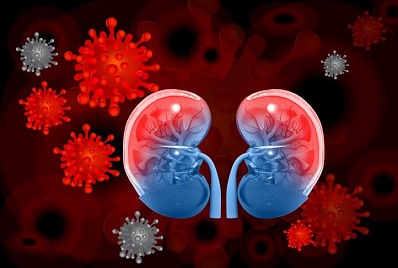
Utilizing a murine model of COVID-19 (MHV-1 infection), researchers from Larkin Community Hospital, Miami-USA and University of Miami Miller School of Medicine-USA observed significant alterations in kidney tissue, including inflammation, tubular necrosis, and macrophage and lymphocyte infiltration.
In particular, the study sheds light on the involvement of various molecules such as TGF-β1, FGF23, NGAL, IL-18, HIF1-α, TLR2, YKL-40, and B2M in long-term post-infection. Furthermore, a synthetic peptide, SPIKENET (SPK), was evaluated for its potential to prevent renal fibrosis. The findings suggest that fibrotic events may initiate early in SARS-CoV-2 infection, leading to pronounced kidney fibrosis in long COVID. Targeting these factors therapeutically may prevent acute or long COVID-associated kidney complications.
Long-term complications following SARS-CoV-2 infection, known as long COVID or post-acute sequelae of SARS-CoV-2 infection (PASC), have been reported in numerous patients and has been covered extensively in numerous studies and
COVID-19 News reports.
Among various organ systems, renal dysfunction has been observed in approximately 30% of patients after acute and long-term post-infection. However, the exact pathophysiology of kidney injury in the context of COVID-19 remains unclear.
https://www.thailandmedical.news/news/thailand-medical-news-warns-that-covid-19-infections-and-vaccinations-are-driving-exponential-incidences-of-acute-kidney-injury
The study team utilized a murine model infected with mouse hepatitis virus-1 (MHV-1), a coronavirus, to study the post-acute and long-term pathological changes in the kidneys. The animals were observed for seven days (acute infection) and twelve months (long-term post-infection). Pathological changes in the kidneys were examined, including edema, inflammation, acute tubular necrosis, macrophage and lymphocyte infiltration, and other changes indicative of fibrosis.
To investigate fibrogenesis factors, mRNA and protein levels of TGF-β1, FGF23, NGAL, IL-18, HIF1-α, TLR2, YKL-40, B2M, EGFR, TNFR1, BCL3, and WFDC2 were assessed in both acute and long-term post-infection. Additionally, the synthetic peptide SPK, known to inhibit spike protein binding, was administered to evaluate its impact on fibrogenesis markers.
The study findings revealed a correlation between MHV-1 infection and kidney injury, consistent with human studies showing kidney damage post-SARS-CoV-2 infection.
The long-term post-infection observation in kidneys demonstrated the development of edema, inflammation, severe acute tubular necrosis, and infiltration of immune cells. Additionally, fibrogenesis markers such as TGF-β1,
FGF23, NGAL, IL-18, HIF1-α, TLR2, YKL-40, and B2M exhibited increased mRNA levels in long-term post-infection, suggesting the possibility of renal fibrosis development.
Conclusions
Various fibrogenesis factors were investigated in this study to understand their roles in kidney injury during acute and long-term post-infection. Among them, EGFR and NGAL demonstrated significant associations with renal fibrosis in acute and chronic infection, respectively. The synthetic peptide SPK was shown to attenuate both mRNA expression of NGAL and TGF-β and protein levels of EGFR, HIF-1α, and TLR2, thereby potentially preventing renal fibrosis.
This study provides important insights into the involvement of fibrogenesis factors in the development of kidney fibrosis during long COVID. The findings suggest that targeting EGFR and NGAL could be potential therapeutic strategies to prevent or mitigate renal fibrosis in long COVID patients. Further clinical trials and research are needed to explore the utility of these markers as therapeutic targets for long COVID-associated kidney complications.
The study findings were published in the peer reviewed journal: Biology.
https://www.mdpi.com/2079-7737/12/8/1070
For the latest
COVID-19 News, keep on logging to Thailand Medical News.




 Share
Share
 Tweet
Tweet
 Share
Share