Scientists Discover a Subtype of Long COVID Patients Who Unknowingly Have Dangerous Immune and Blood Abnormalities
Nikhil Prasad Fact checked by:Thailand Medical News Team Jun 24, 2026 3 months, 1 week, 3 days, 7 minutes ago
Medical News: Long COVID continues to puzzle doctors and researchers around the world, with millions of people still suffering from lingering symptoms months or even years after recovering from a SARS-CoV-2 infection. Now, a new study has revealed that long COVID may not be a single condition at all. Instead, researchers have identified a distinct subgroup of patients who appear to have ongoing immune and blood system abnormalities that are associated with worse symptoms, poorer quality of life, and greater disability.
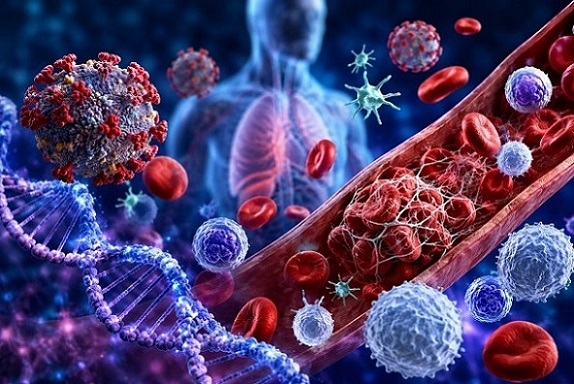 Researchers identify a hidden subgroup of long COVID patients with persistent immune dysfunction, blood
abnormalities, and more severe long-term health impacts
The groundbreaking study was conducted by researchers from the Institute of Environmental Medicine at Karolinska Institutet in Sweden; the Human Microbiome Research Program and Translational Immunology Research Program at the University of Helsinki; Helsinki University Hospital and its Outpatient Clinic for Long-Term Effects of COVID-19; the Finnish Institute of Occupational Health; Turku University Hospital; and the Skin and Allergy Hospital at Helsinki University Hospital.
Looking Beyond Symptoms into Molecular Changes
Although long COVID has been extensively studied, scientists have struggled to explain why some patients recover gradually while others remain severely affected. To investigate this mystery, researchers analyzed blood samples from 107 individuals, including 50 people with long COVID and 57 individuals who had recovered completely after COVID-19 infection.
The team examined two important biological regulators known as microRNAs (miRNAs) and messenger RNAs (mRNAs). These molecules help control how genes function and influence immune responses, inflammation, blood cell production, and many other critical biological processes.
By combining miRNA and mRNA analyses, researchers were able to create a detailed molecular map of long COVID and identify hidden biological differences among patients.
Discovery of Two Distinct Long COVID Groups
The study revealed that long COVID patients naturally separated into two distinct subgroups.
One subgroup, called LC2, had molecular profiles that were relatively similar to those of recovered individuals. However, a second subgroup known as LC1 displayed extensive biological abnormalities affecting both the immune and blood-forming systems.
Researchers found that LC1 patients had widespread disruptions involving more than 100 altered microRNAs along with significant changes in gene activity. These abnormalities affected pathways involved in red blood cell development, platelet activation, immune regulation, inflammation, and antiviral defense mechanisms.
The findings suggest that many individuals with long COVID may unknowingly be living with ongoing biological disturbances that conventional medical testing often fails to detect.
Signs of Blood Clotting and Immune Dysfunction
One of the most concerning discoveries involved markers linked to abnormal
blood clotting and inflammation.
Patients in the LC1 subgroup had elevated levels of fibrin D-dimer and prolonged thrombin time, both of which are indicators of clotting system abnormalities. Researchers also observed altered activity in genes associated with platelet activation, a process involved in blood clot formation.
Additionally, these patients showed evidence of abnormal blood cell production and activation of natural killer cells, specialized immune cells that normally help the body fight infections.
The molecular analyses identified key genes including GATA1, ITGA2B, ITGB3, and GP9 that were strongly associated with blood cell development and platelet function. These findings suggest that long COVID may continue to affect blood and immune system processes long after the initial viral infection has resolved.
This
Medical News report highlights how the study provides some of the strongest evidence yet that persistent immune and hematological abnormalities may be driving illness in a subset of long COVID patients.
Patients Experienced Worse Long-Term Health Outcomes
The biological abnormalities were not merely laboratory findings. They translated into real-world health consequences.
Patients belonging to the LC1 subgroup consistently reported more symptoms and greater impairment than those in the LC2 group. They experienced poorer physical functioning, reduced work ability, increased disability, lower resilience, and significantly diminished quality of life.
Mental health was also affected. LC1 patients demonstrated higher levels of anxiety and depressive symptoms during follow-up evaluations.
Perhaps most importantly, these differences became more pronounced over time. Months after enrollment, patients in the LC1 subgroup continued to experience substantial health challenges while many LC2 patients showed comparatively better outcomes.
Potential Future Blood Tests for Long COVID
Researchers also developed an advanced machine-learning model capable of identifying the high-risk LC1 subgroup. Using nine specific microRNAs together with a gene called LRRFIP2, the model achieved an impressive predictive accuracy score.
The ability to identify this subgroup through blood testing could eventually allow physicians to better classify patients, predict disease progression, and tailor treatments according to underlying biology rather than symptoms alone.
Conclusions
The study provides compelling evidence that long COVID consists of multiple biological subtypes rather than a single disease process. One subgroup, designated LC1, exhibits persistent immune activation, abnormal blood cell and platelet-related pathways, altered gene regulation, and significantly worse clinical outcomes. These findings help explain why some patients remain chronically ill long after infection while others recover more successfully. The discovery of this immune-hematopoietic subtype may ultimately lead to more accurate diagnostic tools, targeted therapies, and personalized management strategies for millions of long COVID sufferers worldwide. Importantly, the research also highlights that many patients may be experiencing serious underlying biological abnormalities that remain invisible through routine clinical assessments.
The study findings were published in the peer reviewed journal: The Journal of Allergy and Clinical Immunology.
https://www.sciencedirect.com/science/article/pii/S0091674926004392
For the latest on Long COVID, keep on logging to Thailand
Medical News.
Read Also:
https://www.thailandmedical.news/articles/long-covid




 Share
Share
 Tweet
Tweet
 Share
Share

































