Nikhil Prasad Fact checked by:Thailand Medical News Team Jun 11, 2026 3 months, 3 weeks, 2 days, 10 hours, 24 minutes ago
Medical News: For years, vitamin D has been associated mainly with healthy bones and calcium regulation. However, a major new scientific review is now highlighting a much broader role for this essential nutrient, suggesting that vitamin D may influence brain development, immune function, mental health, and even the risk of certain psychiatric disorders throughout life.
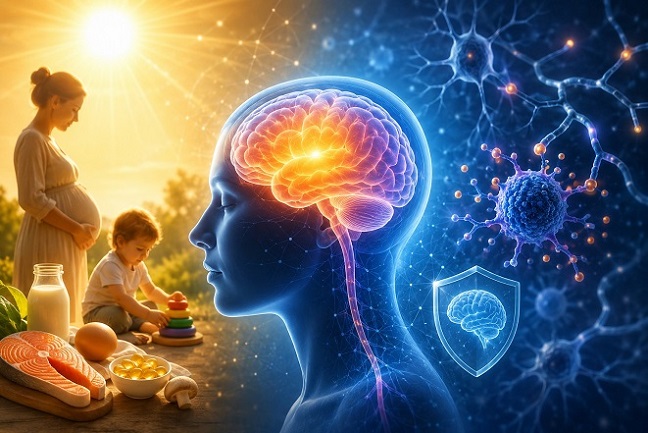 New research suggests vitamin D may influence brain development, immune function, and mental health throughout life
Researchers are urging doctors and scientists to stop viewing vitamin D simply as a nutritional supplement and instead consider it as a powerful biological signal that interacts with the brain and immune system from before birth through old age.
The study was conducted by researchers from the Mazovian Specialist Health Centre in Pruszkow, Poland; the Institute of Biological Sciences at The John Paul II Catholic University of Lublin, Poland; the Institute of Medical Science at The John Paul II Catholic University of Lublin, Poland; the Department of Children’s Diabetology and Lifestyle Medicine at the Medical University of Silesia in Katowice, Poland; and the Department of Clinical Biochemistry at The Children’s Memorial Health Institute in Warsaw, Poland.
Looking Beyond Bones
Vitamin D is produced in the skin after exposure to sunlight and can also be obtained from foods and supplements. While its importance for bone health is well established, scientists say vitamin D also plays a role in immune regulation, inflammation control, cellular energy production, and brain function.
The review examined evidence from developmental studies, clinical trials, genetic investigations, and neuroscience research. Rather than supporting vitamin D as a universal treatment for mental illness, the researchers found that its importance may depend heavily on when deficiency occurs, an individual's biology, and the type of psychiatric condition involved.
Early-Life Deficiency May Influence Future Mental Health
One of the most significant findings involves the role of vitamin D during pregnancy and early childhood. Researchers found growing evidence that low vitamin D levels during critical stages of fetal and neonatal development may increase vulnerability to conditions such as autism spectrum disorder (ASD), attention-deficit/hyperactivity disorder (ADHD), and schizophrenia later in life.
The review highlights several large population studies showing that babies born with lower vitamin D levels were more likely to develop certain neurodevelopmental disorders as they grew older. Scientists stress that vitamin D deficiency does not directly cause these conditions, but it may increase susceptibility when combined with genetic and environmental factors.
Brain development during pregnancy involves the formation of neurons, neural connections, immune programming, and dopamine-related pathways. Vitamin D appears to participate in many of these processes, making adequate levels especially important during early development.
How Vitamin D May Affect the Brain
Researchers identified several biolo
gical pathways through which vitamin D could influence mental health.
Vitamin D receptors are found throughout the brain and immune system. The nutrient appears to help regulate inflammation, support communication between brain cells, influence serotonin and dopamine systems, and maintain healthy stress responses.
The review also found evidence that vitamin D affects the tryptophan-kynurenine pathway, a biological system involved in mood regulation, cognition, sleep, and inflammation. Disturbances in this pathway have been linked to depression, psychosis, suicidal behavior, and cognitive decline.
In addition, vitamin D may help support mitochondrial function, the process by which cells produce energy. Low levels could contribute to fatigue, reduced mental performance, and poorer resilience to physical and psychological stress.
This
Medical News report notes that the researchers repeatedly emphasized the interaction between vitamin D, inflammation, metabolism, and brain health rather than focusing on vitamin D as a stand-alone psychiatric treatment.
Depression and Psychosis Findings
The review analyzed major clinical trials involving depression and psychosis. Results showed that vitamin D supplementation does not appear to prevent depression in the general population when vitamin D levels are already adequate. However, some smaller studies suggest that people who are deficient in vitamin D and also experience inflammatory or metabolic problems may receive modest benefits when deficiencies are corrected. Researchers believe future studies should focus on these specific high-risk groups rather than broad populations.
Similarly, trials involving patients with psychosis found that correcting vitamin D deficiency improved blood levels but did not significantly reduce psychiatric symptoms. Nevertheless, vitamin D deficiency remains common among people with severe mental illness and may worsen overall physical health.
A New Precision Medicine Approach
Rather than recommending vitamin D supplements as a universal solution for psychiatric disorders, the researchers advocate a precision nutrition approach. This means identifying individuals whose biology, developmental history, or medical condition makes them more vulnerable to the effects of vitamin D deficiency.
Potential high-risk groups include pregnant women, individuals with inflammatory depression, people with severe mental illness, those with metabolic disorders, and older adults experiencing frailty or cognitive decline.
Conclusion
The review presents one of the most comprehensive evaluations to date of vitamin D's relationship with mental health. The evidence suggests that vitamin D is far more than a bone-health nutrient and may act as an important neuroimmune signal that influences brain development, inflammation, metabolism, and psychological well-being across the lifespan. Importantly, the researchers caution against viewing vitamin D as a universal treatment for depression, schizophrenia, ADHD, autism, or other psychiatric disorders. Instead, vitamin D appears to be most relevant in specific biological and developmental contexts where deficiency may contribute to increased vulnerability. Future research is expected to focus on identifying these high-risk groups and determining whether targeted nutritional interventions can improve long-term mental health outcomes.
The study findings were published in the peer reviewed journal: Nutrients.
https://www.mdpi.com/2072-6643/18/12/1877
For the latest research on mental health issues, keep on logging to Thailand
Medical News.
Read Also:
https://www.thailandmedical.news/articles/mental-health
https://www.thailandmedical.news/articles/supplements




 Share
Share
 Tweet
Tweet
 Share
Share

































