Nikhil Prasad Fact checked by:Thailand Medical News Team Feb 14, 2026 6 months, 2 weeks, 2 days, 10 hours, 57 minutes ago
Medical News: Researchers uncover persistent immune signals in blood cells and microscopic vesicles long after acute COVID-19 has passed
As the world moves beyond the most devastating waves of the COVID-19 pandemic, scientists are still trying to understand why many people continue to suffer lingering symptoms months after infection. A new study from researchers in Italy and France has shed important light on how the immune system remains altered not only during acute COVID-19, but also in long COVID.
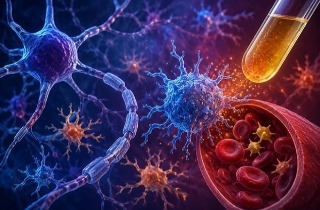
 Persistent immune markers in blood cells and tiny vesicles may help explain long COVID symptoms.
The research was conducted by scientists from the Department of Experimental Medicine and the Department of Systems Medicine at the University of Rome Tor Vergata, the Infectious Diseases Clinic and Virology Unit at Policlinico Tor Vergata in Rome, the Istituto di Struttura della Materia (CNR) in Rome, the University of Padua, the Institut des Maladies Métaboliques et Cardiovasculaires (Inserm UMR1297, Université Paul Sabatier) in Toulouse, and Beckman Coulter Life Sciences in Marseille.
Understanding the Immune Storm
COVID-19 is known to trigger a strong immune reaction. In severe cases, this can escalate into what is often called a “cytokine storm,” where inflammatory molecules flood the bloodstream. While many patients recover, others go on to develop long COVID, a condition marked by fatigue, brain fog, breathing problems, chest pain, and other symptoms lasting for months.
In this
Medical News report, researchers focused on two immune markers: CD169 and HLA-DR. These are proteins found on immune cells, especially monocytes, which help coordinate the body’s response to infection. CD169 is strongly linked to early antiviral responses, while HLA-DR plays a key role in presenting viral fragments to other immune cells to trigger a defense.
Tracking Immune Cells and Tiny Vesicles
The team analyzed blood samples from 48 patients with acute COVID-19, 25 individuals with long COVID, and 22 healthy donors. They did not just examine immune cells themselves. They also studied extracellular vesicles, tiny bubble-like particles released by cells into the bloodstream. These vesicles carry proteins and molecular signals and act as messengers between cells.
Using advanced flow cytometry and microscopy techniques, the researchers measured how much CD169 and HLA-DR were present on both immune cells and extracellular vesicles.
What they found was striking. In patients with active COVID-19, CD169 levels were dramatically elevated in monocytes compared to healthy individuals. Even in long COVID patients, CD169 levels remained moderately elevated, suggesting ongoing immune stimulation long after the virus had cleared.
HLA-DR showed a more complex pattern. In acute infection, its expression dropped in monocytes, which may reflect immune exhaustion or dysregulation. In long COVID, certain immune cells still showed altered HLA-DR levels, indicating that the imm
une system had not fully returned to normal.
Persistent Signals in Circulating Vesicles
Perhaps even more revealing was what the team discovered in extracellular vesicles. Vesicles carrying both CD169 and HLA-DR were significantly increased in acute COVID patients and remained elevated in long COVID individuals compared to healthy donors.
The researchers also found that these vesicle levels correlated with markers of inflammation and blood clotting abnormalities, such as fibrinogen and D-dimer, which are known to be elevated in severe COVID-19. This suggests that extracellular vesicles may act as ongoing carriers of inflammatory signals, potentially contributing to prolonged symptoms.
Importantly, a positive correlation was observed between immune cells and the vesicles they released. This means that changes seen in blood cells were mirrored in these microscopic messengers, pointing to a coordinated, multi-level immune disturbance.
Why This Matters
The findings suggest that the immune system in long COVID patients may remain in a state of low-grade activation. Even if the virus itself is no longer detectable, immune signals continue to circulate in both cells and extracellular vesicles.
This persistent activation could help explain why some individuals experience chronic symptoms affecting multiple organs, including the brain, lungs, heart, and skin. The study also highlights extracellular vesicles as potential biomarkers, offering doctors a new way to monitor disease progression and recovery.
In conclusion, the research provides compelling evidence that immune activation in COVID-19 does not simply switch off after the acute infection resolves. Instead, subtle but measurable immune disturbances can persist in both immune cells and extracellular vesicles for months. These findings open new avenues for understanding long COVID, identifying patients at risk of prolonged illness, and potentially guiding future treatments aimed at restoring immune balance.
The study findings were published in the peer reviewed journal: Frontiers in Cellular and Infection Microbiology.
https://www.frontiersin.org/journals/cellular-and-infection-microbiology/articles/10.3389/fcimb.2026.1686186/full
For the latest COVID-19 News, keep on logging to Thailand
Medical News.
Read Also:
https://www.thailandmedical.news/articles/coronavirus
https://www.thailandmedical.news/articles/long-covid




 Share
Share
 Tweet
Tweet
 Share
Share