Nikhil Prasad Fact checked by:Thailand Medical News Team Feb 16, 2026 6 months, 2 weeks, 16 hours, 15 minutes ago
Medical News: Scientists Discover Lasting Protein Damage After COVID-19 Recovery
A new study by researchers from the First Affiliated Hospital of Zhengzhou University and the Academy of Medical Sciences Zhengzhou University has revealed disturbing evidence that COVID-19 leaves lasting molecular scars in the blood long after patients recover. These hidden changes affect proteins that control immunity, inflammation, and blood clotting, potentially explaining why many survivors continue to experience lingering symptoms months or even years after infection.
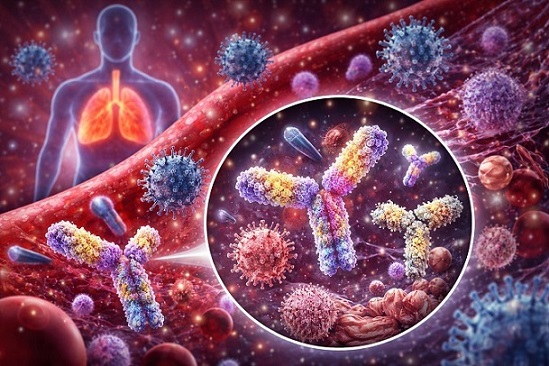 Scientists discover COVID-19 leaves lasting molecular scars in blood proteins linked to immune
dysfunction and long COVID symptoms
The research team analyzed blood samples from 412 individuals, including acute COVID-19 patients, recovered patients at different stages, and healthy individuals. Using advanced proteomic technology, scientists identified over 827 unusual protein changes, known as non-coded amino acids (ncAAs), affecting nearly 30,000 sites across key blood proteins. These changes were not temporary. Many remained present even 12 months after recovery. This
Medical News report highlights how COVID-19 appears to permanently alter the body’s immune system at the molecular level.
Persistent Protein Changes Disrupt Immune System Function
Proteins are essential building blocks in the body that perform most biological functions. Normally, these proteins are precisely structured. However, the study found that COVID-19 triggered widespread structural alterations in these proteins through chemical modifications and amino acid substitutions.
The researchers identified 1,685 different serum proteins affected by COVID-19. Many of these proteins were involved in antibody function, immune defense, and inflammation control. These altered proteins were not simply markers of infection but showed lasting changes that remained even after virus clearance.
Particularly concerning were changes in immunoglobulins, also known as antibodies. Antibodies help recognize and neutralize pathogens. Scientists found more than 7,000 modified sites within antibody structures, especially in regions responsible for detecting viruses. These changes could alter how antibodies recognize threats and regulate immune responses.
Some antibody modifications affected regions that interact with complement proteins, a group of immune molecules responsible for destroying pathogens. If these interactions become abnormal, it could result in either weakened immune defense or excessive inflammation.
Complement System Damage May Explain Long COVID Symptoms
One of the most important findings involved the complement system, which plays a central role in immune defense and inflammation. The study identified 61 major complement proteins that had undergone COVID-related structural modifications.
While some protein changes returned to normal after recovery, many remained altered even after 12 months. Persistent changes were found in key complement components including C
1QC, C1R, C1S, and CFB. These proteins regulate immune activation and inflammation.
The researchers discovered that certain structural changes occurred at critical functional sites of complement proteins. This means the virus may have permanently affected how these proteins activate immune responses. Persistent complement system disruption could explain symptoms such as fatigue, inflammation, neurological issues, and cardiovascular complications commonly reported in long COVID patients.
Blood Clotting System Also Shows Lasting Alterations
The study also found changes in proteins involved in blood clotting and coagulation. COVID-19 is already known to increase clotting risks, and this research shows that structural protein damage may contribute to ongoing clotting abnormalities.
Although many clotting protein changes returned to normal after recovery, some remained altered, especially those interacting with complement pathways. This overlap suggests COVID-19 may cause lasting immune-clotting system imbalance, increasing long-term health risks.
Molecular Memory of Infection Remains in Blood
The researchers concluded that COVID-19 leaves what they described as “molecular imprints” in blood proteins. These imprints are physical structural changes that act as a biological memory of infection. Unlike antibodies that fade over time, these protein modifications may persist for months or longer.
These findings help explain why some recovered patients remain vulnerable to inflammation, immune dysfunction, and chronic symptoms. The persistence of these molecular scars indicates that COVID-19 is not simply a temporary infection but can produce long-term biological consequences at the molecular level.
Conclusion
This groundbreaking study confirms that COVID-19 leaves deep and lasting molecular damage in blood proteins, especially those controlling immunity and inflammation. These persistent structural changes may disrupt immune balance, prolong inflammation, and contribute directly to long COVID symptoms. The discovery of lasting molecular imprints provides critical new insight into why recovery from COVID-19 may take much longer than previously believed and highlights the need for long-term monitoring and targeted therapies for survivors.
The study findings were published in the peer reviewed journal: American Society for Biochemistry and Molecular Biology journal: Molecular and Cellular Proteomics.
https://www.mcponline.org/article/S1535-9476(26)00020-4/fulltext
For the latest COVID-19 News, keep on logging to Thailand
Medical News.
Read Also:
https://www.thailandmedical.news/articles/coronavirus
https://www.thailandmedical.news/articles/long-covid




 Share
Share
 Tweet
Tweet
 Share
Share