Nikhil Prasad Fact checked by:Thailand Medical News Team Jul 25, 2026 2 months, 1 week, 3 days, 1 hour, 33 minutes ago
Medical News:
Researchers identify disrupted calcium signaling in immune cells that may help explain persistent Long COVID symptoms
Scientists have uncovered new evidence showing that Long COVID is associated with major defects in calcium signaling within natural killer (NK) cells, a critical component of the body's immune system. The discovery provides further insight into why many individuals continue to suffer from persistent fatigue, cognitive problems, muscle pain, sleep disturbances, and other debilitating symptoms long after recovering from their initial SARS-CoV-2 infection.
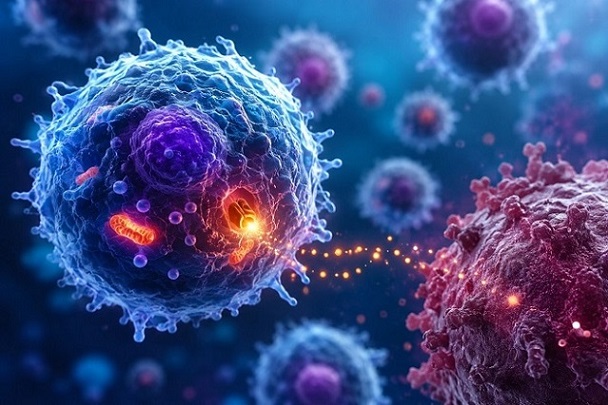 Researchers discover that defective TRPM3 calcium signaling in natural killer cells may play a central role in the
immune dysfunction and energy deficits seen in Long COVID
The research was led by investigators from the National Centre for Neuroimmunology and Emerging Diseases, Griffith University, the Consortium Health International for Myalgic Encephalomyelitis at Griffith University, and the School of Pharmacy and Medical Sciences at Griffith University, Australia, together with researchers from the Laboratory of Cellular Pharmacology, School of Pharmacy, Aichi-Gakuin University, Nagoya, Japan.
Why natural killer cells matter
Natural killer cells are among the body's first responders against viruses. They rapidly identify and destroy infected cells before infections spread further. To perform this task effectively, these immune cells depend on tightly regulated calcium movement inside the cell. Calcium serves as an internal signaling messenger that activates the machinery needed for NK cells to kill infected targets and coordinate immune responses.
Previous work by the same research team had already shown that the TRPM3 ion channel, which allows calcium to enter NK cells, functions poorly in people with Long COVID. The latest study investigated what happens after this channel becomes impaired, particularly how it affects calcium movement inside the cell and into the mitochondria, the energy-producing structures that power virtually every cellular process.
Researchers found widespread calcium signaling abnormalities
The study examined freshly isolated NK cells from eight patients diagnosed with post-COVID-19 condition and compared them with cells from eight healthy volunteers of similar age and sex.
Using advanced live-cell calcium imaging, the researchers found that passive calcium entry into the cell's cytoplasm was dramatically reduced in Long COVID patients. This indicates that NK cells struggle to replenish the calcium required for normal immune activity.
Surprisingly, while calcium entry into the cell itself was reduced, passive calcium accumulation within the mitochondria was significantly increased. The researchers believe this unusual pattern may represent an unsuccessful compensatory response as the cells attempt to maintain normal function despite defective calcium regulation.
The team then activated the TRPM3 ion channel using pregnenolone sulfate, a naturally occurring neurosteroid known to stimulate TRPM3. Both cytoplasmic and mitochondrial calcium responses were signi
ficantly weaker in NK cells from Long COVID patients. Not only was less calcium transported, but the speed at which the cells responded was also substantially slower than in healthy controls.
This
Medical News report highlights that these defects extend beyond a single ion channel and affect the entire intracellular calcium signaling network that regulates immune function and cellular energy production.
Mitochondria also appear to be affected
The researchers observed that abnormal TRPM3 function also altered calcium movement into the mitochondria. These organelles rely on carefully balanced calcium concentrations to generate adenosine triphosphate (ATP), the molecule that supplies energy for virtually every cellular activity.
Reduced TRPM3-dependent calcium influx into mitochondria could therefore impair energy production while simultaneously weakening immune defenses. This combination may contribute to hallmark Long COVID symptoms such as persistent exhaustion, post-exertional malaise, reduced physical endurance, and impaired concentration.
The study further demonstrated altered coordination between cytoplasmic calcium signals and mitochondrial calcium uptake, suggesting that communication between different parts of the cell becomes disrupted in Long COVID.
Findings strengthen links with ME/CFS
The authors note that similar TRPM3 dysfunction has previously been reported in patients with myalgic encephalomyelitis/chronic fatigue syndrome (ME/CFS). Because both illnesses share many symptoms, including severe fatigue, post-exertional symptom worsening, sleep disturbances, and cognitive impairment, the new findings provide additional evidence that Long COVID and ME/CFS may share common biological mechanisms involving impaired calcium signaling and dysfunctional NK cells.
The researchers believe these abnormalities could contribute to broader immune dysregulation and disturbances in cellular metabolism that characterize post-COVID-19 condition.
Conclusion
The study provides compelling evidence that Long COVID is associated with significant defects in TRPM3-dependent calcium signaling in natural killer cells, affecting both the cell's cytoplasm and its mitochondria. These abnormalities may weaken antiviral immune responses while disrupting cellular energy production, offering a biologically plausible explanation for many persistent Long COVID symptoms. Although the study involved a relatively small number of participants, the findings add important evidence supporting TRPM3 dysfunction as a potential therapeutic target deserving further large-scale investigation.
The study findings were published in the peer reviewed: European Journal of Immunology.
https://onlinelibrary.wiley.com/doi/10.1002/eji.70240
For the latest on Long COVID, keep on logging to Thailand
Medical News.
Read Also:
https://www.thailandmedical.news/articles/long-covid




 Share
Share
 Tweet
Tweet
 Share
Share

































