Nikhil Prasad Fact checked by:Thailand Medical News Team Apr 12, 2026 5 months, 3 weeks, 20 hours, 57 minutes ago
Medical News: A new study has revealed that nearly half of patients recovering from severe COVID-19 may struggle with swallowing difficulties, a condition known as dysphagia, raising fresh concerns about long-term complications even after the infection subsides.
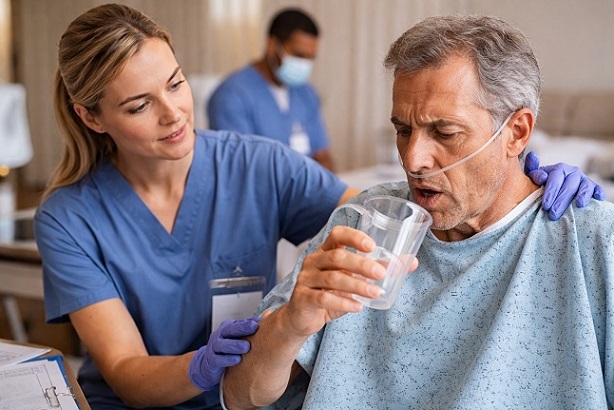 A new study reveals nearly half of severe COVID-19 survivors face swallowing issues, often linked to brain function
Hidden complication in COVID-19 recovery
A new study reveals nearly half of severe COVID-19 survivors face swallowing issues, often linked to brain function
Hidden complication in COVID-19 recovery
Swallowing may seem like a simple, automatic action, but for many patients recovering from severe COVID-19, it becomes a serious challenge. Researchers found that 46 percent of hospitalized COVID-19 patients admitted to rehabilitation facilities experienced dysphagia. This condition can make eating and drinking difficult and may increase the risk of choking or lung infections.
The study analyzed 248 patients who required inpatient rehabilitation after severe COVID-19 infection. These individuals had already endured prolonged hospital stays, often including intensive care and mechanical ventilation. According to the research data, many had spent nearly a month in acute care, with about two weeks in intensive care units.
Who conducted the research
The research team included scientists from Shirley Ryan AbilityLab in Chicago, the Department of Physical Medicine and Rehabilitation at Northwestern Feinberg School of Medicine, and the Department of Biomedical Informatics and Medical Education at the University of Washington Medicine in Seattle.
What the study discovered
The findings show that dysphagia is far more common in COVID-19 recovery than previously believed. Earlier estimates suggested around 30 percent of hospitalized patients were affected, but this study indicates the number may be significantly higher in those needing rehabilitation.
Most patients suffered from a type called oropharyngeal dysphagia, which affects both the mouth and throat. Smaller numbers had issues limited to the oral or pharyngeal stages of swallowing.
Encouragingly, about 43.5 percent of patients saw their swallowing function improve during their rehabilitation stay, which averaged around three weeks. However, more than half still had some level of difficulty at discharge.
Despite this, the majority were able to return home. Importantly, over 92 percent of patients with dysphagia were discharged on a normal or near-normal diet, suggesting that even when swallowing issues persist, they are often mild and manageable.
The surprising brain connection
One of the most striking discoveries in this
Medical News report was the strong link between cognitive function and swallowing ability. Patients with better mental clarity and comprehension scores were less likely to have dysphagia and more likely to recover from it.
This suggests that the brain plays a bigger role in swallowing recovery than previously understood, especially in COVID-19 pati
ents who do not have obvious neurological damage like stroke. It also means that patients showing signs of confusion or cognitive decline may need closer monitoring for hidden swallowing problems.
Risk factors and recovery patterns
The study identified several key risk factors. Patients who spent longer periods in intensive care or had extended hospital stays were more likely to develop dysphagia. These findings align with previous knowledge that prolonged illness and invasive treatments can weaken muscles involved in swallowing.
Interestingly, while many patients had been intubated, this alone was not strongly linked to persistent swallowing issues in this study. Researchers suggest that some patients may recover swallowing function quickly after removal of breathing tubes, even before entering rehabilitation.
What this means for patients and doctors
The results highlight the importance of early screening and treatment of swallowing problems in COVID-19 survivors. Many patients may not realize they have dysphagia, especially if symptoms are mild, yet the condition can still lead to complications if left untreated.
Healthcare providers are encouraged to assess both cognitive and swallowing functions together, as the two appear closely connected. Rehabilitation programs may need to adapt by including more integrated therapies that address both physical and cognitive recovery.
Conclusion
This study provides important new insights into the lasting effects of COVID-19 on the human body. It shows that dysphagia is not only common but also closely tied to cognitive health, making it a more complex condition than previously thought.
While many patients improve during rehabilitation, a significant number continue to experience mild swallowing difficulties. The good news is that most can still return home and manage their condition with minor dietary adjustments. Moving forward, early detection and a more holistic treatment approach could significantly improve recovery outcomes and quality of life for COVID-19 survivors.
The study findings were published in the peer reviewed journal: PM&R.
https://onlinelibrary.wiley.com/doi/10.1002/pmrj.70113
For the latest COVID-19 News, keep on logging to Thailand
Medical News.
Read Also:
https://www.thailandmedical.news/articles/coronavirus
https://www.thailandmedical.news/articles/long-covid




 Share
Share
 Tweet
Tweet
 Share
Share

































